

Malta is a small Mediterranean archipelago packed with history, sunshine and crystal-clear water. It combines a fortified capital, prehistoric temples, golden cliffs and lively festivals. Moreover, English is an official language, so travel is easy. So, it is perfect for a short sunny escape.
Most first trips start in Valletta, the capital. Then, travellers explore Mdina, the Three Cities, Comino’s Blue Lagoon and the island of Gozo.
Read more about Malta
Valletta
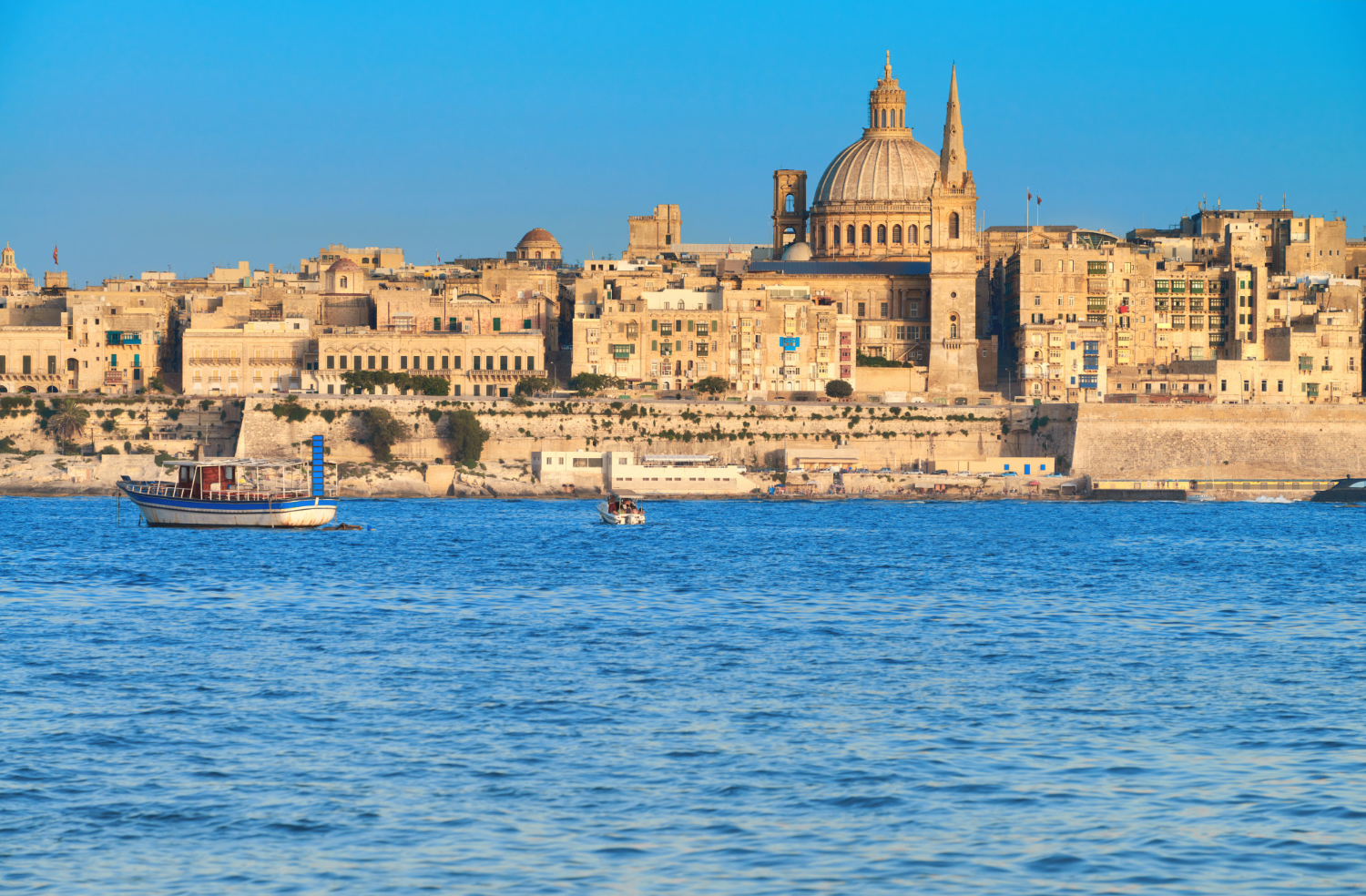
First, Valletta was built by the Knights of St John after the Great Siege of 1565. Visit St John’s Co-Cathedral and its Caravaggio paintings. Then, enjoy the view from the Upper Barrakka Gardens over the Grand Harbour. Read our Valletta guide.
Top Places to Visit in Malta
- Mdina: The “Silent City”, a medieval walled town on a hill.
- The Three Cities: Birgu, Senglea and Cospicua, facing Valletta.
- Comino: The famous turquoise Blue Lagoon.
- Gozo: A greener, quieter island with the Ġgantija temples.
- Marsaxlokk: A fishing village with colourful boats.
- Megalithic temples: Among the oldest free-standing structures in the world.
A Short History of Malta
Malta’s temples are older than the pyramids of Egypt. Later, Phoenicians, Romans, Arabs and Normans ruled the islands. Then, the Knights of St John built fortresses and palaces. After that, Malta was a British colony until independence in 1964. Today, it is the smallest member of the European Union.
Food in Malta
First, try pastizzi, flaky pastries filled with ricotta or peas. Also, rabbit stew, called stuffat tal-fenek, is the national dish. Moreover, fresh fish and local wines are excellent. To drink, try the bitter-sweet soft drink Kinnie.
Practical Tips
- Use buses and ferries: they link most towns and Gozo.
- Drive on the left: a legacy of British rule.
- Visit Comino early: the Blue Lagoon gets crowded by noon.
- Join a village festa: summer festivals bring fireworks and processions.
For more ideas, see the official Visit Malta website.
Basic Words and Expressions to Use in Malta
Everyone speaks English, but Maltese is the national language. It is a unique mix of Arabic, Italian and English, written in the Latin alphabet. So, a few words of Maltese are a lovely surprise for locals.
Finally, Maltese people often switch between Maltese and English in the same sentence. So, don’t be surprised to hear “Grazzi, thanks!”
Malta Travel FAQ
We recommend 4 to 7 days. That way, you can see Valletta, Mdina, the Three Cities, Comino and Gozo. With a long weekend, however, focus on Valletta and one day trip.
Count $80 to $150 per person per day. Buses and street food are cheap. However, hotels in summer and boat trips cost more.
You can visit all year round, as winters are mild. Spring and autumn are ideal, with warm sea and fewer crowds. Summer, meanwhile, is hot and busy, but full of festivals.
The country is part of the EU and the Schengen Area. Many visitors can stay up to 90 days without a visa. Still, always check the latest entry rules for your passport.
Tipping is appreciated but not compulsory. Usually, leaving 5 to 10% for good service is customary.
Public buses cover most of the main island. Also, ferries link Malta with Gozo and Comino. For flexibility, a rental car or ride-hailing apps work well.
In short, the country offers history, sea, sun and great food in a small space. So, combine Valletta with Mdina, Comino and Gozo. Explore our detailed guides for each destination.