

Switzerland is a small Alpine country of snowy peaks, turquoise lakes and spotless cities. It combines world-famous trains, chocolate, cheese and four national languages. Moreover, its mountains are perfect in both summer and winter. So, it is a dream for scenery lovers.
Most first trips combine Zurich or Geneva with Lucerne, Interlaken and Zermatt, linked by scenic trains.
Read more about Switzerland
Top Cities in Switzerland
- Zurich: A lively financial hub with a lovely old town and lake.
- Geneva: An international city with its famous Jet d’Eau fountain.
- Bern: The charming capital, with medieval arcades.
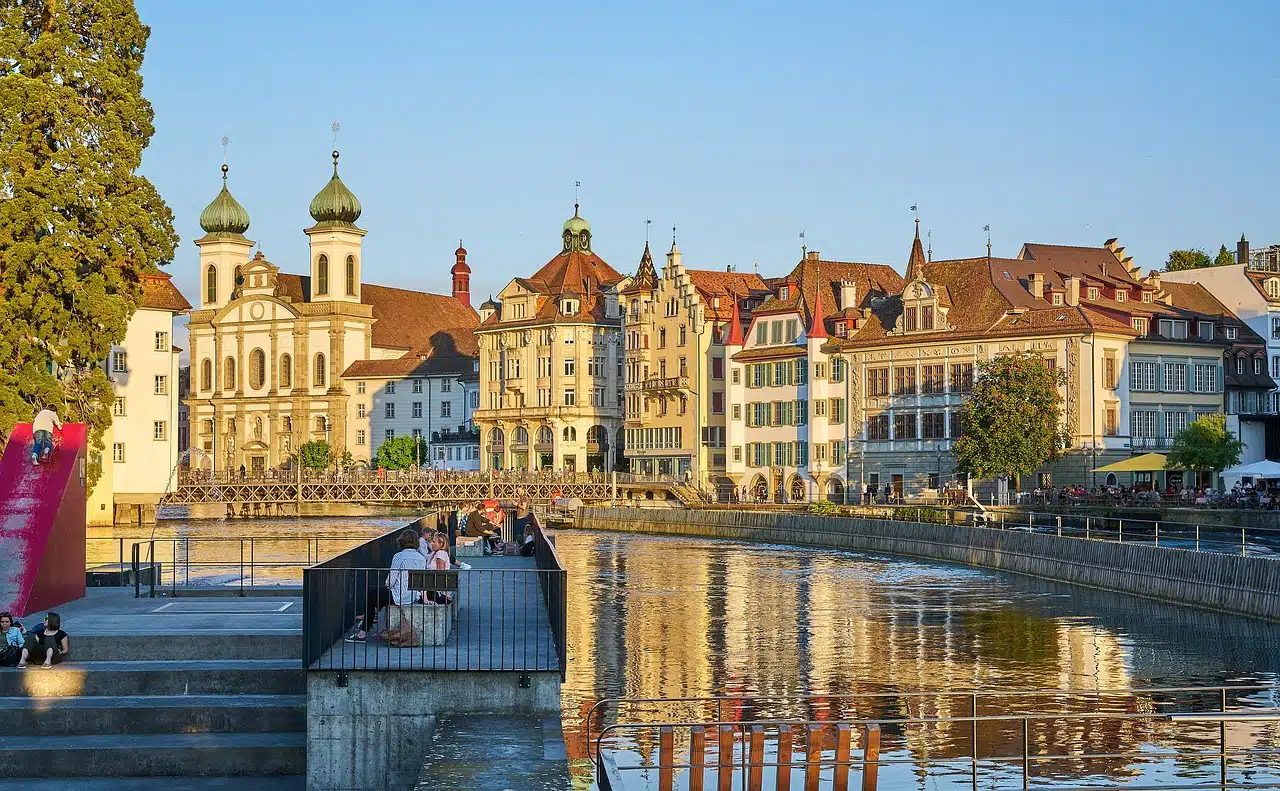
- Lucerne: A wooden Chapel Bridge on a lake surrounded by mountains.
- Lausanne: A hilly lakeside city near the Lavaux vineyards.
- Lugano: Italian-speaking, with palm trees and a Mediterranean feel.
The Swiss Alps
First, Interlaken and the Jungfrau Region offer villages like Grindelwald and Lauterbrunnen. Then, Zermatt sits below the iconic Matterhorn and is car-free. Meanwhile, glamorous St Moritz is famous for winter sports. Also, the Glacier Express and Bernina Express are among the most beautiful train rides in the world.
A Short History of Switzerland
In 1291, three mountain cantons formed an alliance, the start of the Swiss Confederation. Over the centuries, more cantons joined. Then, in 1815, Switzerland’s neutrality was recognised. Today, it is a federal state where citizens vote directly on many decisions.
Food in Switzerland
Of course, try cheese fondue and raclette. Also, rösti, crispy grated potatoes, is a classic. Moreover, Swiss chocolate and cheese tastings are a must, for example in Gruyères.
Practical Tips
- Get a Swiss Travel Pass: it covers trains, buses, boats and many museums.
- Use the local currency: the country uses the Swiss franc (CHF), not the euro.
- Check the weather: mountain views depend on clear skies.
For more ideas, see the official MySwitzerland website.
Basic Words and Expressions to Use in Switzerland
The country has four national languages: German, French, Italian and Romansh. Most people also speak English. Below are useful words in Swiss German, spoken by most of the population.
Finally, in Geneva and Lausanne, switch to French (“bonjour”, “merci”). In Lugano, use Italian (“buongiorno”, “grazie”).
Switzerland Travel FAQ
We recommend 7 to 10 days for a first trip. That way, you can see Zurich or Geneva, Lucerne, the Jungfrau Region and Zermatt. With a long weekend, however, focus on one city and one mountain area.
Count €70 to €150 per person per day for a budget trip. In fact, the country is very expensive. So, a Swiss Travel Pass and supermarket meals help save money.
You can visit all year round. Summer is ideal for hiking and lakes, while winter is perfect for skiing. Spring and autumn, meanwhile, are quieter and cheaper.
The country is part of the Schengen Area, although not part of the EU. Many visitors can stay up to 90 days without a visa. Still, always check the latest entry rules before you travel.
Tipping is not expected, as service is included. However, rounding up for good service is appreciated.
Trains are the best option, as they are punctual and incredibly scenic. Also, buses, boats and cable cars reach almost every village. So, you rarely need a car.
In short, the country offers mountains, lakes, trains and delicious cheese. So, combine one city with two Alpine regions. Explore our detailed guides for each destination.