


Thailand is a captivating blend of ancient traditions and modern energy in Southeast Asia. It combines golden temples, busy markets, jungle-covered mountains and dreamy islands. Moreover, its food and warm hospitality are famous worldwide. So, it suits first-time visitors and seasoned travellers alike.
Most first trips start in Bangkok and head north to Chiang Mai. Then, travellers relax on islands like Phuket, Koh Phi Phi or Koh Samui.
Read more about Thailand
Top Cities in Thailand
Bangkok
First, the capital is busy, noisy and full of life. Visit the Grand Palace and Wat Pho, home of the giant reclining Buddha. Then, take a boat on the Chao Phraya River to Wat Arun. In the evening, street food stalls and rooftop bars take over. Read our Bangkok guide.
Chiang Mai and the North
For a slower pace, head north to Chiang Mai. Its old town has dozens of temples, and Wat Phra That Doi Suthep overlooks the valley. Also, night markets and cooking classes are highlights. Nearby, choose an ethical elephant sanctuary, with no riding or shows.
Ancient Capitals
History lovers should visit Sukhothai, the first Thai capital, with its peaceful temple ruins. In addition, Ayutthaya is an easy day trip from Bangkok.
Islands and Beaches of Thailand
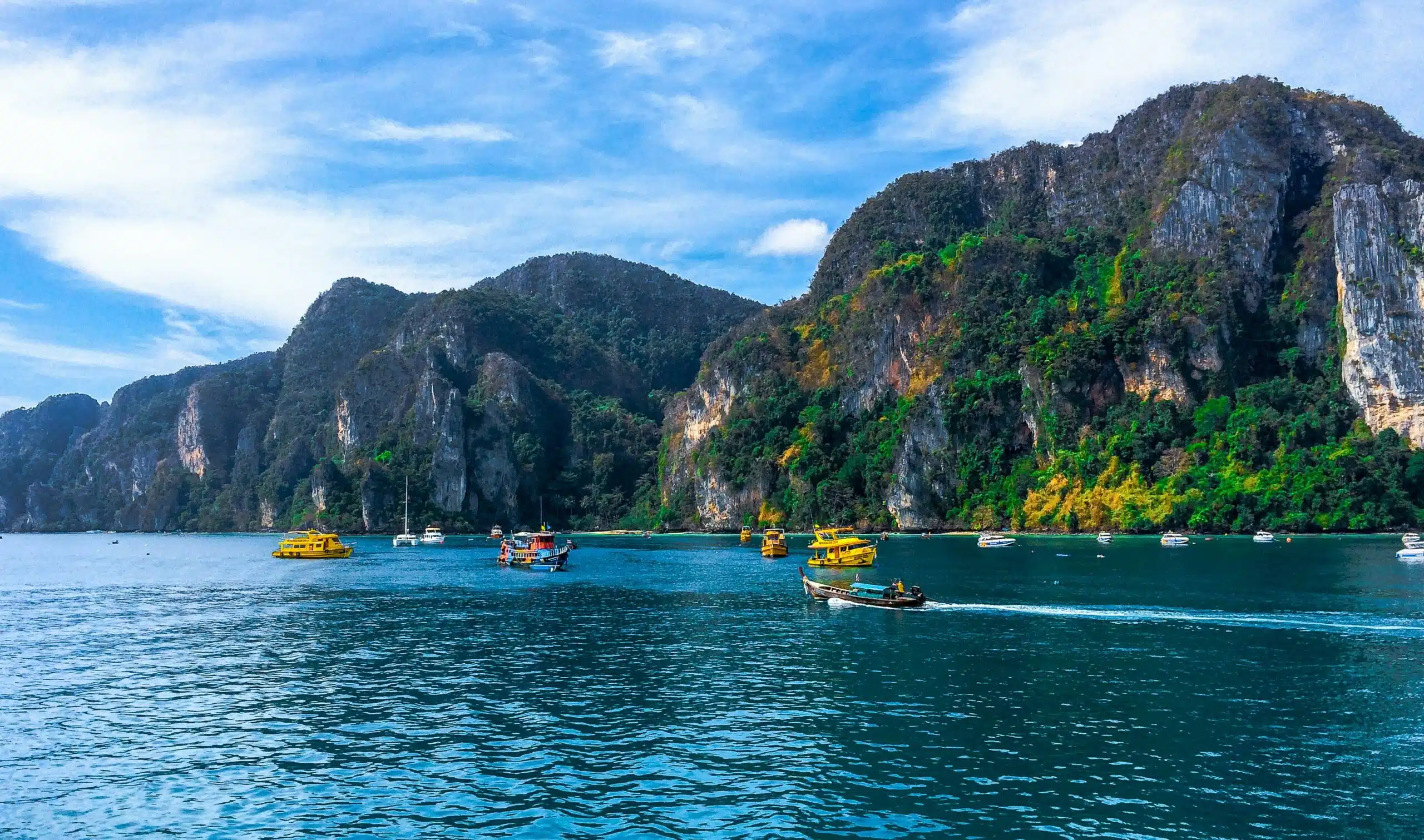
On the Andaman Sea, Phuket is the largest island and the easiest to reach. From there, boats go to Koh Phi Phi and its limestone cliffs. Further south, Koh Lipe has clear water and great snorkelling.
In the Gulf of Thailand, Koh Samui offers comfort and palm-lined beaches. Nearby, Koh Phangan is famous for its Full Moon Party. Meanwhile, Koh Chang is greener and quieter. Closer to Bangkok, Pattaya is a busy beach resort.
Nature and Jungle
In the south, Khao Sok National Park has one of the oldest rainforests in the world. For example, sleep in a floating bungalow on Cheow Lan Lake. In the north, moreover, mountains, waterfalls and hill-tribe villages surround Chiang Mai and Pai.
A Short History of Thailand
First, the kingdom of Sukhothai rose in the 13th century. Then, Ayutthaya became a rich trading capital until its fall in 1767. After that, the capital moved to Bangkok in 1782.
Remarkably, Thailand is the only Southeast Asian country never colonised by a European power. In 1932, absolute monarchy ended. Today, the king is still deeply respected, so never joke about the royal family.
Food in Thailand
Thai food balances sweet, sour, salty and spicy flavours. For example, try pad thai, green curry, tom yum soup and spicy papaya salad, called som tam. For dessert, mango sticky rice is a must. Read more in our Thai cuisine guide.
Street food is cheap, fresh and delicious everywhere. However, ask for “mai phet” if you prefer mild dishes. Also, try northern specialities like khao soi, a curry noodle soup from Chiang Mai.
Culture and Experiences
- Thai massage: a traditional, affordable way to relax after a long day.
- Muay Thai: watch a fight in Bangkok or try a training session.
- Cooking classes: learn to make curry paste from scratch.
- Temples: join monks’ morning alms rounds respectfully, from a distance.
Festivals and Events
- 13–15 April: Songkran, the Thai New Year, becomes a giant water fight.
- November: Loy Krathong fills rivers with floating candles, and Chiang Mai releases lanterns.
- Every month: the Full Moon Party on Koh Phangan.
- October: the Vegetarian Festival in Phuket features colourful processions.
Practical Tips
- Dress modestly in temples: cover shoulders and knees, and remove your shoes.
- Use ride-hailing apps: Grab or Bolt avoid taxi bargaining in cities.
- Carry cash: markets and street stalls rarely take cards.
- Avoid animal shows: skip elephant rides and tiger photos.
- Beware of scams: ignore anyone saying a temple is “closed today”.
For more ideas, see the official Tourism Authority of Thailand website.
Basic Words and Expressions to Use in Thailand
English is common in tourist areas, but less so in the countryside. Still, a few words of Thai bring big smiles. Above all, add “khrap” (if you are a man) or “kha” (if you are a woman) to be polite.
Finally, Thai is a tonal language, so do not worry if people smile at your accent. Moreover, a wai, hands pressed together with a slight bow, is a lovely way to say thank you.
Thailand Travel FAQ
We recommend two to three weeks for a first trip. That way, you can see Bangkok, Chiang Mai and two islands without rushing. With ten days, however, choose Bangkok, the north or one island area.
Count $50 to $100 per person per day. Backpackers can spend less with guesthouses, street food and buses. However, island resorts, diving and domestic flights quickly add up.
The best period is November to February, when the weather is dry and cooler. March to May, by contrast, is very hot. From June to October, the monsoon brings rain, though the Gulf islands stay drier until October.
Many nationalities can enter visa-free for a short stay. However, rules change often, so check the latest requirements for your passport. Also, complete the online Thailand Digital Arrival Card before you fly.
Tipping is not compulsory. However, leaving small change or 20 to 50 baht for good service is appreciated, especially for massages.
Domestic flights are cheap and save time on long distances. Night trains and buses link the main cities. On the islands, use ferries, and in cities, ride-hailing apps like Grab or Bolt.
In short, the country offers temples, jungles, islands and incredible food. So, combine Bangkok and the north with one or two islands. Explore our detailed guides for each destination.