


Vietnam is a long, narrow country in Southeast Asia, full of energy, history and stunning landscapes. It combines busy cities, emerald bays, rice terraces and tropical beaches. Moreover, its street food is among the best in the world. So, it promises an unforgettable journey from north to south.
Most first trips run between Hanoi and Ho Chi Minh City. Along the way, travellers stop in Halong Bay, Hue and Hoi An.
Read more about Vietnam
The North of Vietnam
Hanoi
First, the capital blends Vietnamese traditions with French colonial charm. Stroll through the Old Quarter, admire Hoan Kiem Lake and visit the Temple of Literature. However, crossing the street takes practice: walk slowly and steadily through the scooters. Read our Hanoi guide.
Halong Bay, Ninh Binh and Sapa
Nearby, Halong Bay has thousands of limestone islands rising from emerald water. So, an overnight cruise is a highlight. Also, Ninh Binh offers similar scenery on land, with boat trips through caves and rice fields. In the mountains, Sapa is famous for rice terraces and ethnic minority villages.
Central Vietnam
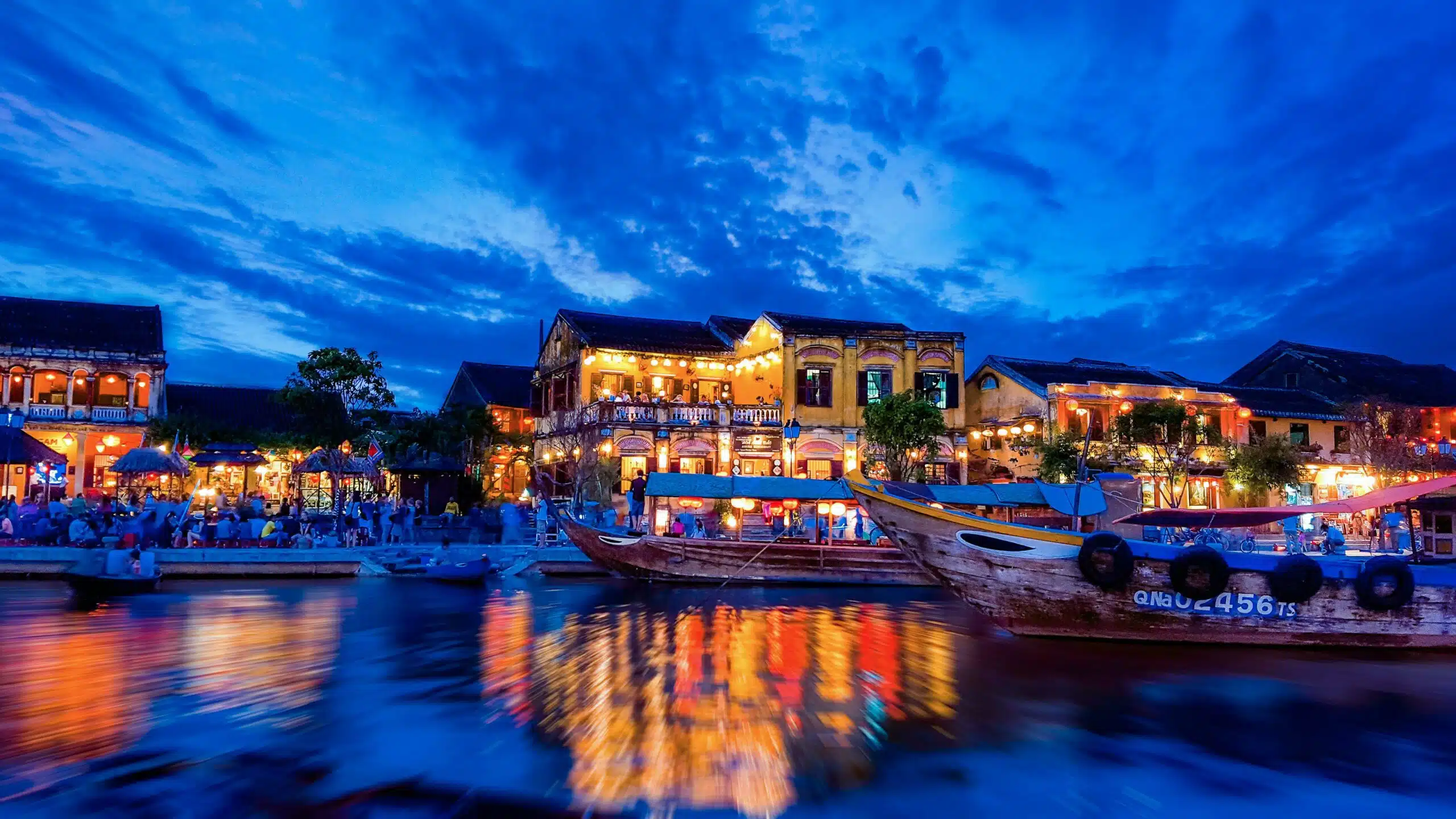
Further south, Hue was the imperial capital, with its Citadel and royal tombs along the Perfume River. Then, Da Nang offers long beaches and the Marble Mountains. Nearby, Hoi An charms with lantern-lit streets, old merchant houses and fast tailors.
In addition, Phong Nha-Ke Bang National Park has some of the largest caves in the world. For example, Son Doong is considered the biggest known cave on the planet.
The South of Vietnam
In the south, Ho Chi Minh City, still called Saigon, buzzes with energy. Visit the War Remnants Museum, Ben Thanh Market and the nearby Cu Chi Tunnels. Then, explore the Mekong Delta and its floating markets. For quiet beaches, the Con Dao Islands are a hidden gem.
A Short History of Vietnam
For about a thousand years, the north was ruled by China. Then, Vietnamese dynasties built temples and citadels, such as Hue in the 19th century. Later, the country became part of French Indochina.
After independence was declared in 1945, long wars followed, against France and then involving the United States. Finally, the country reunified in 1975. Since the 1980s, economic reforms have transformed it into one of Asia’s fastest-growing nations.
Food in Vietnam
Vietnamese cuisine is fresh, light and full of herbs. For example, try pho noodle soup, banh mi sandwiches, bun cha in Hanoi and fresh spring rolls. In Hoi An, taste cao lau noodles. Read more in our Vietnamese cuisine guide.
Street food is cheap and delicious, often eaten on tiny plastic stools. Also, do not miss Vietnamese coffee, strong and sweet with condensed milk. In Hanoi, moreover, try egg coffee, a creamy local speciality.
Festivals and Events
- January or February: Tet, the Lunar New Year, is the biggest celebration. However, many shops close for several days.
- Every month: Hoi An holds a lantern night on the full moon.
- September or October: the Mid-Autumn Festival brings lanterns and mooncakes.
- 2 September: National Day is celebrated with flags and fireworks.
Practical Tips
- Use ride-hailing apps: Grab is cheap and avoids price surprises.
- Carry cash: markets and street food stalls only take dong.
- Count the zeros: notes have many zeros, so check before paying.
- Dress modestly in temples: cover shoulders and knees.
- Plan for the weather: the north, centre and south have different seasons.
For more ideas, see the official Vietnam tourism website.
Basic Words and Expressions to Use in Vietnam
English is common in tourist areas, especially among young people. Still, a few words of Vietnamese make a real difference. Above all, a smile and “cảm ơn” go a long way.
Finally, Vietnamese has six tones, so the same word can change meaning. Don’t worry if people laugh kindly: they appreciate the effort.
Vietnam Travel FAQ
We recommend two to three weeks to travel from Hanoi to Ho Chi Minh City. With ten days, however, focus on the north and the centre, or on the centre and the south.
Count $30 to $50 per person per day. In fact, the country is one of the most affordable in Asia. However, Halong Bay cruises, domestic flights and boutique hotels cost more.
The best period is October to April, when most regions are pleasant. However, the north is cool in winter, and the centre can be rainy from October to December. The south, meanwhile, stays warm all year.
Most visitors need an e-visa, which is easy to get online. Some nationalities are exempt for short stays. Still, always check the latest rules for your passport before you travel.
Tipping is not expected in local eateries. However, a small tip for guides, drivers and good service in restaurants is appreciated.
Domestic flights save time on long distances. Also, the scenic Reunification Express train links Hanoi and Ho Chi Minh City. In cities, Grab is the easiest way to move around.
In short, the country offers bays, mountains, history and amazing street food. So, travel from Hanoi to Saigon, or focus on one region. Explore our detailed guides for each destination.