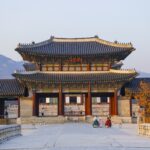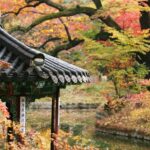
Bukchon Hanok Village is a historic neighbourhood in central Seoul. It lies on a hillside between Gyeongbokgung and Changdeokgung palaces. Here, hundreds of hanok, traditional Korean houses, line narrow lanes. Moreover, people still live in many of them, so it is a real neighbourhood.
So, this guide covers what to see, the visiting rules and practical tips.
History of Bukchon
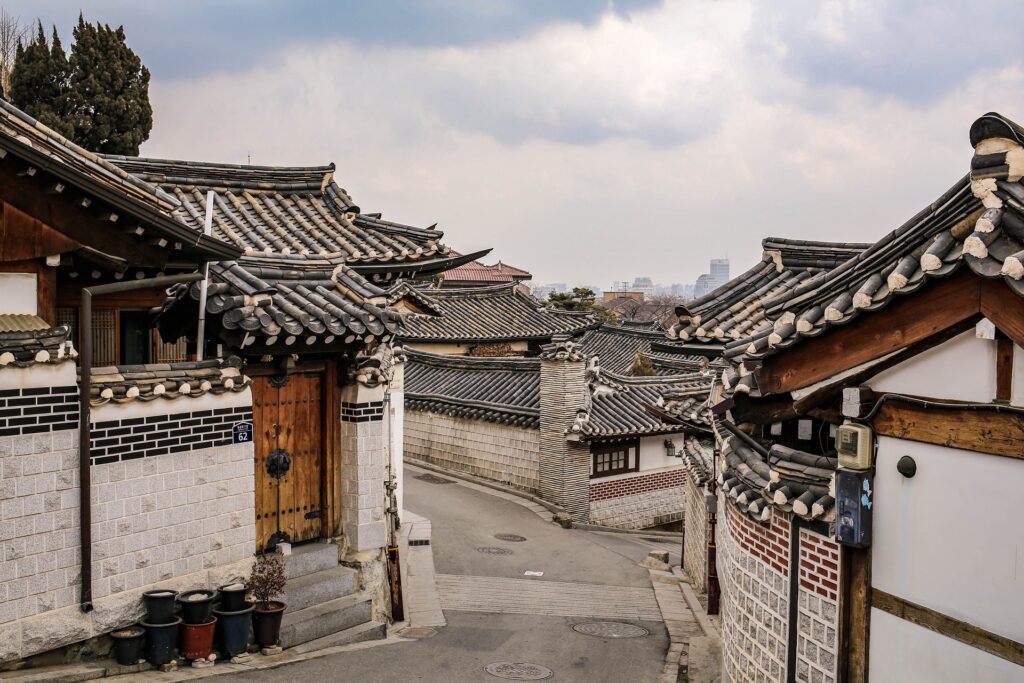
During the Joseon dynasty, high-ranking officials and nobles lived here, close to the royal palaces. Later, in the 1920s and 1930s, many smaller hanok were built for city residents. Today, the area is one of the largest groups of traditional houses in Seoul.
What to See in Bukchon Hanok Village
Hanok Houses
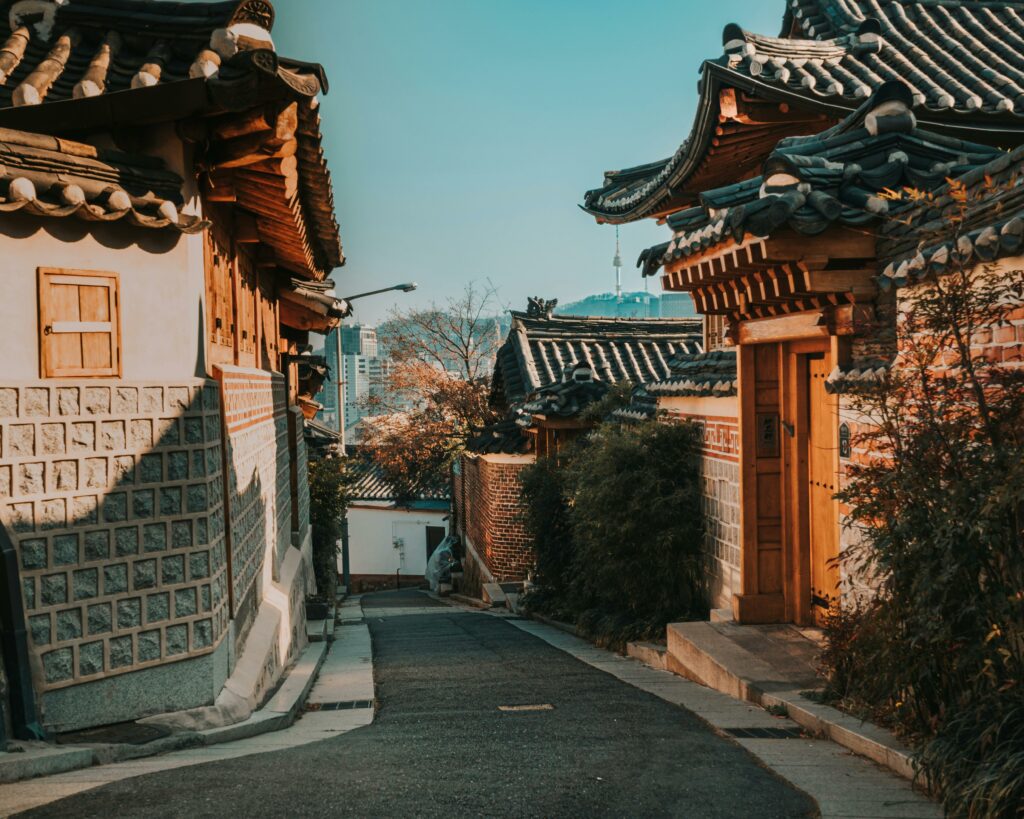
Hanok have curved tiled roofs, wooden beams and paper doors. Also, they are designed around a courtyard and heated through the floor. So, look up at the elegant roof lines from the hilltop lanes.
Viewpoints
Signs mark the « Bukchon views », photo spots along the walk. For example, Bukchon-ro 11-gil offers a famous view of rooftops against modern towers.
Workshops and Museums
Small workshops teach crafts such as knot-making and embroidery. In addition, private museums display traditional crafts and furniture. Then, relax in a tea house in a converted hanok.
Visiting Rules in Bukchon Hanok Village
Overtourism became a serious problem for residents. Therefore, since 2025, tourists may not enter the busiest part of the village between 5 pm and 10 am. In addition, visitors can be fined for breaking the curfew. So, check the signs and keep your voice down.
Tips for Visiting Bukchon Hanok Village
- Go in the morning: Arrive just after 10 am to avoid the biggest crowds.
- Be respectful: Never open doors or enter courtyards.
- Wear a hanbok: It also gives free entry to nearby palaces.
- Combine nearby sights: Insadong and the palaces are within walking distance.
Getting There
Take metro line 3 to Anguk station and use exit 2. Then, walk uphill for about 10 minutes. For more ideas, see the official Visit Seoul website.
Final Thoughts
In short, this quiet hillside shows a living piece of Korean tradition. Afterwards, visit Changdeokgung Palace, Gyeongbokgung Palace or Insadong. Discover all our Seoul travel guides.