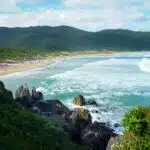
Fernando de Noronha is a volcanic archipelago about 350 km off the northeast coast of Brazil. It includes 21 islands, but only the main one is inhabited. Moreover, most of the archipelago is a marine national park and a UNESCO World Heritage site. As a result, it offers some of the clearest water and wildest beaches in South America.
This guide to Fernando de Noronha covers the best beaches, wildlife, activities and practical tips.
The Beaches of Fernando de Noronha
- Baía do Sancho: Often voted one of the best beaches in the world. Steep cliffs surround it, so you reach it via ladders through a rock crack.
- Praia do Leão: A wild beach where sea turtles nest. Also, it is often quiet.
- Cacimba do Padre: The island’s surf beach, with superb views of the Dois Irmãos rocks.
- Baía dos Porcos: A small cove with natural pools, perfect for snorkelling at low tide.


Marine Life and Snorkelling
The waters around the islands are protected. Therefore, marine life is abundant and easy to see. For example, you can swim with sea turtles, rays and colourful reef fish.
Bay of Dolphins
Every morning, hundreds of spinner dolphins gather in the Baía dos Golfinhos. Swimming is not allowed there. Instead, watch them from the clifftop viewpoint with binoculars. In fact, it is one of the largest gatherings of resident dolphins in the world.
Atalaia Natural Pool
At low tide, a large natural pool forms at Atalaia. Access is limited to small groups, so book in advance. Also, sunscreen is not allowed, because it harms the marine life.
Activities in Fernando de Noronha
- Hiking: Guided trails lead to wild beaches and viewpoints. Some require a park guide.
- Diving: Clear water and shipwrecks make the island one of Brazil’s top dive spots.
- Boat tours: They circle the main island and often meet dolphins. Then, they stop for snorkelling.
- Sunset at Forte do Boldró: This old fort is the classic spot to watch the sun go down.

Protecting Paradise
To protect the fragile environment, the number of visitors is controlled. So, every traveller pays a daily environmental fee. In addition, you need a national park ticket to visit most beaches. Finally, follow the rules: stay on trails, don’t touch animals and take your rubbish with you.
Best Time to Visit Fernando de Noronha
The dry season, roughly from August to February, brings sunny days and calm, clear water. In contrast, March to July is rainier, although showers are usually short. Surfers prefer December to March, when the waves are biggest. Meanwhile, turtles nest mainly from January to June.
How to Get to Fernando de Noronha
Flights arrive from Recife and Natal, in northeast Brazil. Seasonal flights sometimes also come from São Paulo. On the island, most visitors rent a buggy. Alternatively, a bus runs along the main road.
Tips for Visiting Fernando de Noronha
- Budget well: Fees, flights and rooms are expensive. Therefore, plan your budget ahead.
- Book early: Accommodation is limited, especially in high season.
- Bring reef-safe products: Also, pack a snorkel mask and water shoes.
- Stay at least four nights: This way, you can enjoy the beaches at their best tides.
For more about the protected area, see the UNESCO page for the Brazilian Atlantic Islands.
Experience the Magic of Fernando de Noronha
Fernando de Noronha is a true island paradise, carefully protected for the future. Above all, it rewards travellers who respect its nature. Afterwards, visit Salvador de Bahia or Florianópolis. Discover all our Brazil travel guides.