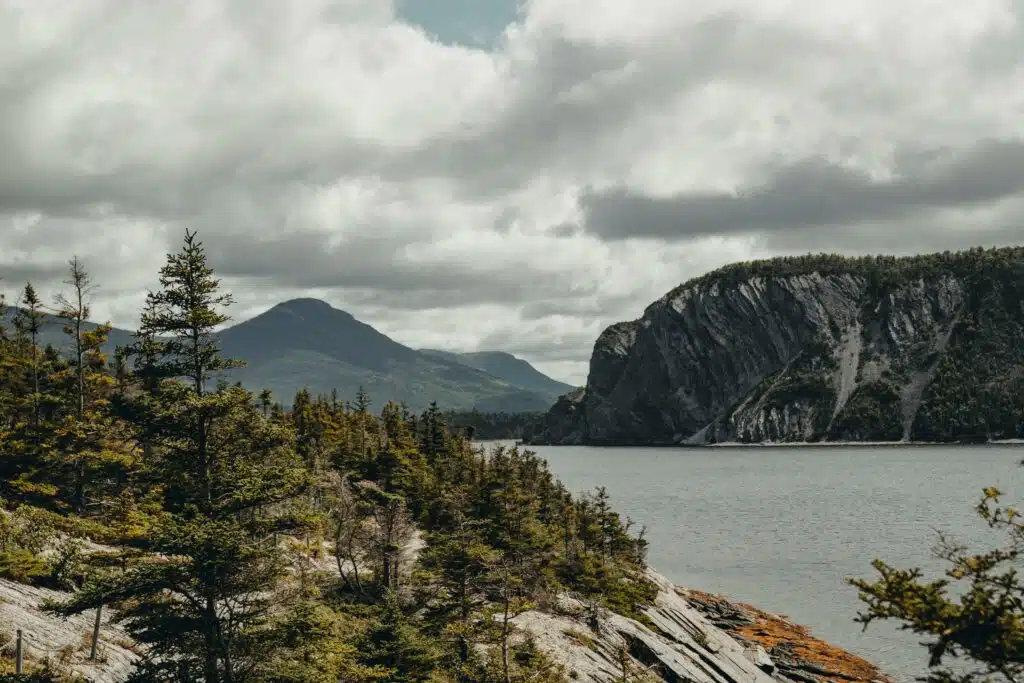
Gros Morne National Park lies on the wild west coast of Newfoundland, in eastern Canada. It is a UNESCO World Heritage site, famous for its fjords, mountains and rare geology. In fact, few places on Earth show so clearly how continents move. As a result, the park attracts hikers, photographers and science lovers alike.
Moreover, the scenery changes at every turn. You can walk on bare orange rock in the morning and cruise between giant cliffs in the afternoon. This guide covers the top sights, the best hikes and how to get there.
What to See in Gros Morne National Park
The Tablelands
The Tablelands of Gros Morne National Park look like the surface of Mars. Here, rock from the Earth’s mantle was pushed up to the surface millions of years ago. Because this rock is poor in nutrients, almost nothing grows on it. In summer, guided walks explain this amazing geology. Also, look for tiny carnivorous pitcher plants along the streams.
Western Brook Pond
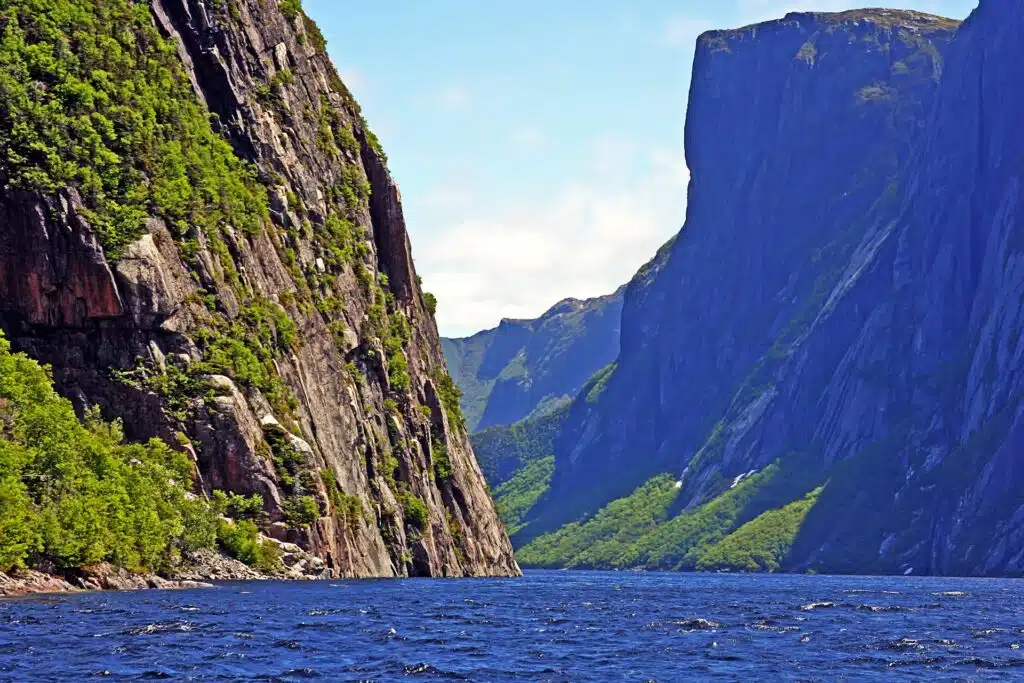
Western Brook Pond is a landlocked fjord with cliffs rising hundreds of metres. First, walk the flat 3 km boardwalk through bogs and forest. Then, board a boat tour between waterfalls and sheer rock walls. It is the most famous experience in the park, so book your tickets early.
Gros Morne Mountain
The park’s highest peak offers a tough 16 km round-trip hike. However, the reward is a sweeping view over fjords, lakes and the Long Range Mountains. Caribou and ptarmigan sometimes appear near the summit. Note that the upper trail usually closes in late spring to protect fragile plants.
Coastal Trails and Waterfalls
Green Gardens is a moderate coastal hike with sea stacks, meadows and sheep grazing on the cliffs. Similarly, Baker’s Brook Falls is an easy forest walk to a series of cascades. Both are ideal when you want nature without a steep climb.
Lobster Cove Head and the Discovery Centre
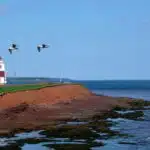
The red and white lighthouse at Lobster Cove Head overlooks the sea near Rocky Harbour. Inside, small exhibits tell the story of local fishing families. Meanwhile, the Discovery Centre near Woody Point explains the park’s geology and culture. It is a great first stop, especially with children.
Wildlife and Local Life
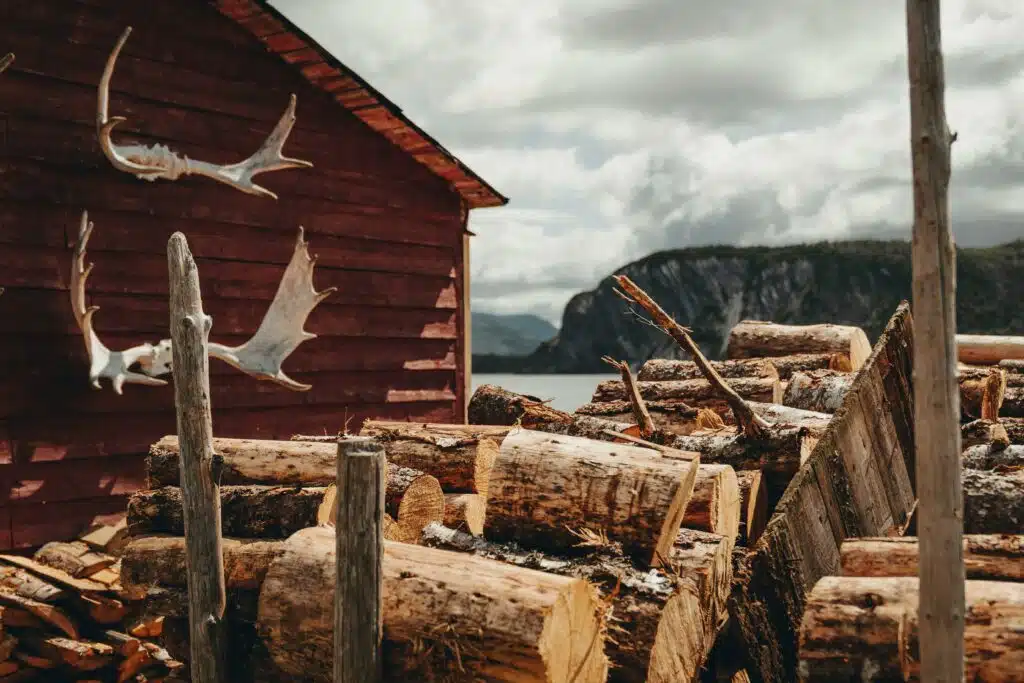
Moose are very common in the park, so drive carefully at dawn and dusk. Black bears, foxes and caribou also live here. Along the coast, you may even spot whales in summer. In addition, small fishing villages like Norris Point and Trout River offer fresh seafood and friendly Newfoundland music.
Tips for Visiting Gros Morne National Park
- Dress in layers: The weather changes quickly. So, always pack a rain jacket and a warm layer.
- Respect wildlife: Keep your distance from animals and store food properly.
- Check trail conditions: Ask at a visitor centre before long hikes. Also, carry enough water and snacks.
- Book early: Lodging is limited, especially in July and August. Therefore, reserve months ahead.
- Buy a park pass: All visitors to Gros Morne National Park need a daily or annual pass from Parks Canada.
Best Time to Visit Gros Morne National Park
Most services and boat tours run from June to September. July and August bring the warmest weather, but also the most visitors. In contrast, September offers autumn colours and quieter trails. In winter, the park becomes a destination for cross-country skiing and snowshoeing.
How to Get to Gros Morne National Park
- By air: Fly into Deer Lake Regional Airport (YDF), about 30 km from the park boundary. Then, rent a car at the airport.
- By car: Follow the Trans-Canada Highway to Deer Lake. From there, Route 430, the Viking Trail, leads into the park.
- By ferry: From North Sydney in Nova Scotia, take the ferry to Port aux Basques. Afterwards, drive about 300 km north.
For passes, trail updates and boat tour details, visit the official Parks Canada website.
Final Thoughts
Gros Morne National Park combines dramatic landscapes, rare geology and warm local culture. Above all, it rewards travelers who take their time. For more Canadian nature, also explore Banff, Jasper or Prince Edward Island. Discover all our Canada travel guides.