Korčula is a green island in the Adriatic Sea, off the coast of southern Croatia. Its walled old town sits on a small peninsula, surrounded by turquoise water. For this reason, it is often called “Little Dubrovnik”. Moreover, the island is known for white wines, sword dances and quiet coves.
Korčula is calmer than Hvar or Dubrovnik, yet it has plenty to see. This guide covers the old town, the best beaches, local food and how to get there.


Discovering Korčula Old Town
The old town is a small masterpiece of medieval planning. Its streets branch off the main street like the bones of a fish. In fact, this clever design lets cool breezes in while blocking strong winds. Therefore, the town stays pleasant even on hot days.
St. Mark’s Cathedral
St. Mark’s Cathedral stands on the main square. Its stone facade mixes Gothic and Renaissance styles, with carved animals and figures. Inside, look for paintings by the Venetian artist Tintoretto. Also, climb the bell tower for a great view over the red rooftops.
Marco Polo House
Local tradition says the explorer Marco Polo was born on Korčula. Historians still debate this claim. Nevertheless, a small museum and a tower are linked to his name. So, it is a fun stop, especially with children.
Town Walls and Towers
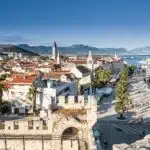
Strong walls and round towers once protected the town from attacks. Today, some towers house bars with sea views. Above all, the Land Gate and the Revelin Tower make a grand entrance.
The Moreška Sword Dance
The Moreška is a traditional sword dance performed for centuries. It tells the story of two kings fighting for a princess. In summer, shows usually take place several evenings a week. As a result, it is one of the island’s most memorable experiences.
Best Beaches on Korčula
- Vela Pržina, Lumbarda: A rare sandy beach, ideal for families. Also, vineyards surround the village.
- Pupnatska Luka: A beautiful pebble bay with bright blue water on the south coast.
- Vaja: A secluded pebble beach near the village of Račišće, reached by a footpath.
- Badija Island: A short boat ride from town, it has a Franciscan monastery and tame deer.

Wine and Food on Korčula
Wine has been made here since ancient times. For example, the rare Grk grape grows mainly in the sandy soils of Lumbarda. Meanwhile, the villages of Čara and Smokvica produce Pošip, a fresh white wine. Many family wineries welcome visitors for tastings.
For dinner, choose a konoba, a traditional tavern. Then, try grilled fish, octopus salad or pašticada, a slow-cooked beef stew. Also, taste local olive oil and almond cakes.
Hiking, Cycling and Boat Trips
Pine forests, olive groves and vineyards cover the island. So, quiet roads and trails are ideal for cycling and walking. For instance, a short hike leads to St. Anthony’s Hill, lined with old cypress trees. In addition, boat trips explore small islets such as Vrnik, once famous for its stone quarry.
Practical Tips for Visiting Korčula
- Best time to visit: May, June and September offer warm seas and fewer crowds. In contrast, July and August are busy.
- Book ahead: Rooms in the old town are limited. Therefore, reserve early for summer.
- Rent a scooter or car: Buses are infrequent, so a vehicle helps you reach remote beaches.
How to Get to Korčula
There is no airport on the island. Instead, fast catamarans link Korčula with Split and Dubrovnik. Alternatively, drive along the Pelješac peninsula to Orebić. From there, a short car ferry crosses to the island. For timetables and events, visit the official Croatia tourism website.
Final Thoughts on Korčula
Korčula combines medieval charm, fine wine and a slow island rhythm. Above all, it is perfect for travelers who want beauty without the crowds. Afterwards, visit nearby Mljet National Park. Discover all our Croatia travel guides.