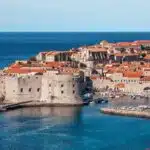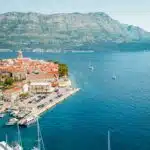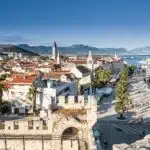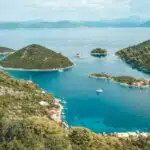
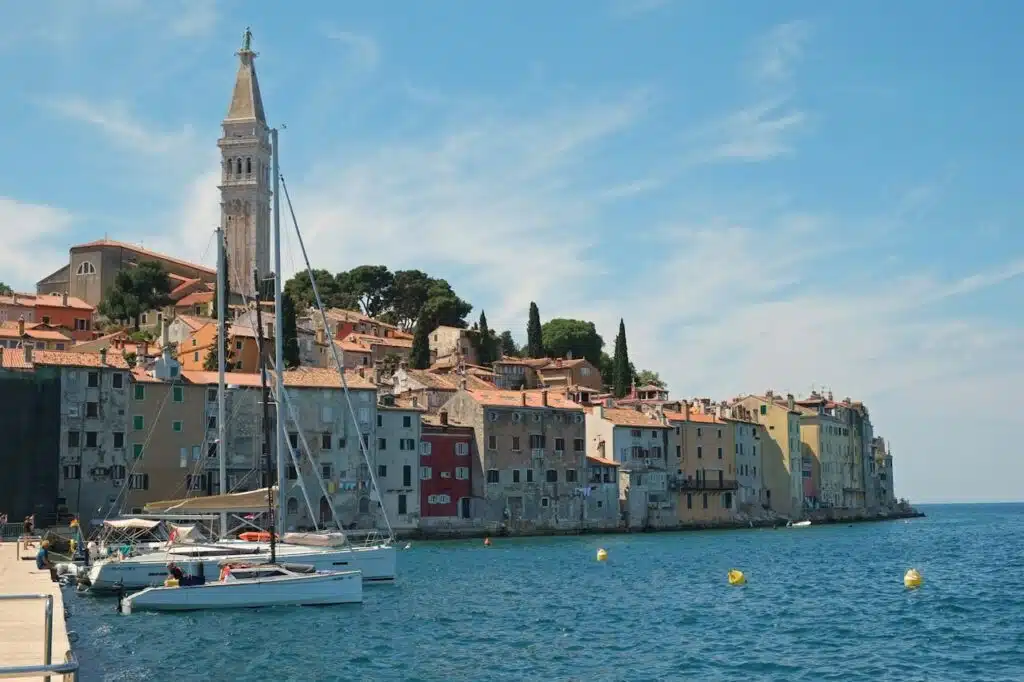
Rovinj is a colourful fishing town on the Istrian peninsula, in northwest Croatia. Its pastel houses crowd around a hill crowned by a tall bell tower. Rovinj was once an island, but the channel was filled in 1763. As a result, the old town still feels like it floats on the sea.
Moreover, Venetian, Roman and Slavic influences blend in its streets, food and language. This guide covers the old town, the best beaches, Istrian food and practical tips.
Exploring Rovinj Old Town
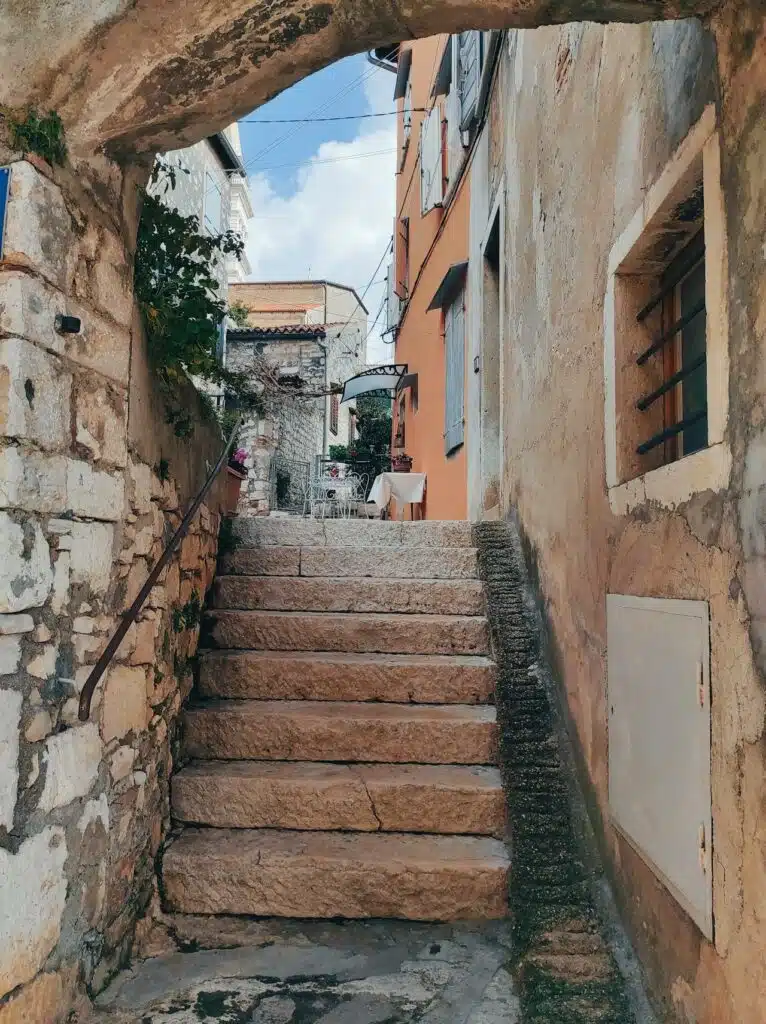
The old town is best explored on foot. Here, narrow cobbled lanes also climb between houses, galleries and small cafés. Also, some houses rise straight out of the water.
St. Euphemia’s Church
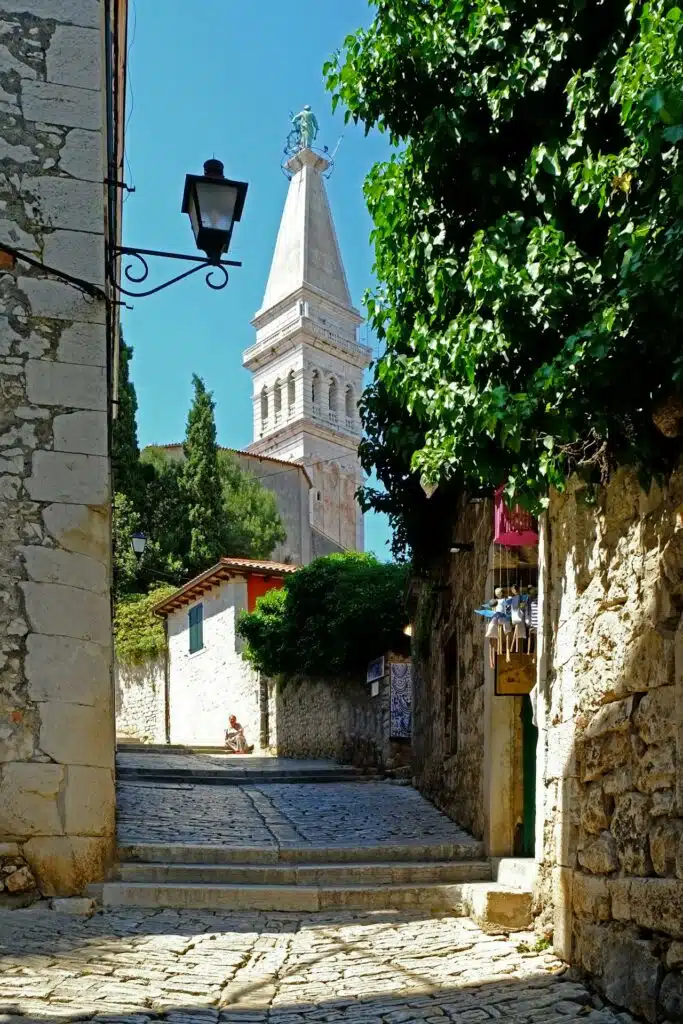
This baroque church stands at the highest point of town. Moreover, it is dedicated to the patron saint, whose stone tomb lies inside. In fact, its bell tower was modelled on St. Mark’s in Venice. So, climb its wooden stairs for a superb view of the islands.
Balbi’s Arch and Grisia Street
Balbi’s Arch, built in the 17th century, was once the main town gate. Beyond it, Grisia Street climbs towards the church. Indeed, it is lined with artists’ studios and galleries. Then, every August, it becomes a large open-air art exhibition.
Batana Eco-Museum
The batana is a traditional flat-bottomed fishing boat. This small museum also tells its story and the life of local fishermen. In summer, you can also join an evening ride in a batana, followed by local food.
Beaches and Nature Around Rovinj
- Golden Cape Forest Park: Just south of town, pine forests meet rocky coves. So, it is perfect for walking, cycling and swimming.
- Lone Bay: A popular pebble beach with clear, calm water inside the park.
- Red Island (St. Andrew’s): A short boat ride away, it offers quiet beaches and shady paths.
- Rovinj Archipelago: Boat tours visit some of the many small islands and hidden coves nearby.
A Taste of Istria
Istrian food mixes Mediterranean and Central European flavours. For example, local restaurants serve grilled fish, squid and a rich fish stew called brodetto. In addition, inland forests produce prized truffles. Therefore, truffle pasta appears on almost every menu.
Also, try the region’s excellent olive oil and Malvazija white wine. For picnic supplies, visit the green market near the harbour.
Best Time to Visit Rovinj
May, June and September offer warm weather and fewer crowds. In contrast, July and August are busy and more expensive. Winter is quiet, although many restaurants close.
Tips for Visiting Rovinj
- Park outside the centre: Cars cannot enter the old town. So, use the paid car parks nearby.
- Wear good shoes: The polished stones are slippery.
- Watch the sunset: The western seafront bars are perfect at golden hour.
How to Get to Rovinj
Pula Airport is about 40 km away. Alternatively, fly to Trieste or Venice and drive along the coast. In summer, fast ferries also link Rovinj with Venice. For more ideas, visit the official Croatia tourism website.
Final Thoughts on Rovinj
Rovinj combines Venetian charm, an artistic soul and a beautiful coastline. Above all, it is one of the most romantic towns on the Adriatic. Afterwards, continue to Plitvice Lakes, Zagreb or Split. Discover all our Croatia travel guides.