
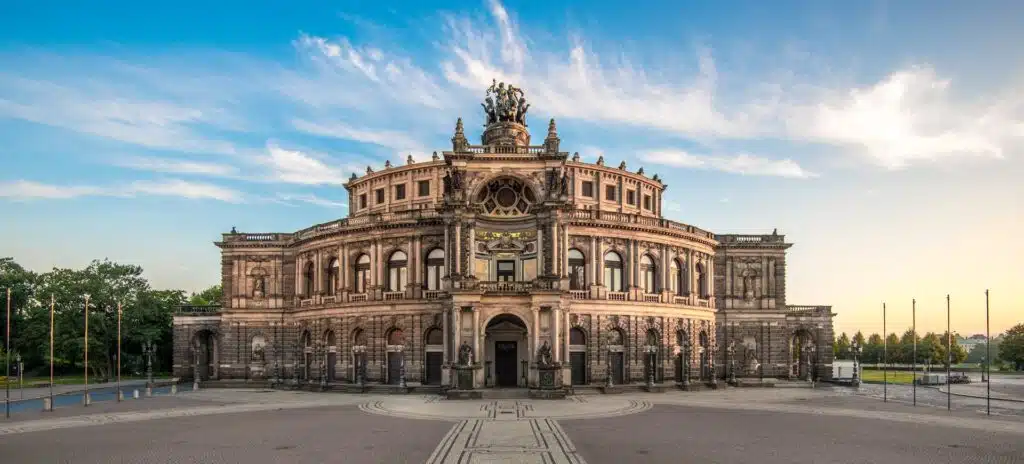


Germany is a fascinating country with a rich history, a lively culture and varied landscapes. It combines creative cities, fairytale castles, deep forests and romantic rivers. Moreover, its trains, beer gardens and Christmas markets are famous worldwide. So, it offers something for every traveller.
Most first trips start in Berlin or Munich. Then, travellers add Neuschwanstein Castle, the Rhine Valley or the Black Forest.
Read more about Germany
Top Cities in Germany
Berlin
First, the capital mixes history and creativity. Visit the Brandenburg Gate, the Reichstag and the Berlin Wall Memorial. Also, Museum Island holds treasures from ancient Egypt to modern art. In the evening, explore lively districts like Kreuzberg. Read our Berlin guide.
Munich
Next, the Bavarian capital is famous for Oktoberfest, beer gardens and Marienplatz. Also, visit Nymphenburg Palace and the English Garden. Moreover, the Alps are close, so day trips are easy. See our Munich guide.
Hamburg, Cologne and Frankfurt
In the north, Hamburg combines the old Speicherstadt warehouses with the modern Elbphilharmonie. On the Rhine, Cologne has a huge Gothic cathedral. Meanwhile, Frankfurt mixes skyscrapers with a rebuilt old town.
Dresden and Leipzig
In the east, Dresden rose again after the war, with its Frauenkirche and Zwinger Palace. Nearby, Leipzig is the city of Bach and of the peaceful 1989 protests.
Castles, Rivers and Historic Towns
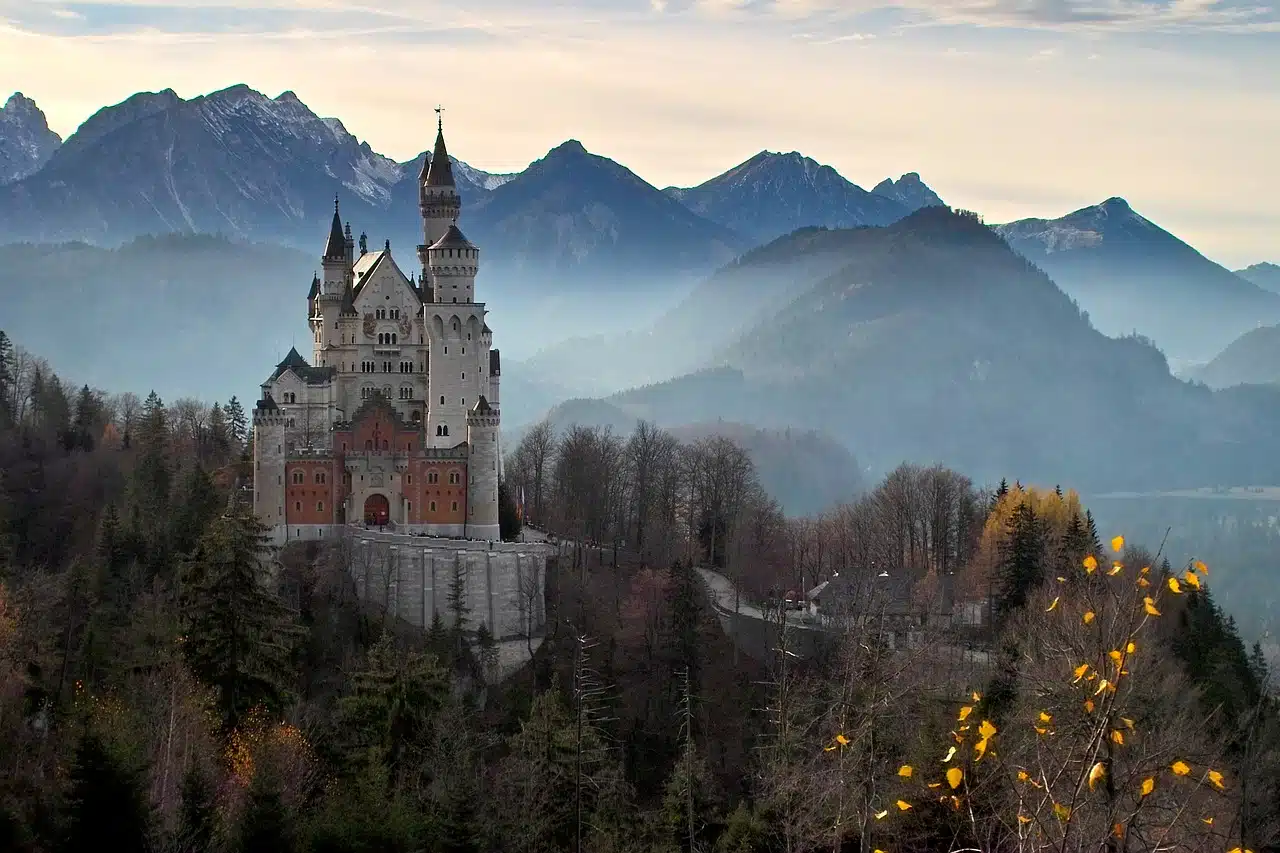
- Neuschwanstein Castle: King Ludwig II’s fairytale castle in the Bavarian Alps.
- Rothenburg ob der Tauber: A perfect medieval town on the Romantic Road.
- Heidelberg: A romantic castle above an old university town.
- Nuremberg: A medieval old town and a famous Christmas market.
- The Rhine and the Moselle: River cruises past castles and vineyards.
Nature in Germany
In the southwest, the Black Forest offers dense woods, waterfalls and cuckoo clocks. Further east, Garmisch-Partenkirchen sits below the Zugspitze, the highest peak in the country. So, it is a great base for hiking in summer and skiing in winter.
A Short History of Germany
For centuries, the land was divided into many small kingdoms and states. Meanwhile, the Holy Roman Empire left cathedrals, castles and walled towns. Then, in 1871, Germany became a single nation for the first time.
However, the 20th century brought two world wars and the crimes of the Nazi regime. After 1945, the country was split into East and West, and Berlin was divided by a wall. Finally, the Wall fell in 1989, and the country reunited in 1990. Today, memorials and museums help visitors understand this past.
Food and Drink in Germany
German cuisine is hearty and regional. For example, try sausages, pretzels, schnitzel and Bavarian Weißwurst. In the southwest, Black Forest cake is a must. Also, Berlin’s currywurst is a popular street snack.
Beer is part of the culture, with hundreds of local breweries. However, wine lovers will enjoy the Riesling of the Rhine and Moselle valleys. In winter, moreover, mulled wine called Glühwein warms up every Christmas market.
Festivals and Events
- February: Carnival, or Karneval, brings parades and costumes to Cologne.
- Spring and summer: beer gardens open, and wine festivals start in the Rhine valleys.
- Late September to early October: Oktoberfest takes over Munich.
- 3 October: German Unity Day celebrates reunification.
- Late November to December: Christmas markets light up almost every town.
Practical Tips
- Use the trains: ICE high-speed trains link the major cities.
- Carry some cash: cards are common, but some bakeries and bars still prefer cash.
- Plan around Sundays: most shops are closed, except at stations and airports.
- Return your bottles: a deposit, called Pfand, is refunded at supermarkets.
- Respect the bike lanes: cyclists ride fast, so do not walk on them.
For more ideas, see the official Germany tourism website.
Basic Words and Expressions to Use in Germany
Many Germans speak excellent English. Still, a few words of German make a real difference. Above all, greet people with “Guten Tag” when you enter a shop.
Finally, use “Sie” with strangers and “du” only with friends. If you make mistakes, don’t worry: the effort is what counts.
Germany Travel FAQ
We recommend 10 to 14 days for a first trip. That way, you can see Berlin, Munich and Neuschwanstein, plus the Rhine or the Black Forest. With one week, however, focus on two cities. With three weeks, you can add the north and the east.
Count €50 to €120 per person per day. Budget travellers stay near the lower end with hostels, regional trains and bakery lunches. However, Munich during Oktoberfest and big trade fairs are much more expensive.
The best period is May to October, with long days and outdoor beer gardens. September also brings Oktoberfest and wine festivals. In winter, by contrast, days are short and cold. Still, the Christmas markets and Alpine skiing make December special.
The country is part of the Schengen Area. Many visitors can stay up to 90 days without a visa. Still, always check the latest entry rules for your passport before you travel.
Yes, around 5 to 10% is usual for good service. However, Germans tell the waiter the total when paying, instead of leaving coins on the table.
Trains are the best option, with fast ICE trains between big cities. Also, regional day tickets can be very good value. For the Romantic Road or the Black Forest, however, a rental car gives you more freedom.
In short, the country offers history, culture, nature and great food. So, combine one or two cities with castles or a river valley. Explore our detailed guides for each destination.