


Spain is a sunny country in southwest Europe, full of history, art and lively traditions. It combines great cities, Moorish palaces, beaches and mountain villages. Moreover, its food culture, from tapas to paella, is famous worldwide. So, every region offers a different experience.
Most first trips combine Madrid or Barcelona with Andalusia. There, Seville, Granada and Córdoba reveal centuries of Moorish heritage.
Read more about Spain
Top Cities in Spain
Madrid
First, the capital has world-class museums, such as the Prado and the Reina Sofía, home of Picasso’s Guernica. Also, the Retiro Park is perfect for a slow afternoon. In the evening, tapas bars stay lively late into the night. Read our Madrid guide.
Barcelona
Next, Gaudí’s Sagrada Família and Park Güell are highlights of this Mediterranean city. Then, get lost in the Gothic Quarter and finish the day on the beach. See our Barcelona guide.
Andalusia
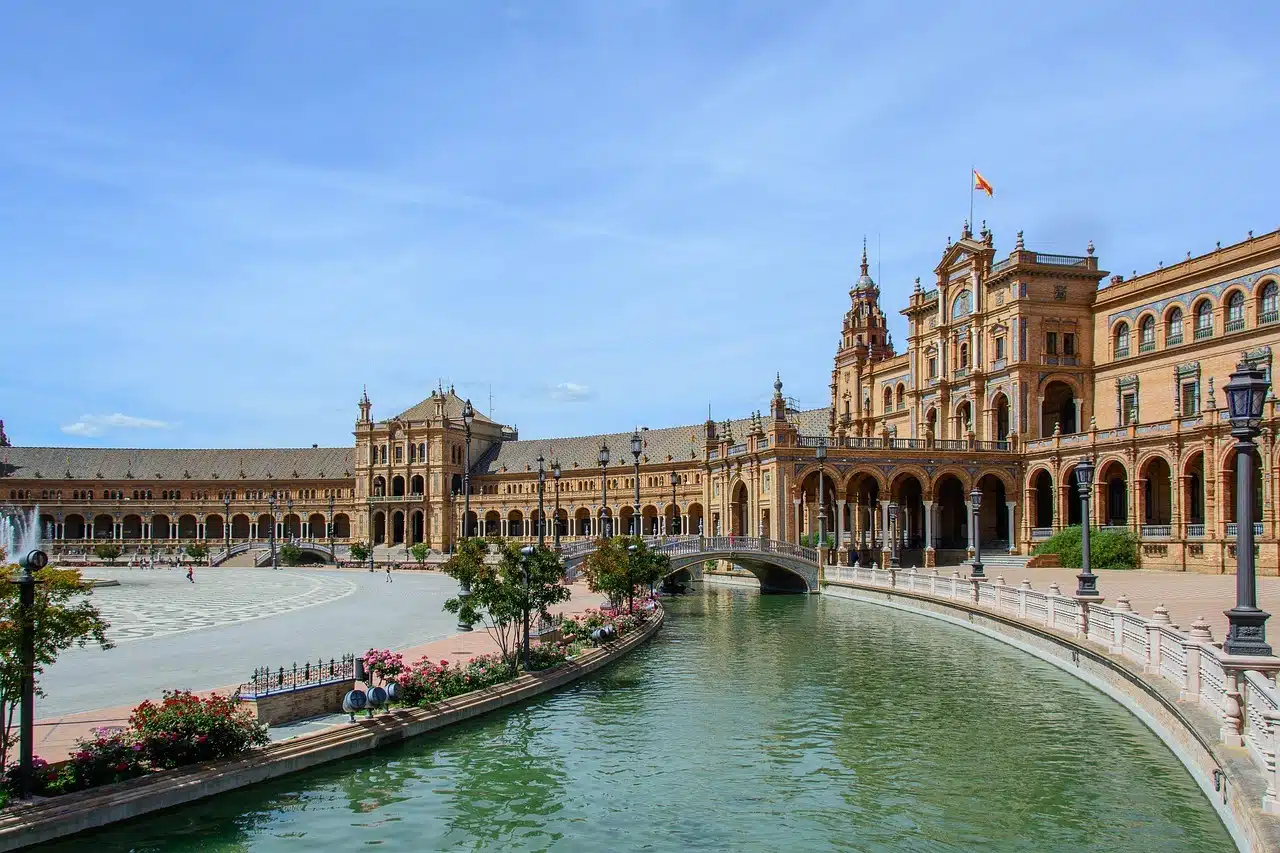
Further south, Seville is famous for flamenco and its Royal Alcázar. Also, Granada has the Alhambra, and Córdoba its great Mosque-Cathedral. In addition, Ronda sits above a dramatic gorge. However, avoid July and August, when temperatures often pass 40°C.
Valencia
Meanwhile, the birthplace of paella combines futuristic architecture and city beaches. In March, the Fallas festival fills the streets with giant figures and fireworks. Discover our Valencia guide.
Historic Towns
- Toledo: A hilltop city of churches, mosques and synagogues, an easy day trip from Madrid.
- Ávila: Complete medieval walls you can walk on.
- Cuenca: Hanging houses above a gorge.
- Santiago de Compostela: The end of the famous Camino pilgrimage route.
The North
Further north, the Basque Country offers great food in San Sebastián and modern art in Bilbao. In San Sebastián, small bites called pintxos line every bar counter. Meanwhile, La Rioja is the country’s most famous wine region. The north is also greener and cooler, so it is ideal in summer.
Islands and Coasts of Spain
In the Mediterranean, Mallorca, Menorca and Ibiza offer beautiful coves. Also, the Costa Brava combines cliffs and fishing villages. In the Atlantic, moreover, Tenerife has Mount Teide, the highest peak in the country. Thanks to its mild climate, the Canary Islands are pleasant all year.
A Short History of Spain
First, the Romans left aqueducts and theatres, such as the aqueduct of Segovia. Then, from 711, Moorish rulers shaped the south for nearly eight centuries. As a result, Andalusia still has the Alhambra and the Mosque-Cathedral of Córdoba.
In 1492, Granada fell and Columbus sailed to the Americas. After that, a vast empire brought great wealth and art. In the 20th century, however, a civil war led to the Franco dictatorship. Finally, democracy returned after 1975, and the country opened up to the world.
Food and Wine in Spain
First, try jamón ibérico, tortilla, patatas bravas and gazpacho. Also, every region has its own specialities and wines. Above all, enjoy the tradition of sharing tapas with friends.
For example, eat paella in Valencia, pintxos in San Sebastián and fried fish in Andalusia. For breakfast, churros with thick hot chocolate are a classic. At lunch, look for the menú del día, a set menu with great value. Moreover, many bars in Granada still serve a free tapa with each drink.
Festivals and Events
- March: Las Fallas in Valencia burns giant papier-mâché figures.
- Easter: Holy Week brings solemn processions, especially in Seville and Málaga.
- April or May: the Seville April Fair celebrates with flamenco dresses, horses and sherry.
- July: San Fermín in Pamplona is famous worldwide.
- August: La Tomatina turns Buñol into a giant tomato fight.
- December: Christmas markets and, on 31 December, twelve grapes at midnight.
Practical Tips
- Use high-speed trains: AVE trains link the major cities quickly.
- Eat late: Lunch is around 2 pm and dinner after 9 pm.
- Book major sights: The Alhambra and Sagrada Família sell out.
- Plan around the siesta: in small towns, shops often close in the early afternoon.
- Watch your belongings: pickpockets target crowded areas, such as Las Ramblas in Barcelona.
For more ideas, see the official Spain tourism website.
Basic Words and Expressions to Use in Spain
Many people speak some English in big cities and resorts. Still, a few words of Spanish make a real difference. Above all, start with a friendly “hola” before asking anything.
Finally, Spanish is spoken alongside Catalan, Basque and Galician in some regions. However, Spanish works everywhere, and locals appreciate any effort.
Spain Travel FAQ
We recommend 10 to 14 days for a first trip. That way, you can combine Madrid or Barcelona with Andalusia. With one week, however, focus on one city and one region. With three weeks, you can add the north or an island.
Count €50 to €120 per person per day. Budget travellers stay near the lower end with hostels, trains booked early and set lunch menus. However, Barcelona, Madrid and the islands in summer cost more.
The best period is April to June, with warm weather and blooming landscapes. September and October are also pleasant. In contrast, July and August are very hot inland and crowded on the coasts. In winter, the Canary Islands stay mild.
The country is part of the Schengen Area. Many visitors can stay up to 90 days without a visa. Still, always check the latest entry rules for your passport before you travel.
Tipping is not expected, because service is included. However, rounding up the bill or leaving a few euros for good service is appreciated.
High-speed AVE trains link Madrid with Barcelona, Seville, Valencia and many other cities. For villages and coastal roads, however, a rental car gives you more freedom. Between islands, use ferries or short flights.
In short, the country offers sunshine, art, history and unforgettable food. So, combine a big city with Andalusia or the coast. Explore our detailed guides for each destination.