The Northern Lights, or Aurora Borealis, are one of nature’s greatest shows. Ribbons of green, pink and violet light dance across the night sky. Canada is one of the best places on Earth to see them. In fact, much of the country’s north sits right under the auroral oval, the ring where auroras appear most often.
Seeing the Northern Lights in Canada is easier than many travelers think. Dark skies, vast wilderness and good tourist facilities make the experience comfortable. This guide explains where to go, when to travel, and how to boost your chances. It also covers photography tips, winter clothing and the best activities between aurora nights.
What Causes the Northern Lights?
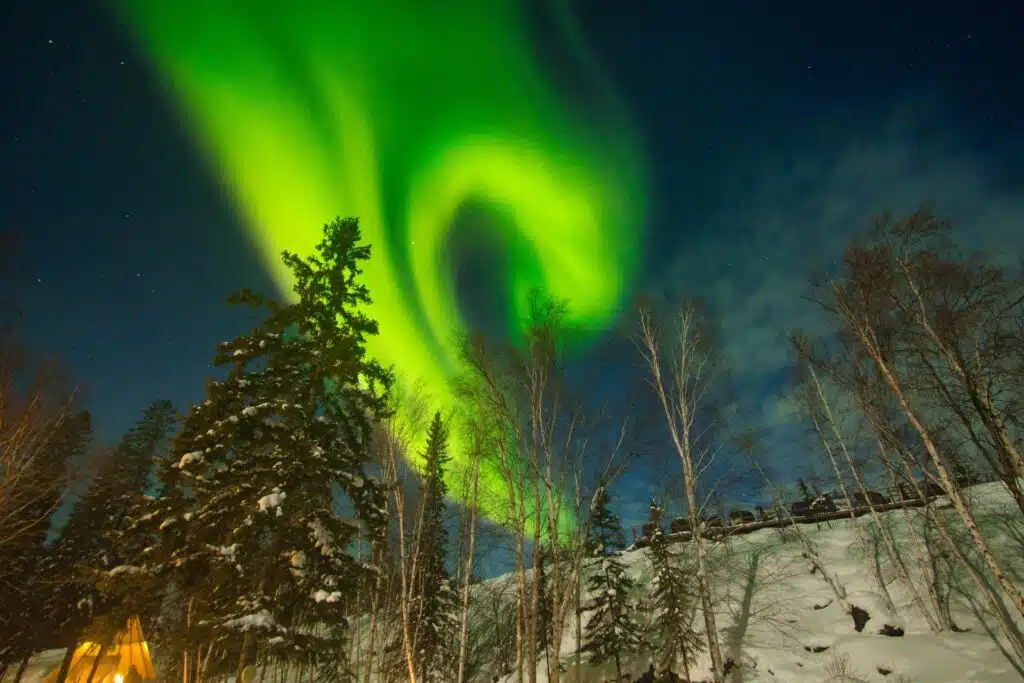
The aurora starts on the Sun. Solar winds send charged particles towards our planet. Earth’s magnetic field then guides these particles towards the poles. As a result, they collide with gases in the upper atmosphere and release light.
The colour depends on the gas and the altitude. For example, oxygen produces the classic green glow and rare red tones at high altitude. Nitrogen, on the other hand, creates blue and purple edges. Strong solar storms push the aurora further south, so even southern Canada can enjoy a show.
When to See the Northern Lights in Canada
The aurora happens all year round. However, you need dark skies to see it. For this reason, the main season runs from late August to mid-April. Summer nights in the far north are simply too bright.
- Late August to October: Milder nights and reflections on unfrozen lakes. This is ideal if you dislike extreme cold.
- November to February: The longest and darkest nights. Consequently, you get the most viewing hours, but temperatures can drop below -30°C.
- March to mid-April: Clear skies, longer days and great winter activities. Moreover, the weeks around the spring equinox often bring strong displays.
The best hours are usually between 10 pm and 2 am. Also, try to plan your trip around the new moon. A bright full moon can wash out weaker displays.
Where to See the Northern Lights in Canada
Canada offers many great aurora spots, from subarctic towns to mountain national parks. Here are the six best places, each with its own character.
1. Yellowknife, Northwest Territories
Best time: late August to early April.
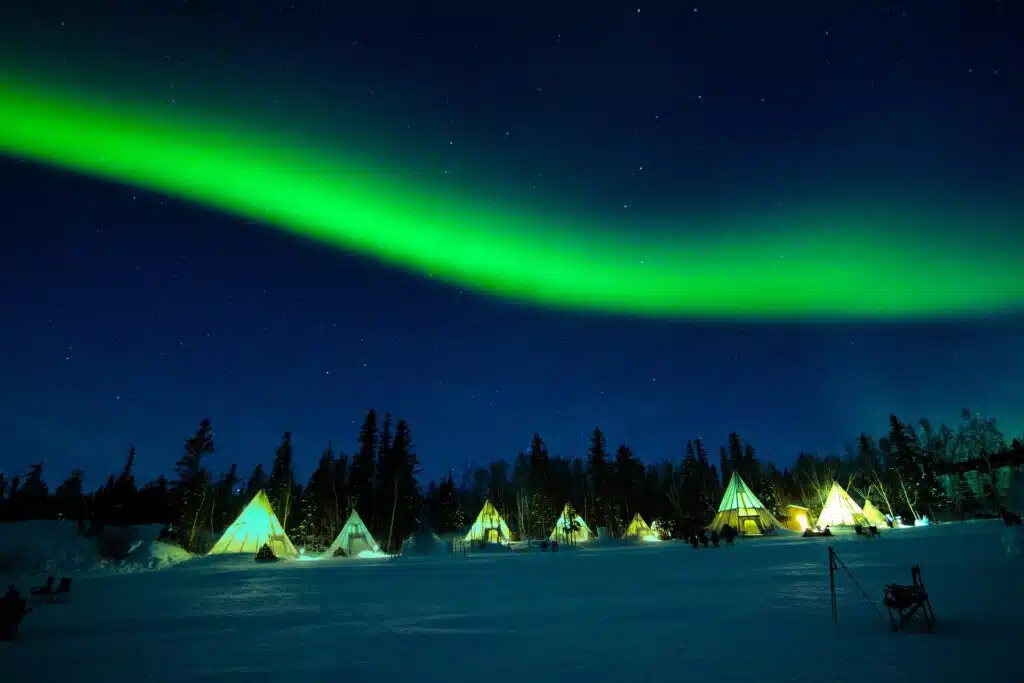
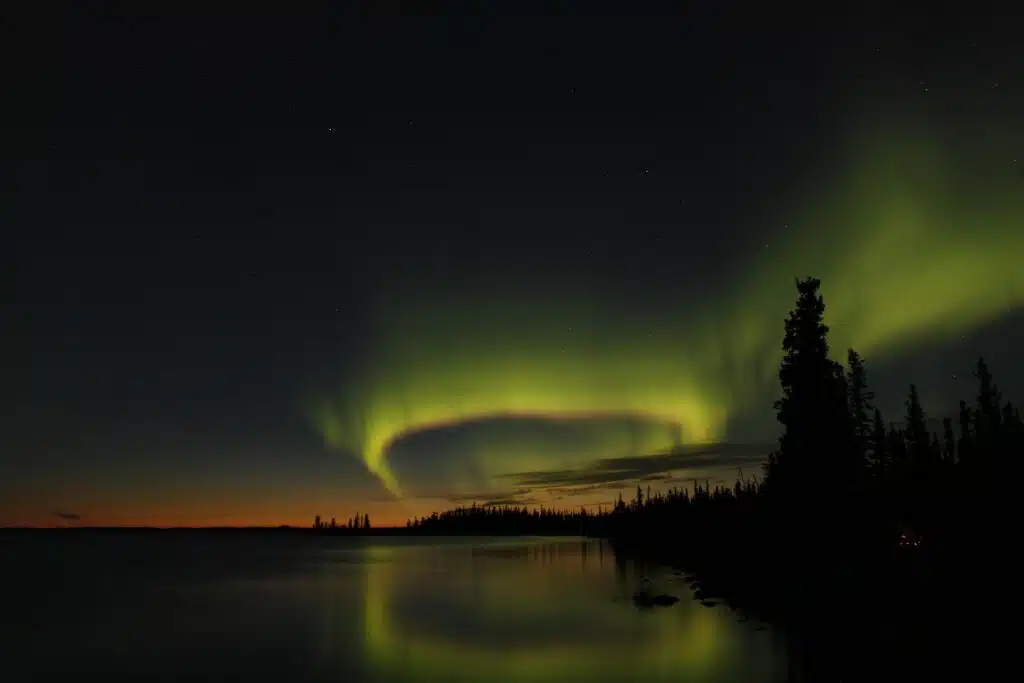
Yellowknife is often called the aurora capital of North America. It lies directly under the auroral oval and enjoys a dry, clear climate. As a result, visitors staying three nights or more have excellent odds of a sighting. Many lodges outside town offer heated teepees, hot drinks and guided night tours. In addition, the town has a friendly frontier feel and good restaurants.
2. Whitehorse, Yukon
Best time: late August to mid-April.
Whitehorse combines a lively small city with wild mountain scenery. Within minutes, you can leave the lights behind and reach dark viewing sites. Many tour operators provide transport, warm cabins and photography help. Furthermore, the nearby Takhini Hot Pools let you soak while watching the sky.
3. Churchill, Manitoba
Best time: January to March.
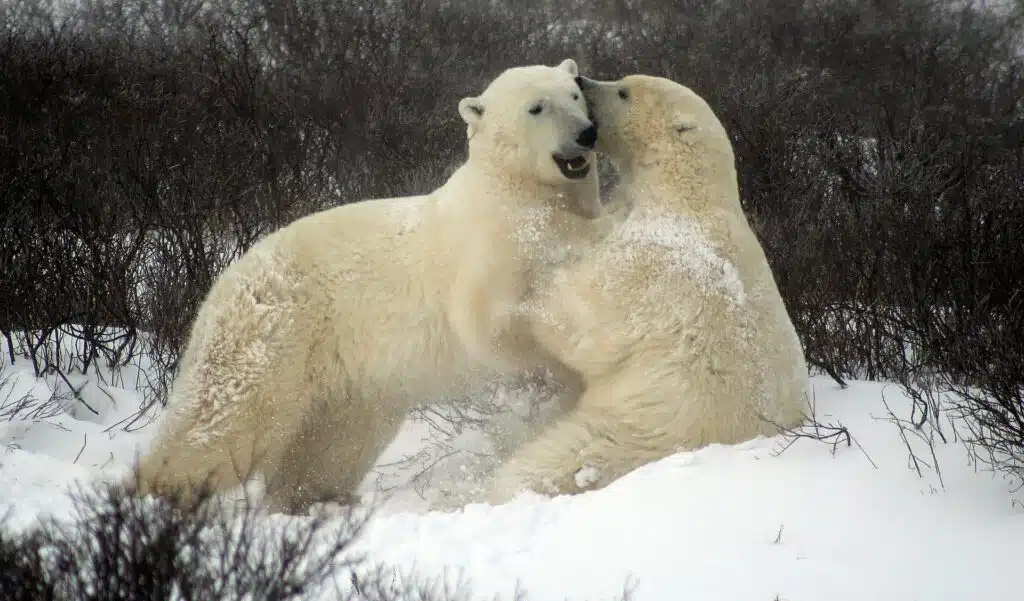
Churchill is famous for its polar bears on the shores of Hudson Bay. Yet it is also one of the world’s top aurora destinations. The town sits under the auroral oval and has very little light pollution. In winter, special viewing domes and tundra vehicles keep you warm while you wait. Plus, no road reaches Churchill, which adds to its remote charm.
4. Jasper National Park, Alberta
Best time: September to April.
Jasper National Park is one of the largest accessible Dark Sky Preserves in the world. Because light pollution is so low, faint auroras and the Milky Way stand out clearly. The aurora is less frequent here than in the north. Still, strong displays over the lakes and peaks are unforgettable. Every October, the Jasper Dark Sky Festival also celebrates the night sky with talks and stargazing.
5. Banff National Park, Alberta
Best time: September to April.
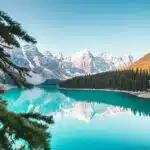
Sightings in Banff National Park are less regular. Even so, strong solar activity can paint the sky above Lake Minnewanka or Vermilion Lakes. This makes Banff a great bonus if you are already in the Rockies. For the best chance, drive away from the town lights and face north.
6. Iqaluit, Nunavut
Best time: late August to April.
Iqaluit is the capital of Nunavut, on Baffin Island in the Arctic. Here, you can watch the lights above an untouched landscape of ice and tundra. In addition, the city offers a rare insight into modern Inuit culture and art. It is a true adventure for travelers who want something different.
Tips for Viewing the Northern Lights
Seeing the aurora takes a little planning and some patience. These simple tips will greatly improve your chances.
- Stay several nights: Sightings are never guaranteed. Therefore, plan at least three or four nights in one place.
- Check the forecast: Use an aurora app or a space weather website. A Kp index of 3 or more is good in the north. Meanwhile, check the cloud forecast too.
- Escape the city lights: Even a small town creates glare. Instead, head to a lake, a field or an organized viewing site.
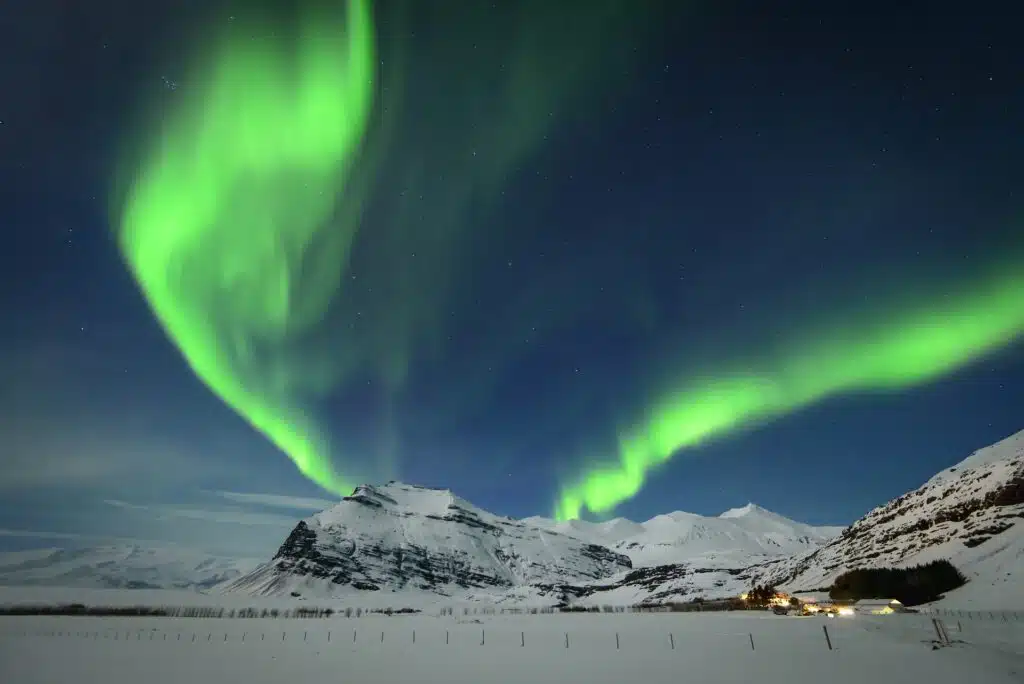
- Look north and be patient: The aurora often starts as a pale arc. Then, it can suddenly explode into moving curtains of colour.
- Let your eyes adapt: Avoid your phone screen for 20 minutes. As a result, your night vision will reveal much fainter lights.
- Join a guided tour: Local guides know the best spots and read the sky well. Besides, they often provide heated shelters and hot drinks.
What to Wear
Winter nights in northern Canada are extremely cold. In Yellowknife, for instance, January nights often fall below -30°C. So, dress in three layers: thermal base layers, a fleece, and an insulated parka. Also, wear snow boots rated for extreme cold, a warm hat, a neck warmer and mittens. Many tour operators rent cold-weather gear, which saves space in your suitcase.
How to Photograph the Aurora
Your camera often sees more colour than your eyes. To capture it, use a sturdy tripod and switch to manual mode. Then, try these starting settings:
- Aperture: as wide as possible, ideally f/2.8 or lower.
- ISO: between 1600 and 3200.
- Shutter speed: 5 to 15 seconds. Use shorter times when the lights move fast.
- Focus: manual, set on a distant star or light.
Modern smartphones also work well in night mode. Just rest the phone on something stable. Finally, keep spare batteries in an inside pocket, because the cold drains them quickly.
Other Activities Under the Northern Lights
Aurora hunting happens at night, so your days are free. Fortunately, Canada’s winter offers plenty of exciting ways to fill them.
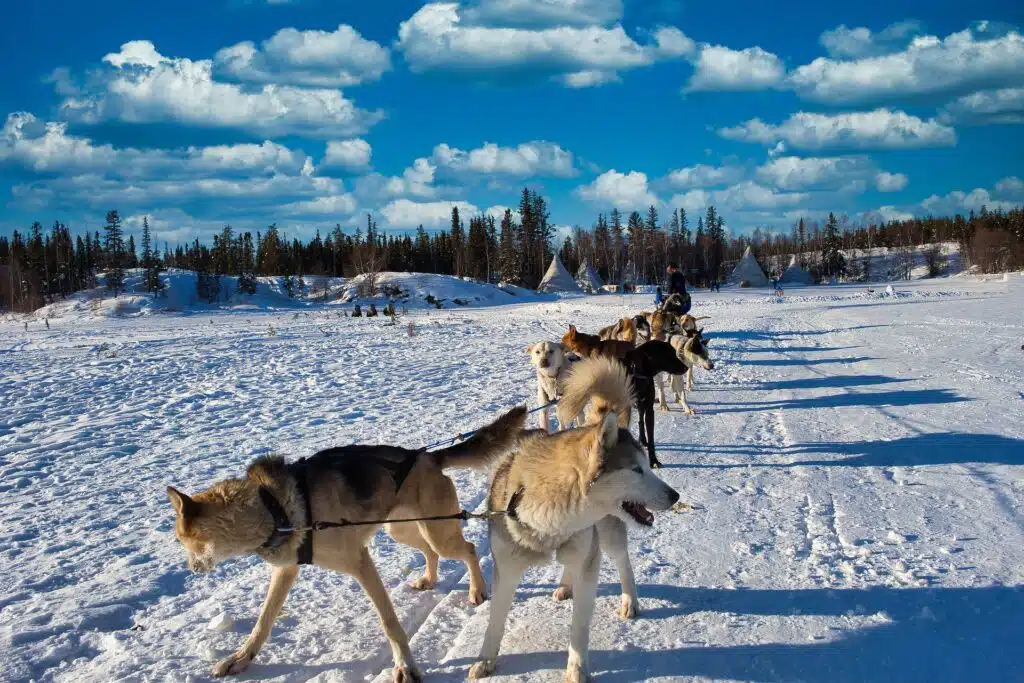
- Dog sledding: Glide through snowy forests behind a team of huskies. Some tours even run at night under the aurora.
- Snowshoeing: Explore quiet trails at your own pace. It is a peaceful way to enjoy the winter landscape.
- Ice fishing: Relax in a warm hut on a frozen lake. Then, cook your catch for a true northern lunch.
- Hot springs: Soak in natural pools, such as those in Banff, Jasper or near Whitehorse.
- Photography tours: Learn from experts how to capture the lights at their best.
- Winter hiking: Trek through snow-covered valleys and frozen canyons, like Maligne Canyon in Jasper.
- Polar bear viewing: In Churchill, combine an autumn aurora trip with a polar bear safari in October or November.
- Snowmobiling: Race across frozen lakes and open tundra with an experienced guide.
- Indigenous cultural experiences: Hear traditional stories and learn how northern peoples live on the land.
- Winter festivals: Enjoy ice sculptures, snow castles and local music at northern winter celebrations.
The Aurora in Indigenous Culture
Long before tourists arrived, northern peoples told stories about the lights. Their meanings vary from one community to another. For example, some Inuit stories describe the aurora as the spirits of ancestors playing a ball game. Other traditions advise people not to whistle at the lights. Today, several Indigenous-owned tour companies share these stories around the campfire. Consequently, an aurora night becomes a cultural experience as well as a natural one.
How to Get There
Most aurora destinations are remote, so flying is usually the easiest option. Here is how to reach each one.
- Yellowknife: Fly into Yellowknife Airport (YZF) from Vancouver, Calgary or Edmonton. Alternatively, it is a long but scenic drive of about 15 hours from Edmonton.
- Whitehorse: Fly into Erik Nielsen Whitehorse International Airport (YXY) from Vancouver, Calgary or Edmonton.
- Churchill: Fly into Churchill Airport (YYQ) from Winnipeg. Otherwise, take the VIA Rail train from Winnipeg, a journey of about two days. Seats are limited, so book early.
- Jasper National Park: Fly into Edmonton (YEG) or Calgary (YYC). Then, drive about 4 hours to Jasper. The VIA Rail train from Vancouver or Edmonton is another scenic option.
- Banff National Park: Fly into Calgary International Airport (YYC) and drive about 1.5 hours west.
- Iqaluit: Fly into Iqaluit Airport (YFB) from Ottawa or Montreal. Direct flights are available.
Combine Your Aurora Trip with More of Canada
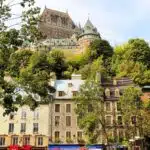
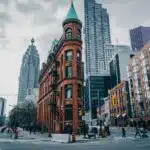
Many travelers connect through a big city on the way north. So, why not add a few days? Vancouver pairs well with a Yukon trip. Similarly, Toronto and Quebec City are great stops before or after the Arctic. In the Rockies, you can also ski at Whistler Blackcomb or catch a hockey game in a local arena.
Northern Lights in Canada: FAQ
What is the best month to see the Northern Lights in Canada?
There is no single best month. However, September and March combine dark nights, clear skies and milder temperatures. December to February offers the longest nights, but also the coldest weather.
Can you see the aurora from southern Canada?
Yes, during strong geomagnetic storms. In those cases, the lights can appear above cities near the US border. Still, the far north offers far more reliable sightings.
How many nights should I stay?
Plan for at least three nights, and ideally four or more. This way, a cloudy night will not ruin your trip.
Is it too cold for children?
Not with the right gear. In fact, many lodges have heated cabins where families can wait in comfort. Autumn trips are also a gentler option for young travelers.
Final Thoughts
Watching the Northern Lights in Canada is a once-in-a-lifetime experience. Choose a spot under the auroral oval, stay several nights, and dress warmly. Above all, be patient. When the sky finally starts to dance, every cold minute will be worth it. Ready to plan more? Discover all our Canada travel guides.