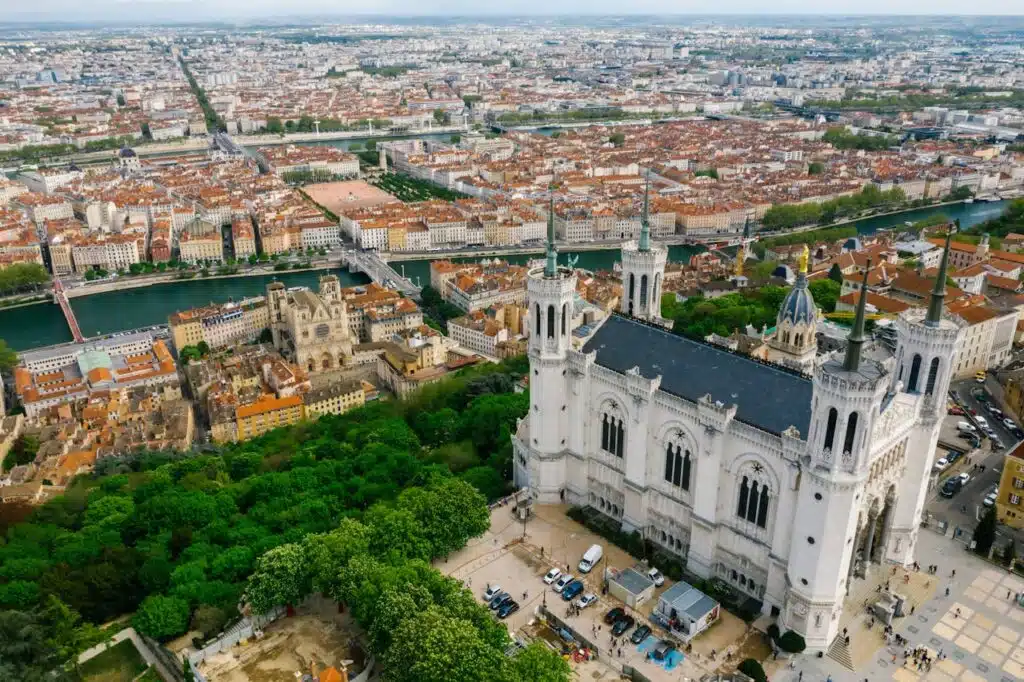
Lyon is the third-largest city in France, at the meeting point of the Rhône and Saône rivers. In addition, it has Roman ruins, a huge Renaissance old town and lively modern districts. Moreover, it is often called the food capital of France. As a result, Lyon is a perfect city break for history and food lovers.
Its historic centre is also a UNESCO World Heritage site. So, this guide covers the top sights, local food, festivals and practical tips.
Discovering Historic Lyon
Vieux Lyon and the Traboules
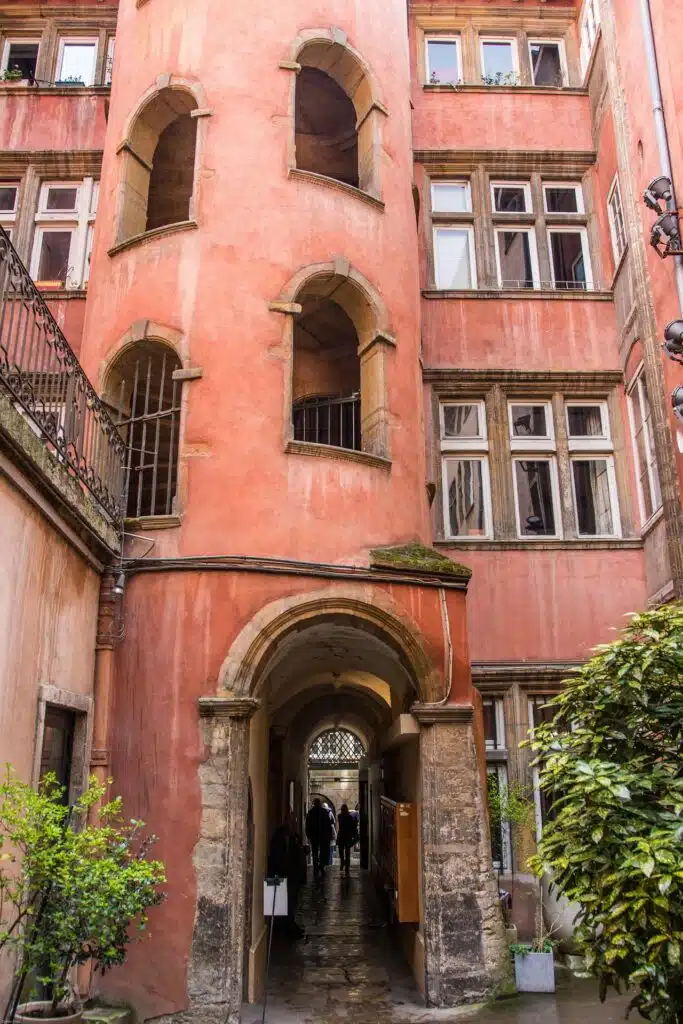
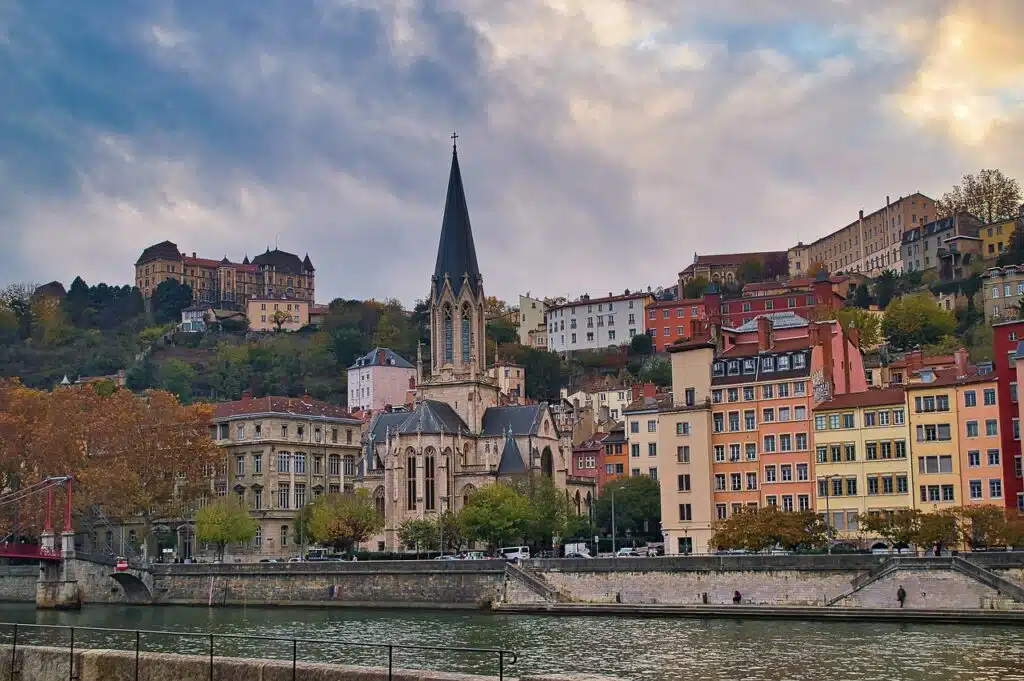
Vieux Lyon is one of the largest Renaissance districts in Europe. Moreover, pastel facades hide elegant courtyards and spiral staircases. Also, secret passages called traboules run through the buildings. In the past, silk workers used them to carry fabric while staying dry. Today, many are open to visitors during the day.
Fourvière Hill
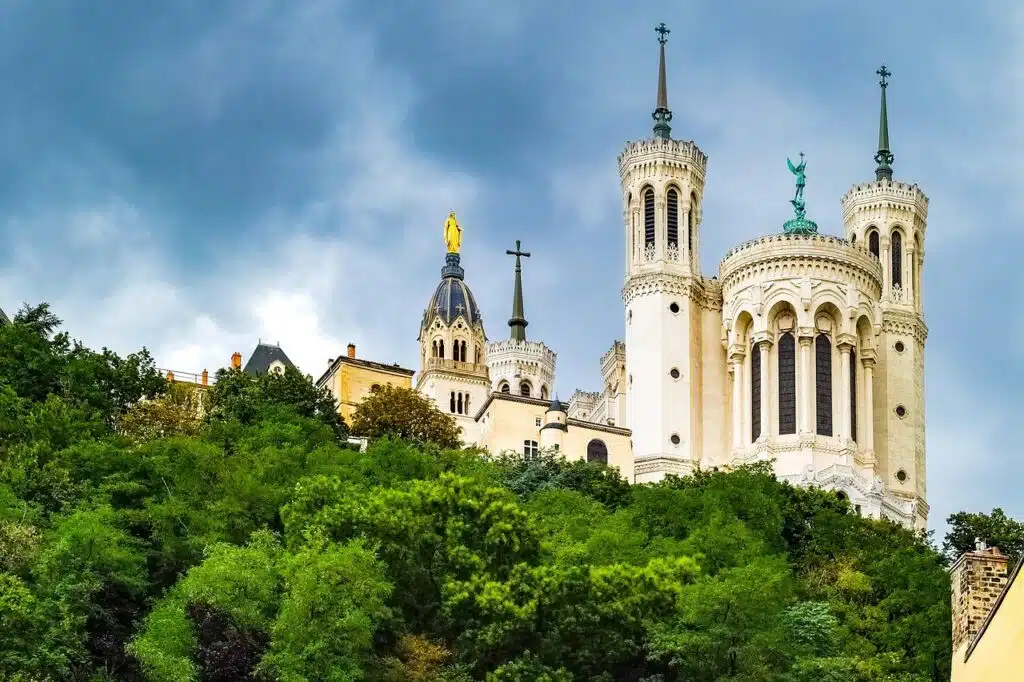
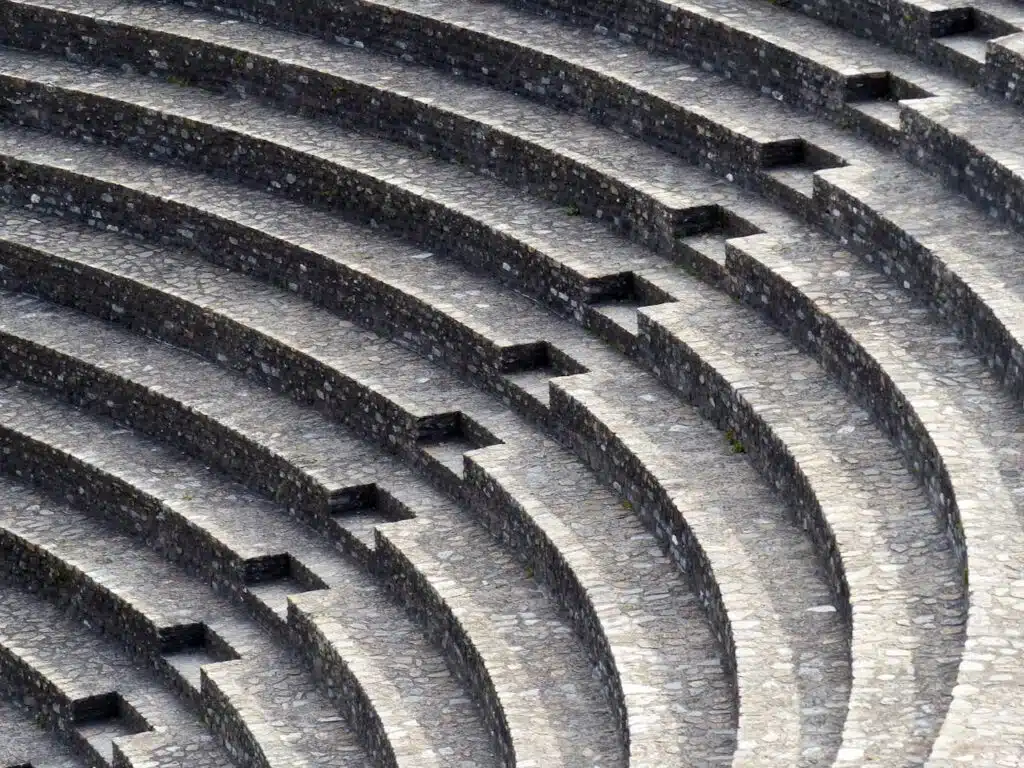
Above the old town, Fourvière Hill is crowned by a white basilica built in the 19th century. Inside, however, it is covered in golden mosaics. Then, walk down to the Roman theatre, built around 15 BC. Also, in summer, it hosts the Nuits de Fourvière festival.
Presqu’île, Bellecour and Terreaux
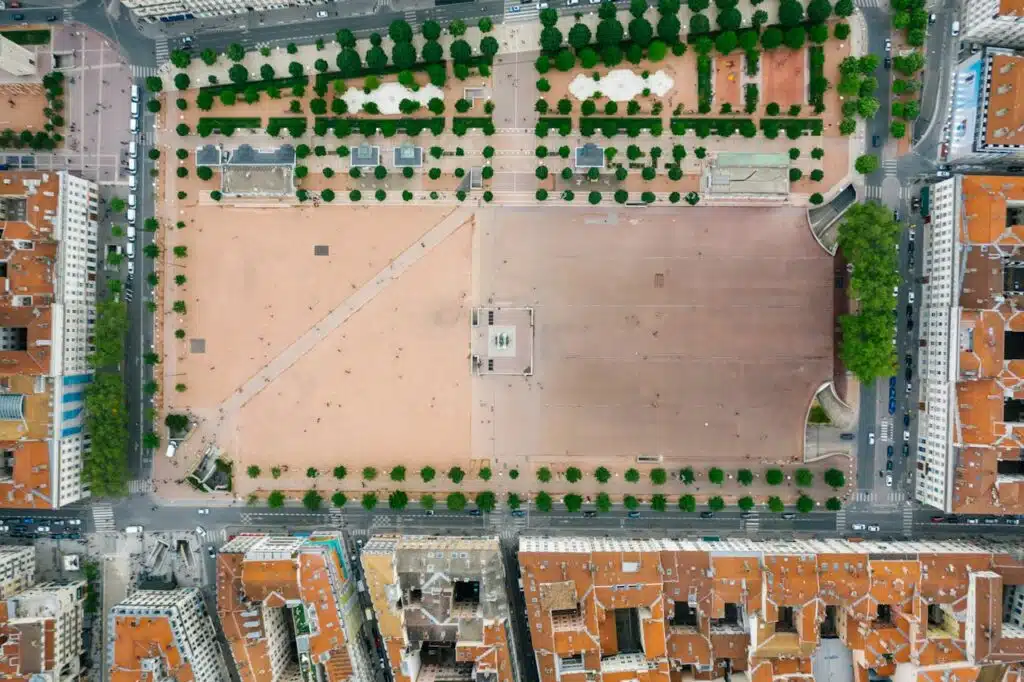
Between the two rivers, the Presqu’île is the city’s commercial heart. For example, Place Bellecour is one of the largest open squares in Europe. Further north, Place des Terreaux features a grand fountain by Bartholdi, creator of the Statue of Liberty. In addition, the square is home to the City Hall and the Museum of Fine Arts.
The Rhône and Saône Rivers
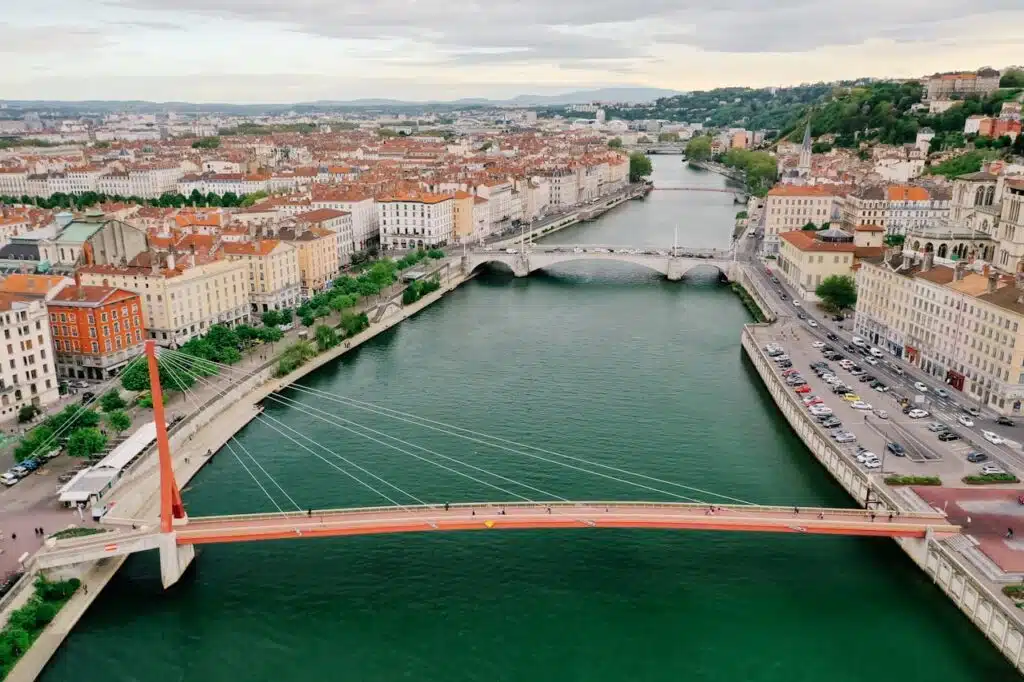
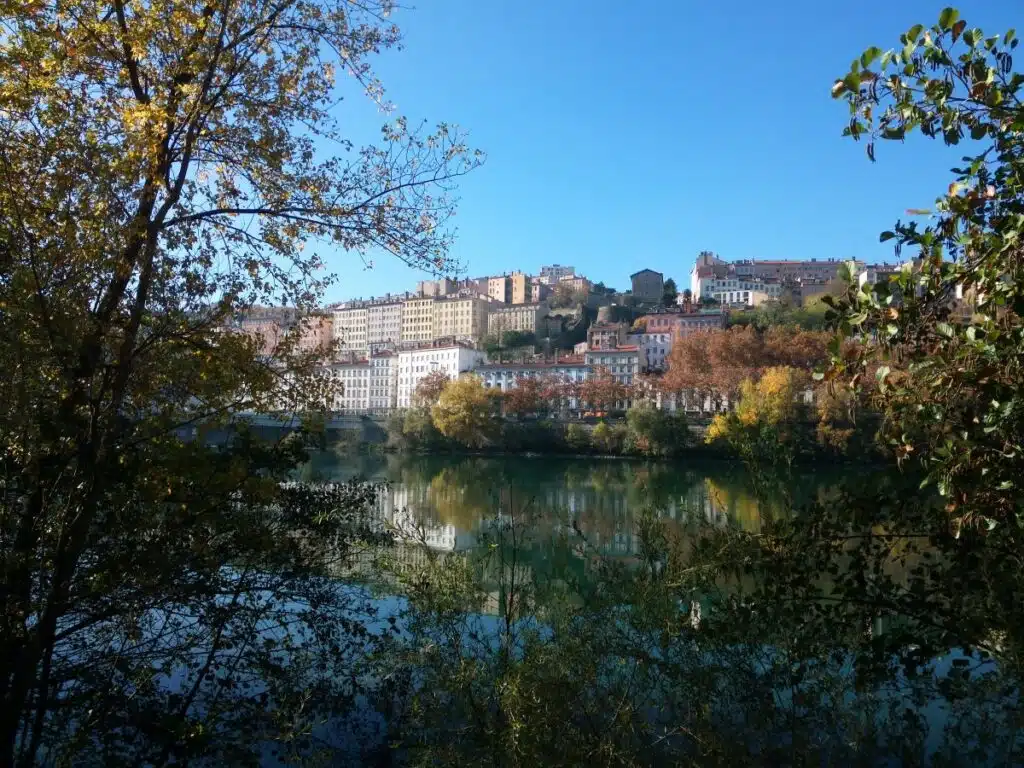
Above all, the two rivers give Lyon its character. The Saône is calm and lined with old houses. In contrast, the Rhône is wider, with long riverside parks. As a result, its banks are perfect for walking, cycling or an evening drink on a moored boat. Also, river cruises offer a different view of the bridges.
Lyon: the Culinary Capital of France
In fact, food is central to life in Lyon. Above all, eat in a bouchon, a small traditional restaurant. For example, try:
- Quenelles: Light dumplings, often served with a creamy crayfish sauce.
- Salade lyonnaise: Frisée lettuce with bacon, croutons and a poached egg.
- Cervelle de canut: A fresh cheese spread with herbs and garlic.
- Praline tart: A bright pink dessert made with sugared almonds.
Also, visit Les Halles Paul Bocuse, a covered market named after the famous chef.
Museums and Festivals in Lyon
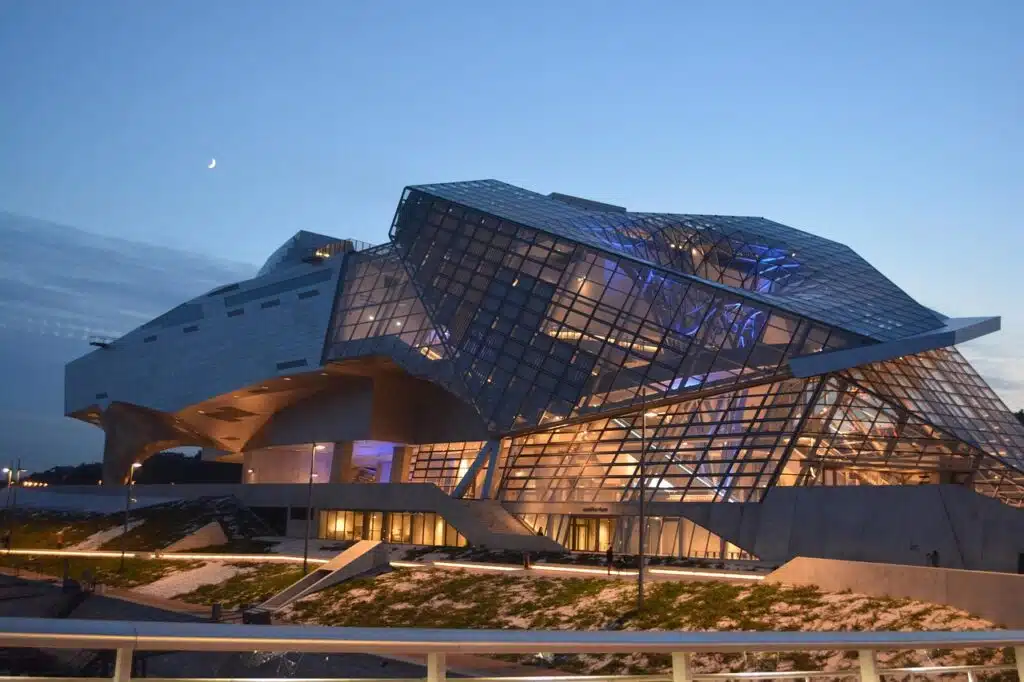
- Musée des Confluences: A futuristic science and anthropology museum where the two rivers meet.
- Museum of Fine Arts: Set in a former abbey, it covers art from ancient Egypt to modern times.
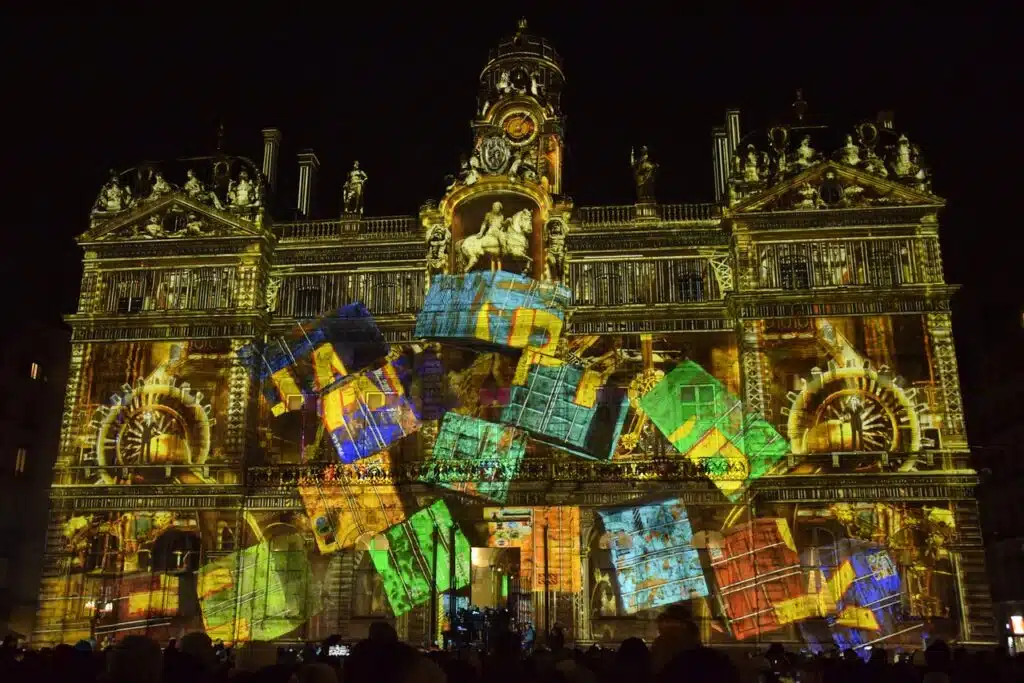
- Festival of Lights: Every December, around the 8th, light shows transform buildings across the city.
Nearby Day Trips
North of the city, for example, the Beaujolais hills offer vineyards and golden-stone villages. Meanwhile, the medieval village of Pérouges is famous for its sugary galette. Both are less than an hour away.
Tips for Visiting Lyon
- Best time: Spring and autumn are mild. However, December is magical during the Festival of Lights.
- Getting around: Metro, trams and funiculars cover the city. Also, the centre is easy to walk.
- Lyon City Card: It includes transport and many museums.
- Book bouchons: The best ones fill up, especially on weekends.
How to Get to Lyon
Today, high-speed trains link Paris and Lyon in about two hours. In addition, Lyon airport has flights across Europe. For more information, visit the official Lyon tourism website.
Final Thoughts on Lyon
Lyon blends history, gastronomy and riverside life in an authentic French city. Afterwards, continue to the French Alps or Provence. Discover all our France travel guides.