


Greece is the cradle of Western civilization, where ancient history meets breathtaking landscapes. It combines famous ruins, whitewashed villages and thousands of islands in a turquoise sea. Moreover, its food and hospitality make every visitor feel welcome. So, it suits history lovers, hikers and beach lovers alike.
Most first trips combine Athens with one or two islands, such as Santorini, Mykonos or Crete. On the mainland, travellers also add Meteora and Delphi.
Read more about Greece
Athens and the Ancient Sites
First, the capital is dominated by the Acropolis and the Parthenon. Then, visit the Acropolis Museum and stroll through the old Plaka district. In the evening, rooftop bars offer great views of the lit-up temples. Read our Athens guide.
- Delphi: Once seen as the centre of the world, with the Temple of Apollo.
- Olympia: The birthplace of the Olympic Games.
- Meteora: Monasteries perched on top of giant rock pillars.
The Greek Islands
Santorini and Mykonos
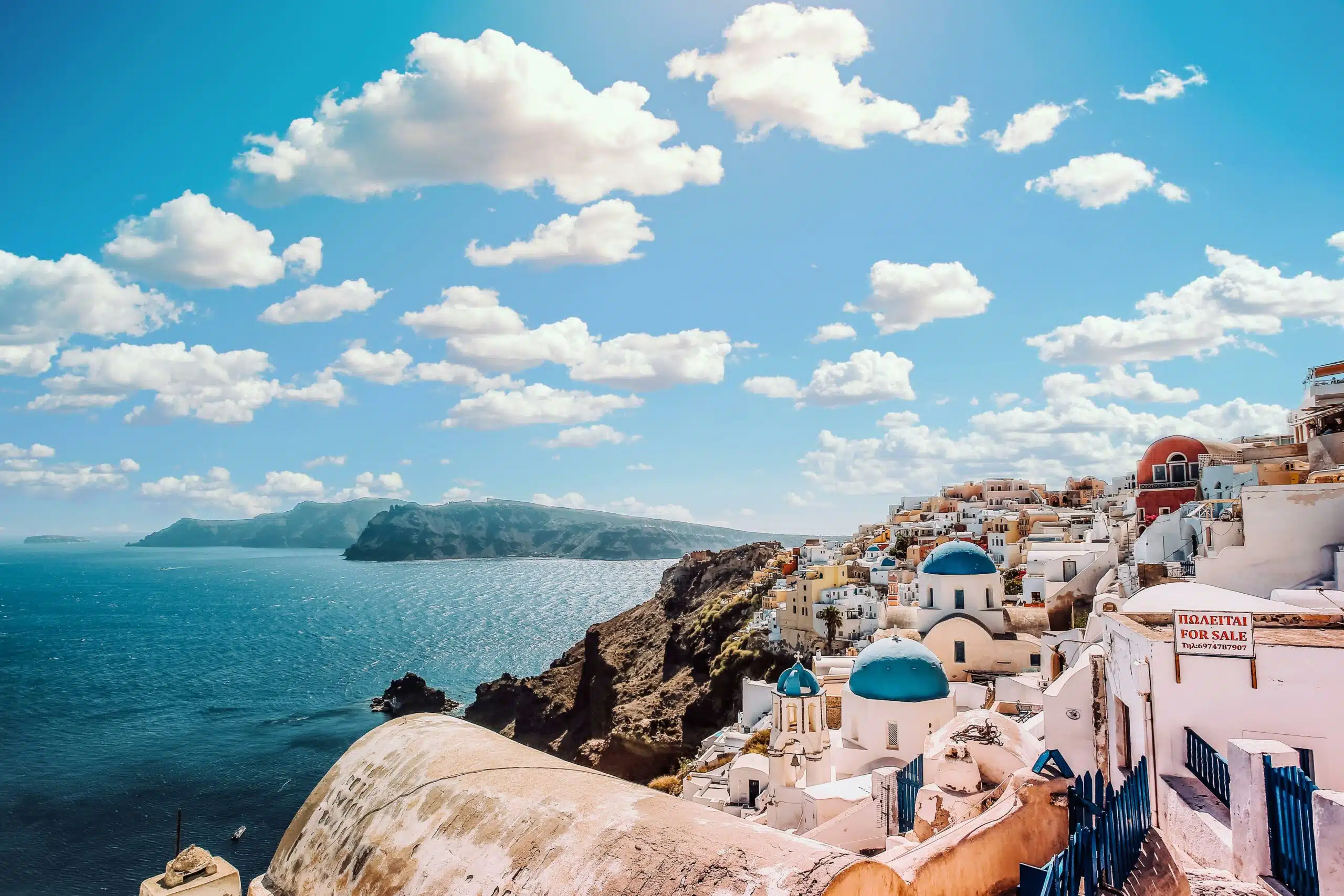
In the Cyclades, Santorini is famous for its volcanic caldera and sunsets in Oia. However, it gets very crowded in summer, so visit early or in the shoulder season. Meanwhile, Mykonos combines windmills, beaches and a lively nightlife.
Crete
Also, Crete, the largest island, has the Minoan palace of Knossos and the charming port of Chania. In addition, hikers love the Samaria Gorge. Since it is so big, plan at least five days there.
Rhodes and Corfu
In the southeast, Rhodes has a medieval old town built by the Knights of St John. In contrast, Corfu, in the Ionian Sea, is green and shows a Venetian influence.
Nature and Mountains of Greece
Mount Olympus, the mythical home of the gods, offers a challenging hike with great views. Also, the Peloponnese has olive groves, castles and quiet beaches. Moreover, the mainland is far less crowded than the islands in summer.
A Short History of Greece
First, the Minoans on Crete built one of Europe’s earliest civilizations. Later, Athens gave the world democracy, philosophy and theatre. Then, Alexander the Great spread Greek culture as far as India.
After that, the Romans and the Byzantine Empire ruled for centuries. Meanwhile, Orthodox monasteries kept traditions alive. However, the Ottomans controlled most of the country for nearly 400 years. Finally, the War of Independence began in 1821, leading to a modern Greek state.
Food and Drink in Greece
Greek food is simple, fresh and full of olive oil. For example, try moussaka, souvlaki, gyros and a classic Greek salad. Also, share small dishes, called meze, in a family-run taverna.
On the islands, fresh fish and seafood are the highlights. For dessert, baklava and Greek yoghurt with honey are delicious. To drink, try ouzo with ice, local wine or a cold frappé coffee. Moreover, many tavernas offer a small free dessert at the end of the meal.
Festivals and Events
- February: Carnival is celebrated with parades, especially in Patras.
- 25 March: Independence Day brings parades across the country.
- Orthodox Easter: the biggest celebration of the year, with candlelit processions and fireworks.
- Summer: the Athens and Epidaurus Festival stages plays in ancient theatres.
- 15 August: the Assumption is celebrated with village festivals called panigiria.
Practical Tips
- Book ferries early: summer boats between popular islands fill up quickly.
- Visit sites early: the Acropolis is hot and crowded by midday.
- Do not flush paper: in many places, toilet paper goes in the bin.
- Dress modestly in monasteries: cover shoulders and knees.
- Know the gestures: “ne” means yes, and a quick head tilt up means no.
For more ideas, see the official Visit Greece website.
Basic Words and Expressions to Use in Greece
English is widely spoken in tourist areas. Still, a few words of Greek bring big smiles. Above all, “kaliméra” in the morning and “efcharistó” will take you far.
Finally, remember that “ne” means yes, even if it sounds like “no”. If you make mistakes, don’t worry: Greeks love any effort.
Greece Travel FAQ
We recommend 10 to 14 days for a first trip. That way, you can see Athens and two or three islands without rushing. With one week, however, choose Athens and one island. With three weeks, you can add Crete, Meteora or the Peloponnese.
Count €50 to €80 per person per day. Budget travellers stay near the lower end with guesthouses, ferries and taverna meals. However, Santorini and Mykonos in high season can cost much more, so book early.
The best period is April to October. May, June and September are ideal, with warm sea and fewer crowds. July and August, by contrast, are very hot and busy on the islands. In winter, many island hotels and ferries close.
The country is part of the Schengen Area. Many visitors can stay up to 90 days without a visa. Still, always check the latest entry rules for your passport before you travel.
Tipping is not compulsory. However, rounding up the bill or leaving 5 to 10% for good service is appreciated.
Ferries link Athens’s ports to most islands, and fast boats save time. For long distances, short domestic flights are useful. On the mainland and on Crete, however, a rental car gives you more freedom.
In short, the country offers ancient wonders, island life and great food. So, combine Athens with one or two islands. Explore our detailed guides for each destination.