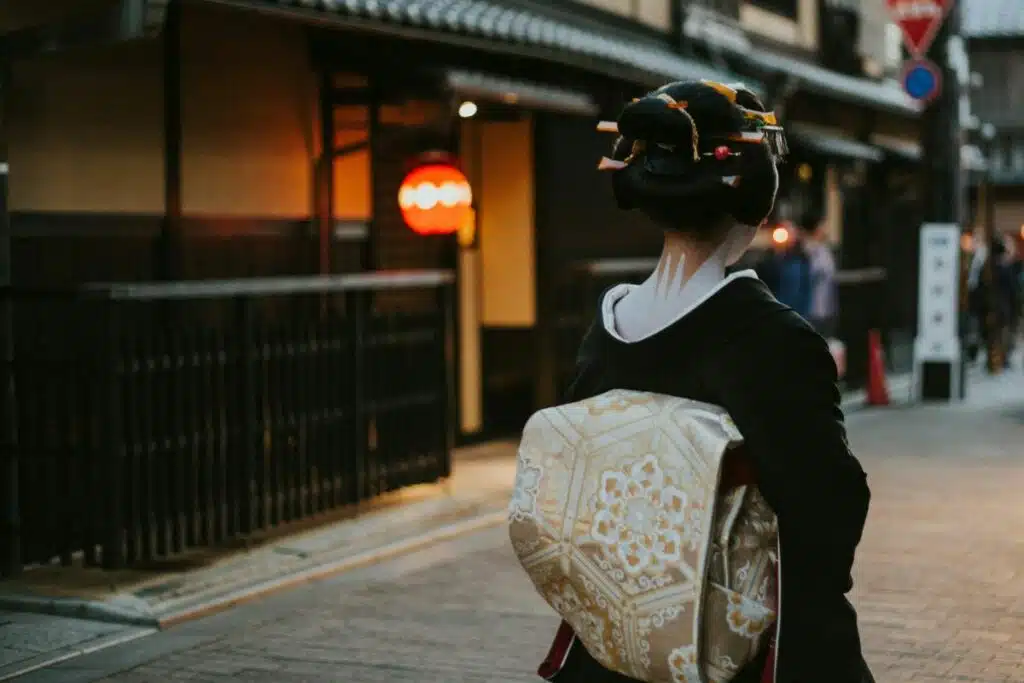
Gion is the most famous geisha district in Kyoto. Wooden townhouses, paper lanterns and stone lanes create an atmosphere from another age. In fact, this is where you can still see geiko and maiko, Kyoto’s geisha and apprentice geisha. As a result, it is one of the most evocative places in Japan.
However, the district is also a living neighbourhood with strict local rules. This guide explains what to see, when to go and how to visit respectfully.
What to See in Gion
Hanamikoji Street
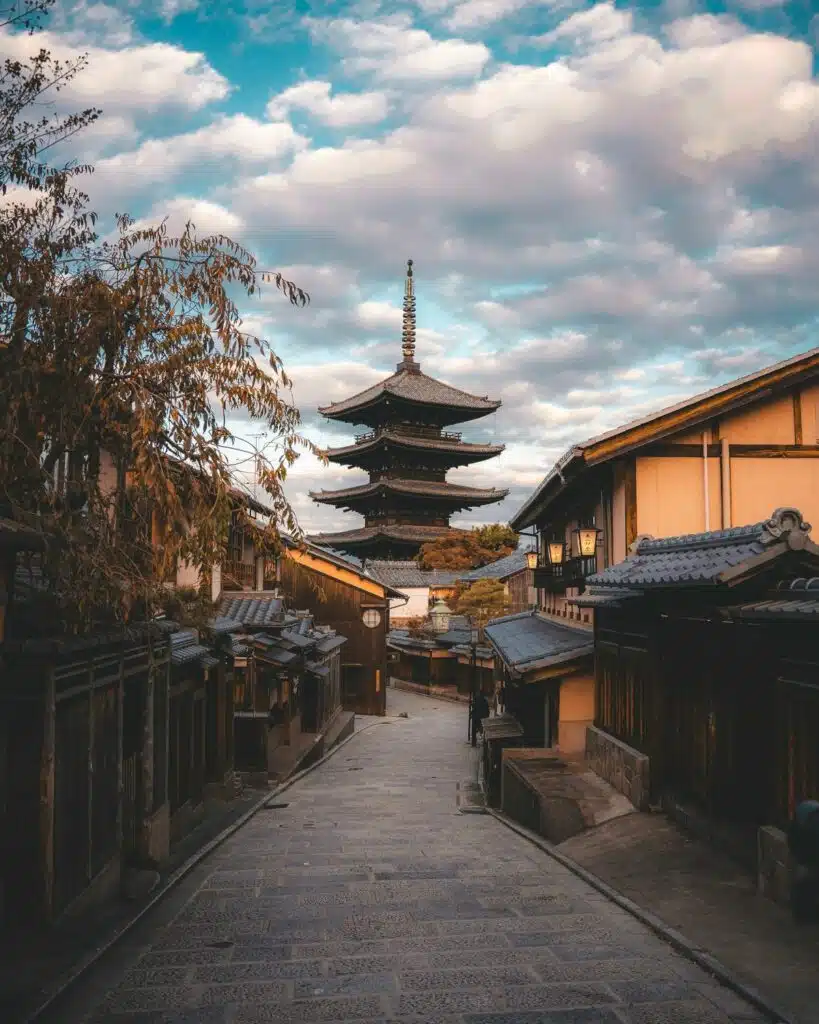
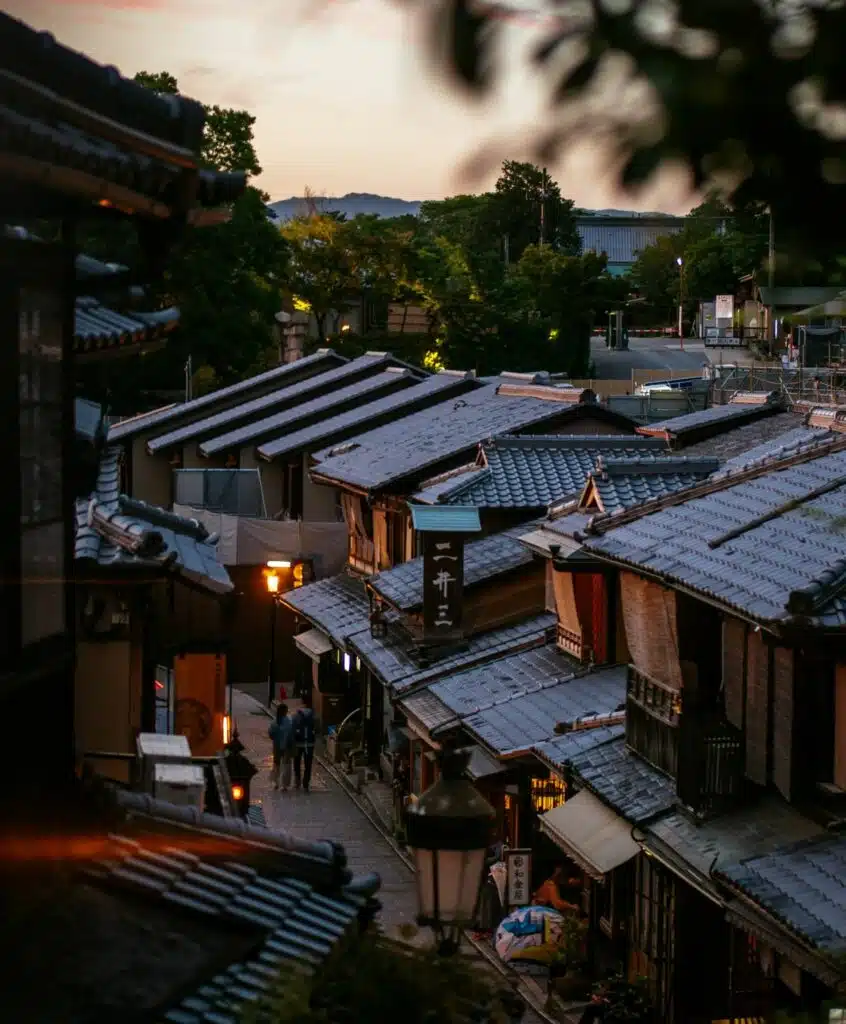
Hanamikoji is the main street of the district. It is also lined with preserved wooden teahouses and refined restaurants. Behind discreet doors, geiko entertain guests with dance and music. Also, the street is especially beautiful at dusk, when the lanterns glow.
Shirakawa Canal and Tatsumi Bridge
The Shirakawa area is quieter and very photogenic. Willow trees hang over a narrow canal, while old houses line its banks. In spring, cherry blossoms add a pink frame. Therefore, it is one of the best photo spots in Kyoto.
Yasaka Shrine
At the eastern end of Shijo Street, Yasaka Shrine watches over the district. Indeed, its bright orange gate is a Kyoto landmark. In the evening, hundreds of lanterns light up the main stage. Moreover, the shrine hosts the famous Gion Matsuri festival every July.
Kennin-ji Temple
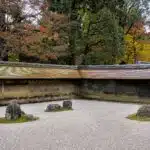
Founded in 1202, Kennin-ji is Kyoto’s oldest Zen temple. It sits just a few steps from Hanamikoji. Inside, admire the twin dragons painted on the ceiling and the calm rock gardens. So, it is a perfect contrast to the busy streets outside.
Gion Corner and Traditional Arts
Gion Corner presents short shows of traditional arts. For example, you can see a tea ceremony, flower arranging, comic theatre and maiko dances. Also, in April, the geiko perform the elegant Miyako Odori dances.
Geisha Etiquette: Please Read
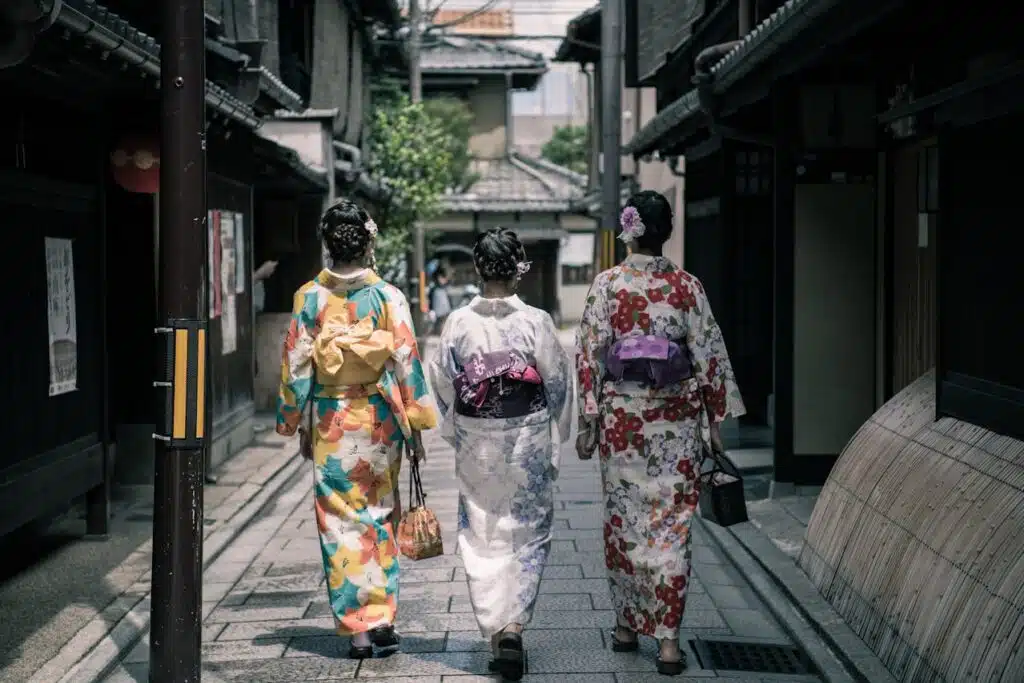
Geiko and maiko are working professionals, not tourist attractions. Unfortunately, some visitors have chased or touched them. As a result, local residents have introduced rules.
- Never block their path, touch them or ask for photos.
- Respect signs: photography is banned in the private lanes off Hanamikoji, and fines may apply.
- Keep noise low, because people live here.
Tips for Visiting Gion
- Come early or at dusk: Mornings are quiet and perfect for photos. Then, return at dusk for the lanterns.
- Book dinner ahead: Traditional kaiseki restaurants are often small. Also, some only accept guests with a reservation.
- Try a kimono: Many rental shops offer kimono, hair styling and accessories for a day.
- Plan for Gion Matsuri: The festival lasts all July. However, the big float parades bring huge crowds.
- Combine nearby sights: Walk uphill to Kiyomizu-dera through Maruyama Park and the old lanes of Higashiyama.
How to Get to Gion
Gion-Shijo Station on the Keihan Line is right at the edge of the district. Alternatively, Kyoto-Kawaramachi Station on the Hankyu Line is a short walk across the river. City buses also stop at Gion. For local events, check the official Kyoto travel guide.
Why Visit Gion?
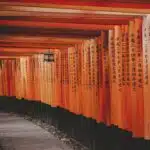
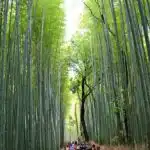
Gion offers a rare glimpse of traditional Japan that still lives today. Above all, visit with curiosity and respect. Afterwards, explore Nishiki Market, Fushimi Inari or the Arashiyama Bamboo Grove. Discover all our Kyoto travel guides.