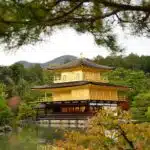
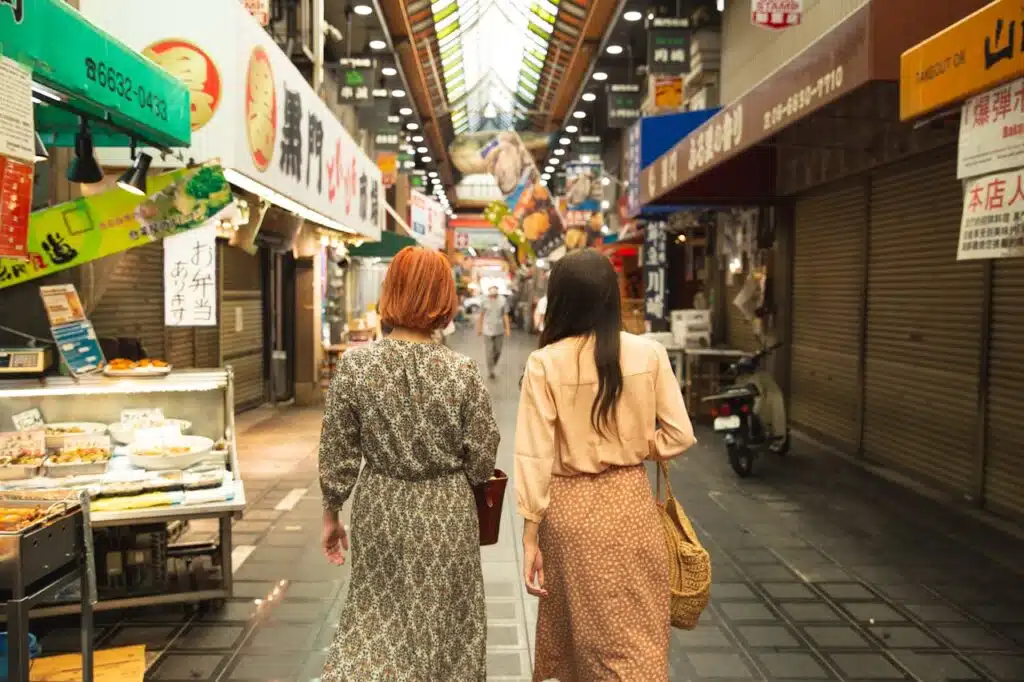
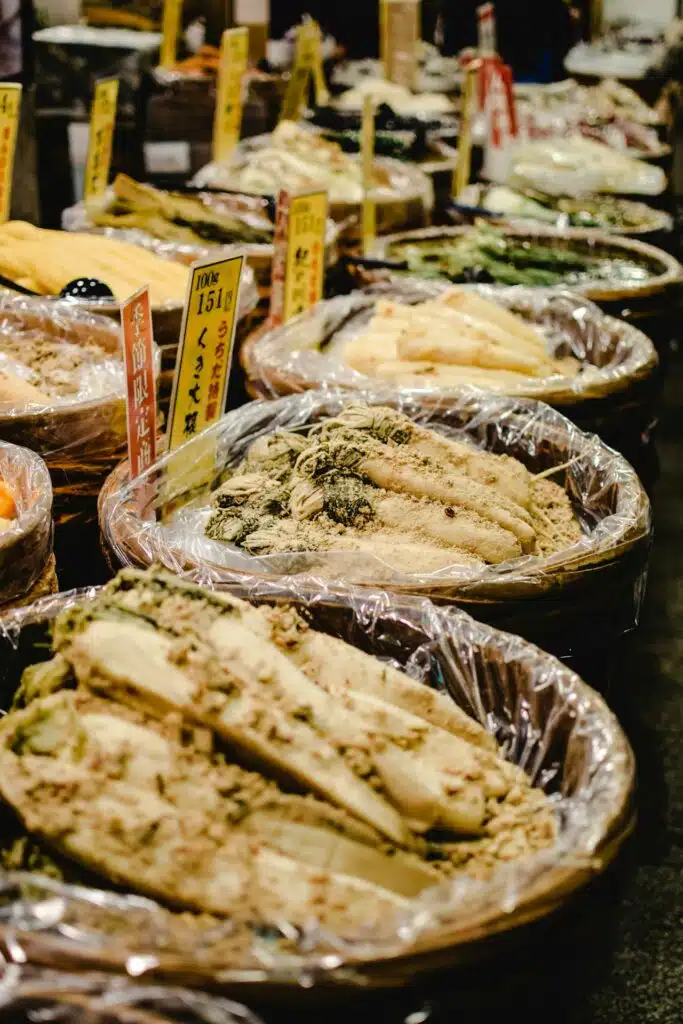
Nishiki Market is a narrow covered shopping street in the centre of Kyoto. Known as “Kyoto’s Kitchen”, it has supplied the city with food for about 400 years. Today, around 130 shops and stalls line its 400-metre length. So, it is the perfect place to taste local specialities.
This guide covers what to eat, what to buy, market etiquette and practical tips.
What to Eat at Nishiki Market
- Tamagoyaki: A sweet rolled omelette, often sold on a stick.
- Tako tamago: A small octopus with a quail egg inside its head.
- Yuba: Delicate tofu skin, a Kyoto speciality.
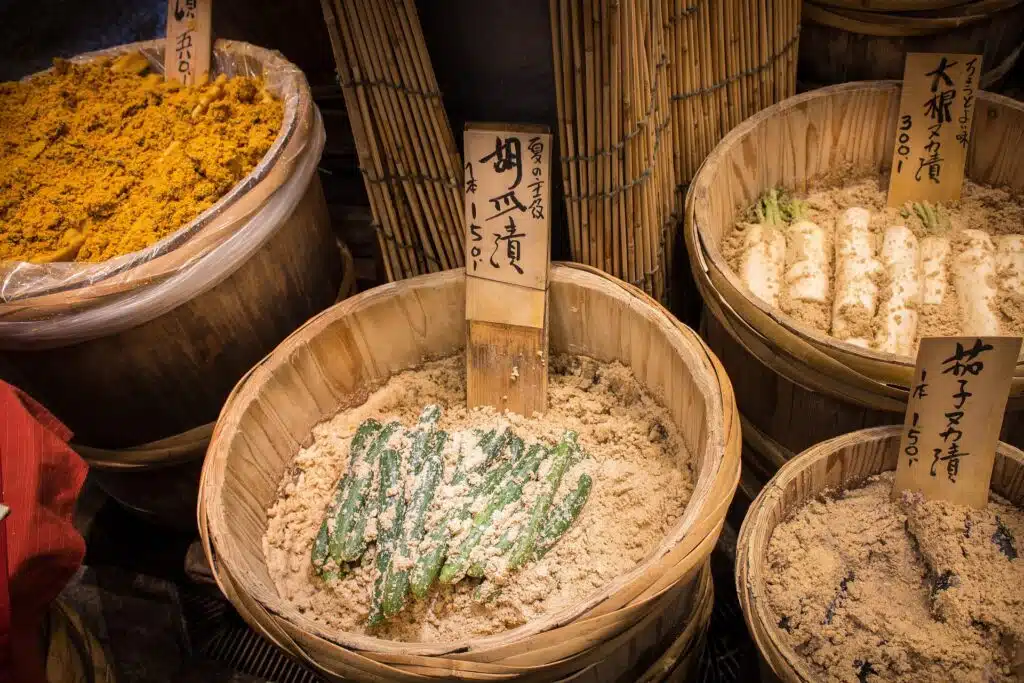
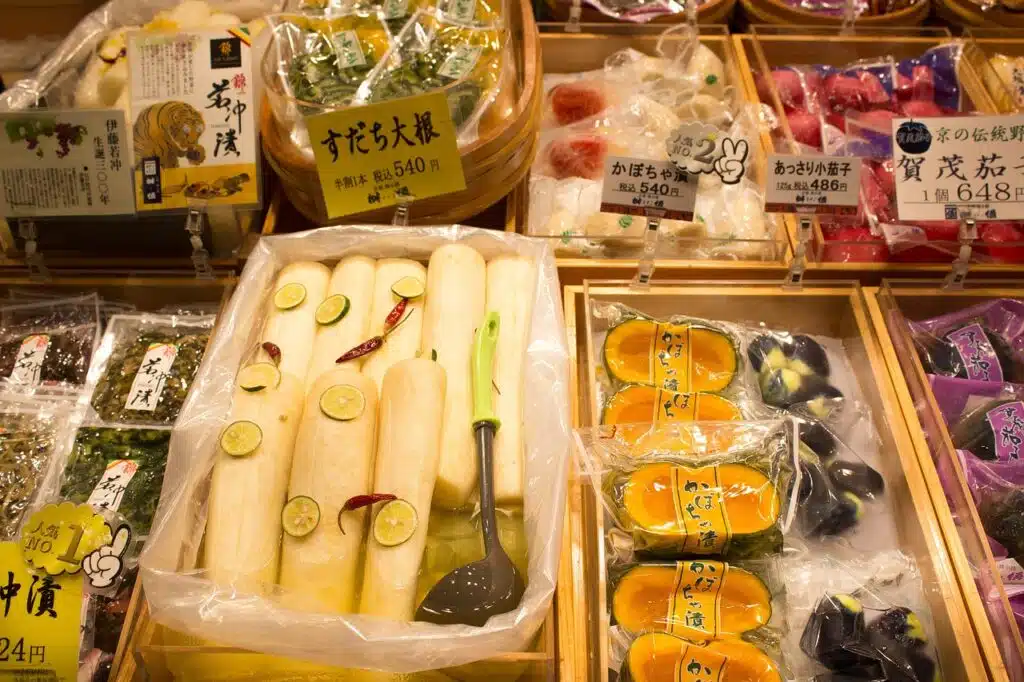
- Tsukemono: Colourful Kyoto-style pickles.
- Soy milk doughnuts: Light and warm, sold by the bag.
- Matcha sweets: Ice cream, mochi and cakes made with green tea.
Also, look for fresh seafood skewers and seasonal treats, such as chestnut sweets in autumn.
What to Buy
Also, many shops sell ingredients such as dried fish, miso, spices and tea. Moreover, Aritsugu, founded in 1560, makes famous kitchen knives. In addition, small shops sell ceramics and chopsticks.
Market Etiquette
However, in Japan, eating while walking is considered impolite. In fact, many stalls display signs asking visitors to eat in front of the shop. So, stand by the stall to finish your snack. Also, don’t touch food without asking, and avoid blocking the narrow street.
Best Time to Visit Nishiki Market
Usually, most shops open from about 10 am to 5 or 6 pm. In fact, mornings are the quietest time. However, the market is very crowded in the afternoon and at weekends. Also, some shops close on Wednesdays or Sundays.
Practical Tips
- Bring cash: Small stalls often don’t accept cards.
- Come hungry: Small portions let you try many dishes.
- Take your rubbish: Bins are rare in Japan.
Getting There
Conveniently, the market runs parallel to Shijo Street, between Teramachi and Takakura. So, it is close to Shijo and Kawaramachi stations. For more ideas, see the official Kyoto travel guide.
Final Thoughts on Nishiki Market
In short, Kyoto’s Kitchen is a delicious introduction to Japanese food culture. Afterwards, walk to Gion or visit Kiyomizu-dera. Discover all our Kyoto travel guides.