Meiji Shrine (Meiji Jingu) is one of the most important Shinto shrines in Japan. It honours Emperor Meiji and Empress Shoken, who led Japan into the modern era. Yet it sits in a quiet forest right next to busy Harajuku. As a result, a visit feels like a peaceful escape from Tokyo.
This guide explains what to see at Meiji Shrine, how to follow local customs, and when to visit. Moreover, it suggests nearby sights to complete your day.
A Short History of Meiji Shrine
The shrine was completed in 1920, a few years after the emperor’s death. Then, air raids destroyed it during the Second World War. Thanks to public donations, it was rebuilt in 1958. Today, it welcomes millions of visitors every year.
The surrounding forest is also remarkable. In fact, around 100,000 trees were donated from all over Japan. Volunteers planted them to create a forest that would grow naturally for centuries.
What to See at Meiji Shrine
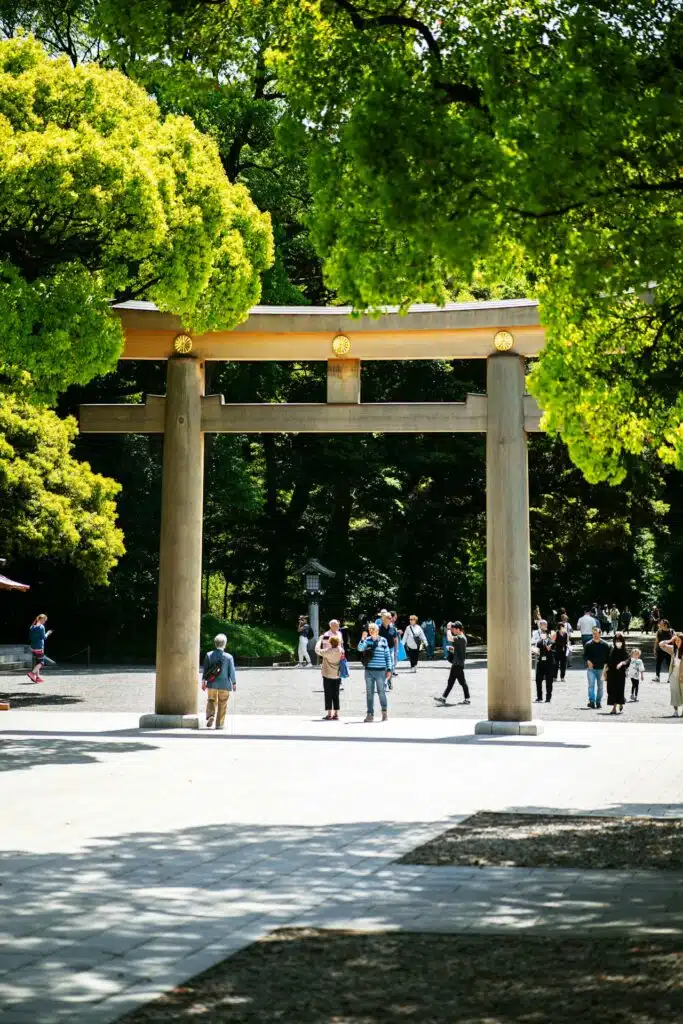
The Great Torii Gates
Huge wooden torii gates mark the entrance to the sacred grounds. The largest, the Otorii, is one of the biggest wooden torii in Japan. Interestingly, the original gate used ancient cypress from Taiwan’s Alishan mountains. Similarly, today’s gate is made of Taiwanese cypress. Traditionally, visitors bow once before passing through.
The Forest Path and the Barrel Walls
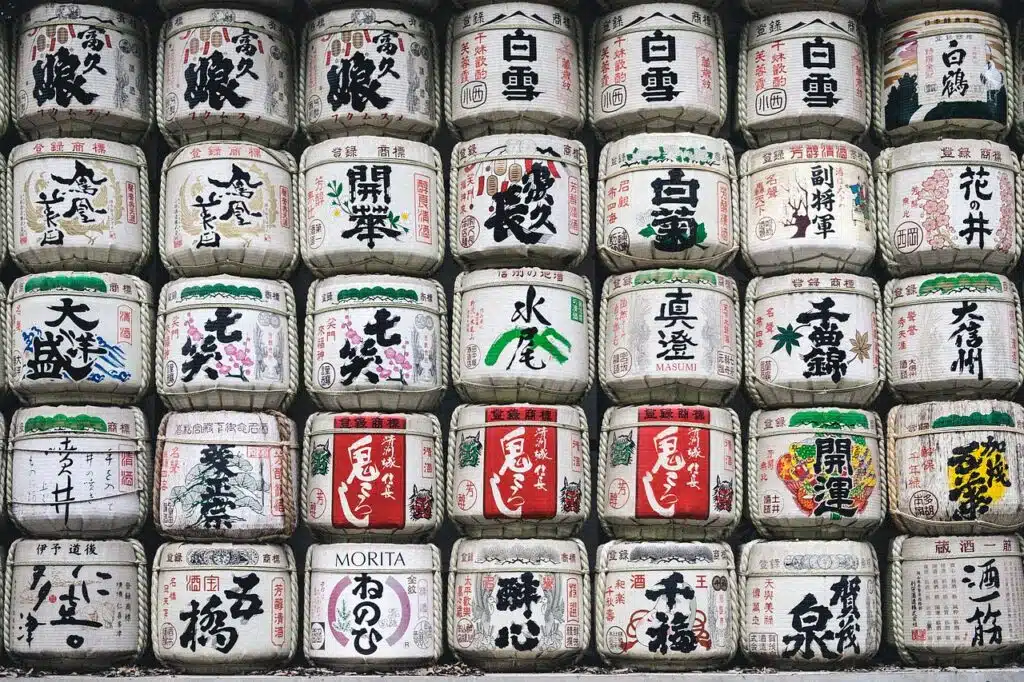
A wide gravel path leads through the forest to the main hall. Along the way, you will pass a wall of colourful sake barrels. Sake brewers offer them every year to honour the gods. Opposite, a row of French wine barrels recalls the emperor’s openness to the West.
The Main Hall
The main hall of Meiji Shrine is built in a simple, elegant Shinto style with cypress wood and copper roofs. Here, visitors pray and priests perform daily rituals. In addition, two large camphor trees stand side by side in the courtyard. They symbolise a happy marriage, so couples often pray here.
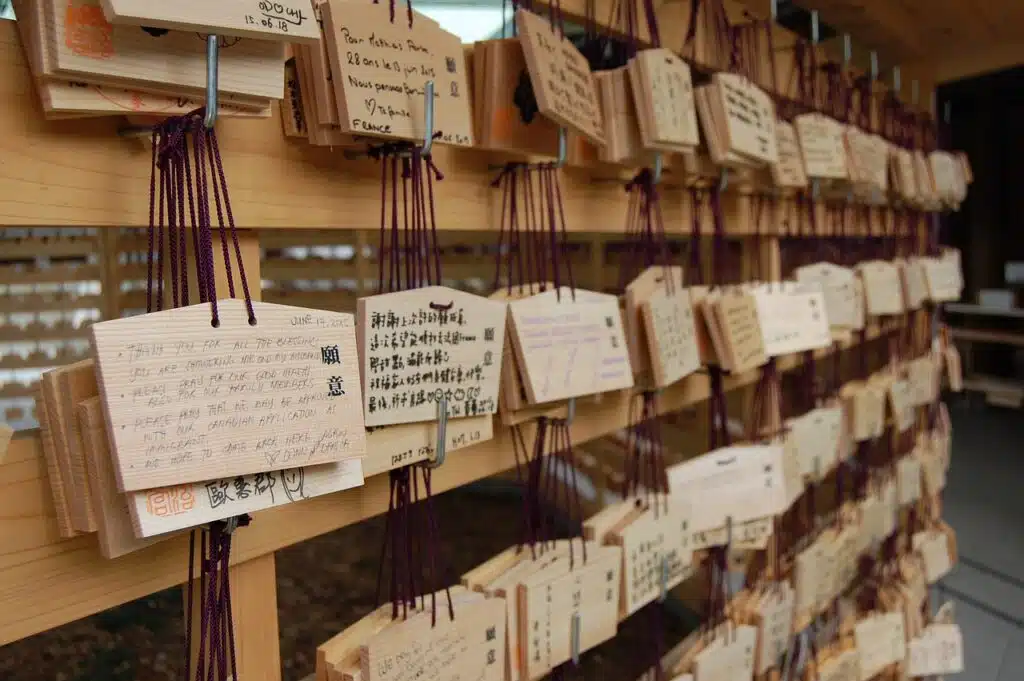
Ema and Omamori
Near the main hall, you can buy an ema, a wooden plaque for writing a wish. Afterwards, hang it on the special racks. You can also buy an omamori, a small amulet for luck, health or safe travels.
The Inner Garden and the Museum
The Inner Garden (Gyoen) charges a small entry fee. Inside, you will find a calm pond and Kiyomasa’s Well, a popular spring. Moreover, the iris garden blooms beautifully in June. Nearby, the modern Meiji Jingu Museum displays treasures linked to the imperial couple.
Traditional Weddings
With some luck, you may see a Shinto wedding procession at Meiji Shrine. The bride wears a white kimono, while priests and shrine maidens lead the way. Of course, watch quietly and keep a respectful distance.
How to Pray at Meiji Shrine
- Purify yourself: At the temizuya fountain, rinse your left hand, then your right hand. Next, pour water into your hand to rinse your mouth.
- Make an offering: Gently drop a coin into the offering box.
- Bow and clap: Bow twice, clap twice, and then make your wish. Finally, bow once more.
Tips for Visiting Meiji Shrine
- Go early: The shrine opens at sunrise. So, mornings are the calmest time to visit.
- Entry is free: Only the Inner Garden and the museum charge a fee.
- Dress respectfully: It is an active place of worship. Therefore, avoid very casual clothing.
- Photography: Photos are fine in the grounds. However, do not photograph inside the main hall or during rituals.
- New Year crowds: In the first days of January, millions come for hatsumode, the first prayer of the year. Consequently, expect long queues.
How to Get to Meiji Shrine
The main entrance is next to Harajuku Station on the JR Yamanote Line. Alternatively, use Meiji-jingumae Station on the Chiyoda and Fukutoshin subway lines. From the gate, the walk to the main hall takes about ten minutes. For opening hours and events, check the official Meiji Jingu website.
What to See Nearby
After your visit, explore the colourful shops of Takeshita Street in Harajuku. Then, stroll down elegant Omotesando avenue. Yoyogi Park is also right next door. In addition, Shibuya Crossing and Shinjuku are only one train stop away.
Why Visit Meiji Shrine?
Meiji Shrine shows a calm, spiritual side of Tokyo. In just one hour, you can walk through a forest, pray like a local and admire Shinto traditions. For more temples, also visit Senso-ji Temple in Asakusa. Discover all our Tokyo travel guides.