


Morocco is a captivating North African country, where ancient traditions meet modern life. It combines bustling souks, historic medinas, the Atlas Mountains and the golden dunes of the Sahara. Moreover, its food, crafts and hospitality are unforgettable. So, it offers a real change of scenery only a short flight from Europe.
Most first trips start in Marrakech and continue to the Sahara and Fes. Then, travellers add the blue town of Chefchaouen or the seaside medina of Essaouira.
Read more about Morocco
Top Cities in Morocco
Marrakech
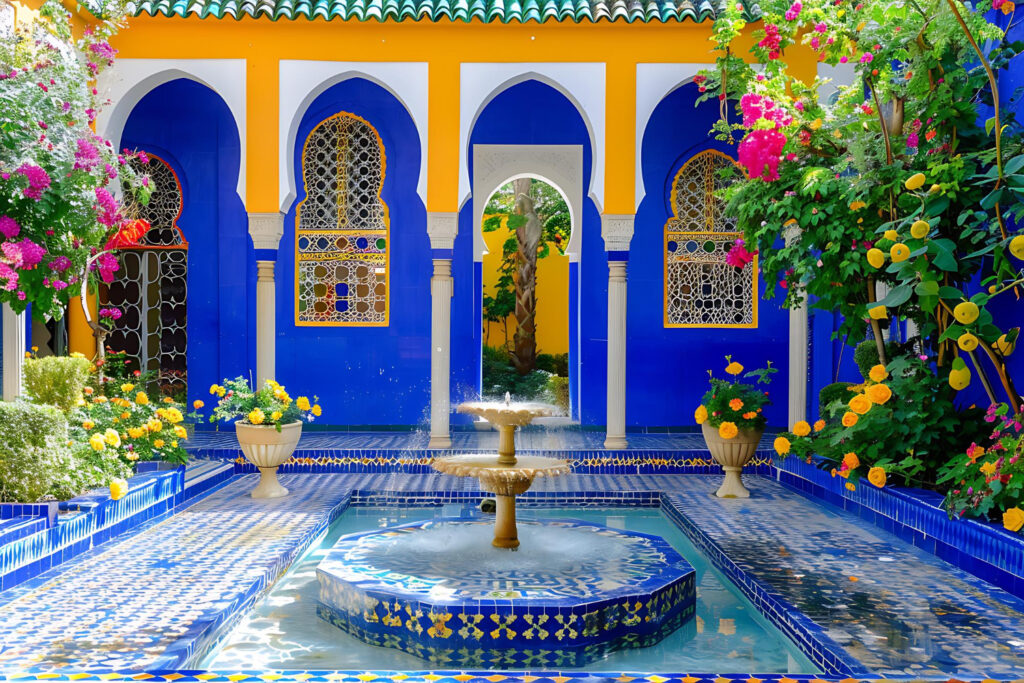
First, the Red City dazzles with colourful souks and street performers. In the evening, Jemaa el-Fnaa Square fills with food stalls and musicians. Also, the Bahia Palace and the Majorelle Garden offer calm away from the crowds. Read our Marrakech guide.
Fes
Next, the cultural capital has one of the largest car-free medinas in the world. Visit the leather tanneries and Al Quaraouiyine, often called the oldest existing university. However, the maze of alleys is confusing, so a local guide helps. See our Fes guide.
Chefchaouen, Tangier and Rabat
In the Rif Mountains, Chefchaouen charms with its blue-painted streets. On the coast, Tangier looks across the strait to Spain. Meanwhile, the capital, Rabat, has the Hassan Tower and the peaceful Kasbah of the Udayas.
Casablanca and Essaouira
On the Atlantic, Casablanca is home to the huge Hassan II Mosque, which non-Muslims can visit on a tour. Further south, Essaouira has a relaxed medina, a fishing port and windy beaches.
Desert and Mountains of Morocco
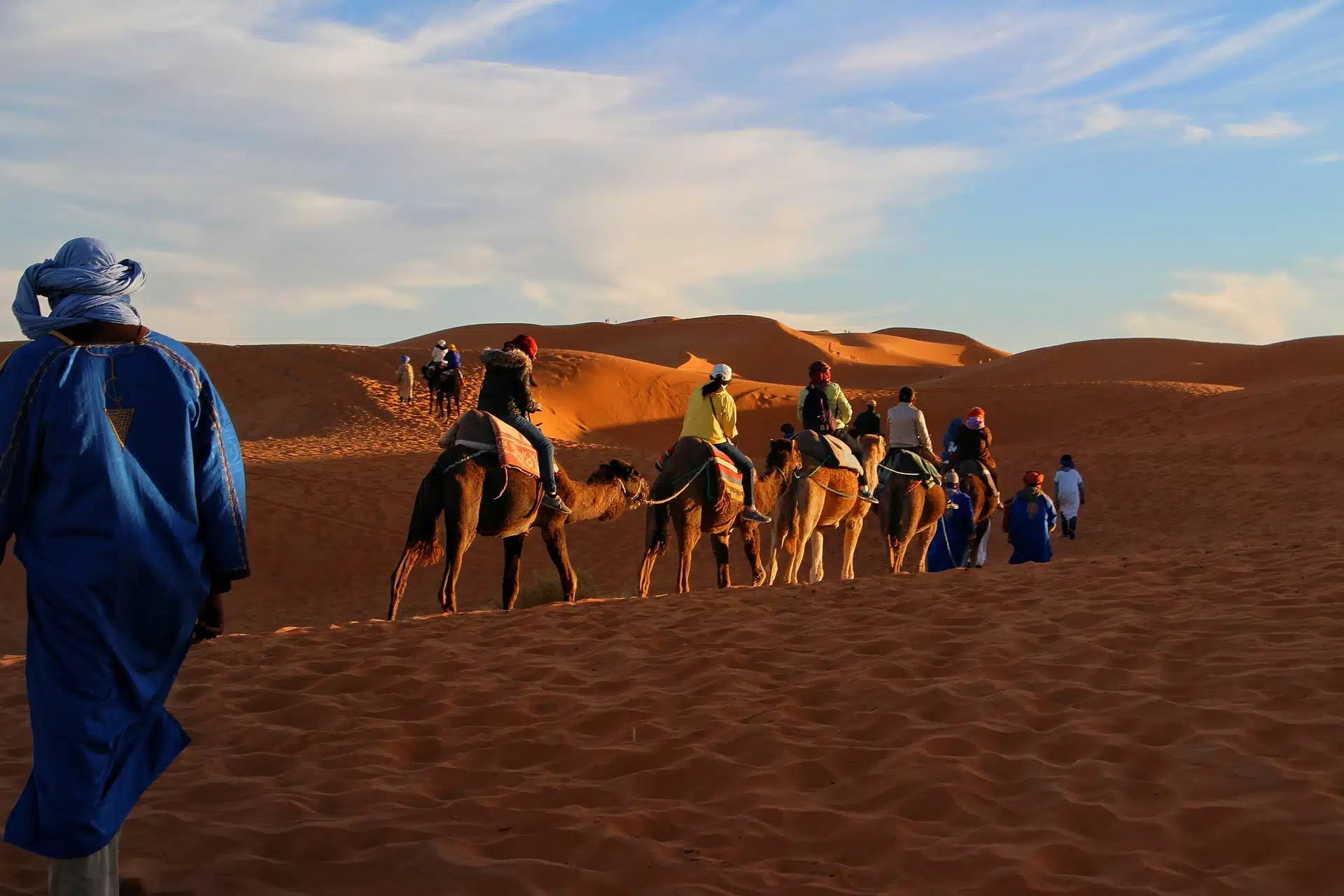
For many visitors, a night in the Sahara is the highlight. So, ride a camel over the dunes of Erg Chebbi and sleep under the stars in a desert camp. On the way, stop at Aït Benhaddou, a famous earthen kasbah used in many films.
Also, the High Atlas offers great hiking around Mount Toubkal, the highest peak in North Africa. Berber villages there welcome visitors with mint tea and simple meals.
A Short History of Morocco
First, Berber, or Amazigh, peoples lived here long before the Romans built Volubilis. Then, from the 7th century, Islam and Arab culture arrived. Later, great dynasties made Fes, Marrakech, Rabat and Meknes royal capitals.
In the 20th century, France and Spain controlled most of the country. However, Morocco regained its independence in 1956. Today, it is a kingdom with a strong blend of Arab, Berber, African and European influences.
Food in Morocco
Moroccan cuisine is rich in spices, dried fruit and slow cooking. For example, try tagine, couscous on Fridays, sweet and savoury pastilla, and harira soup. Read more in our Moroccan cuisine guide.
Everywhere, sweet mint tea is a sign of welcome. Also, fresh orange juice in Jemaa el-Fnaa is cheap and delicious. After a long day, moreover, a traditional hammam is the perfect way to relax.
Festivals and Events
- Ramadan (dates change each year): days are quiet, but evenings are festive after sunset.
- May or June: the Fes Festival of World Sacred Music brings artists from around the world.
- June: the Gnaoua World Music Festival fills Essaouira with music.
- May: the Rose Festival in Kelaat M’Gouna celebrates the harvest of the Dades Valley roses.
Practical Tips
- Bargain in the souks: start low, stay friendly and walk away if needed.
- Dress modestly: cover shoulders and knees, especially outside big cities.
- Ignore fake guides: politely refuse people offering to show you the way.
- Ask before taking photos: some people and performers expect a tip.
- Carry cash: the dirham is used everywhere, and cards are rare in souks.
For more ideas, see the official Visit Morocco website.
Basic Words and Expressions to Use in Morocco
Moroccans speak Darija, a Moroccan form of Arabic, as well as Berber languages. French is also widely spoken. Still, a few words of Darija bring big smiles, especially in the souks.
Finally, “inshallah” (God willing) and “safi” (that’s fine, enough) are heard everywhere. So, use them and watch people smile.
Morocco Travel FAQ
We recommend 8 to 12 days for a first trip. That way, you can see Marrakech, the Sahara and Fes, plus Chefchaouen or the coast. With a long weekend, however, Marrakech alone already works well.
Count $50 to $100 per person per day. Budget travellers stay near the lower end with simple riads and local food. However, desert tours, private drivers and luxury riads cost more.
Spring and autumn are the best seasons, with warm days and cool nights. In contrast, summer is very hot inland and in the desert. In winter, nights are cold, and snow can fall in the Atlas Mountains.
Many nationalities can visit visa-free for up to 90 days. However, rules depend on your passport, so always check the latest entry requirements before you travel.
Yes, tipping is common. For example, leave around 10% in restaurants and small tips for guides, drivers and hammam staff.
Trains link Tangier, Rabat, Casablanca, Fes and Marrakech, including the fast Al Boraq line. For the desert and the mountains, however, use a tour, a private driver or a rental car. CTM and Supratours buses are also reliable.
In short, the country offers medinas, mountains, desert and incredible food. So, combine Marrakech with the Sahara and Fes. Explore our detailed guides for each destination.