


South Korea is a dynamic country where centuries-old palaces stand next to glass skyscrapers. It combines royal heritage, Buddhist temples, green mountains and a world-famous pop culture. Moreover, its food, safety and fast trains make travel easy. So, it is a great destination for a first trip to Asia.
Most first trips start in Seoul. Then, travellers take the fast train to Busan and Gyeongju, or fly to Jeju Island.
Read more about South Korea
Top Cities in South Korea
Seoul
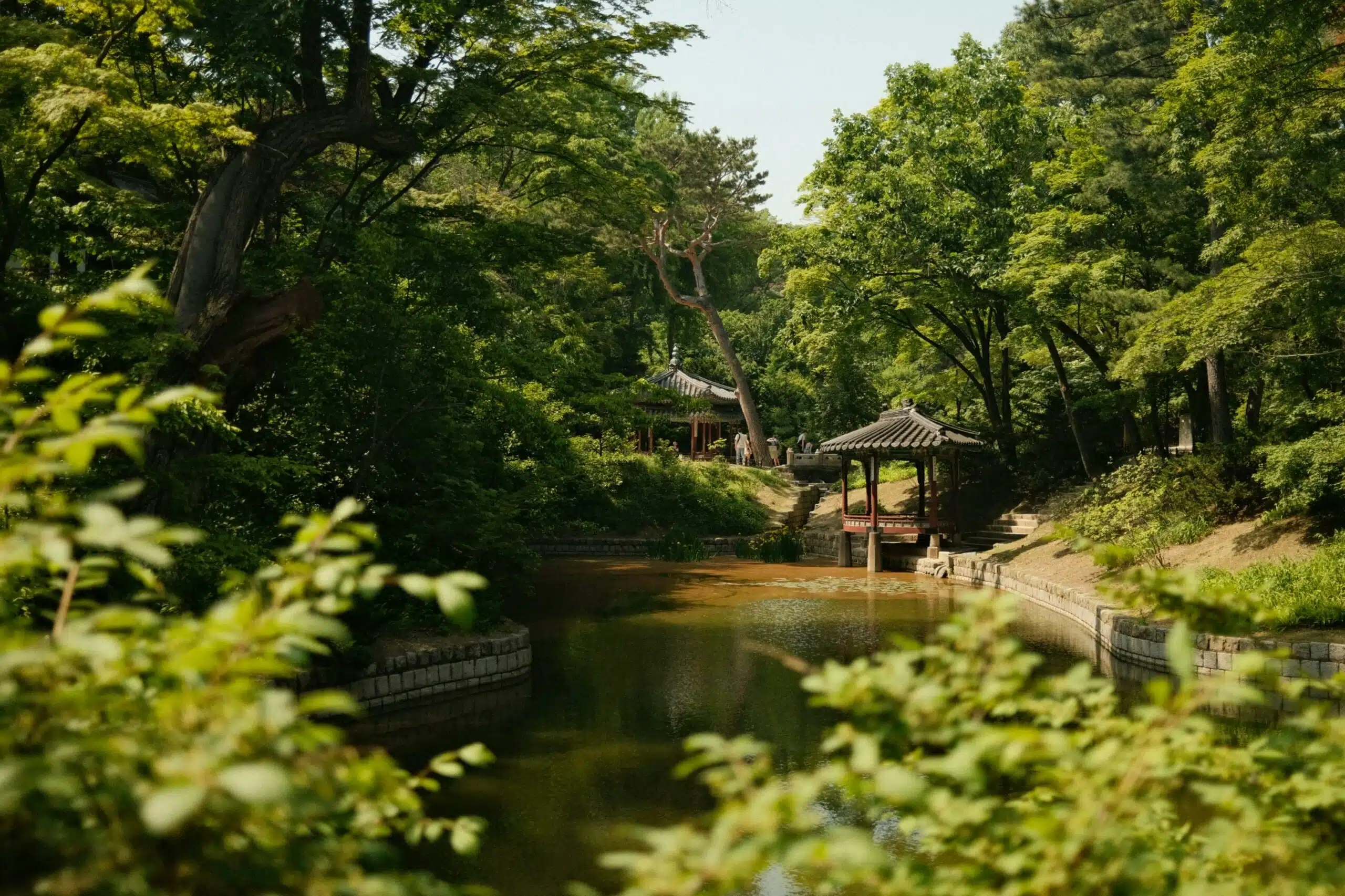
First, the capital mixes tradition and innovation. Visit Gyeongbokgung Palace, Changdeokgung and its Secret Garden. Then, wander through Bukchon Hanok Village and the tea houses of Insadong. In the evening, Myeongdong and Hongdae buzz with street food and music. Read our Seoul guide.
Busan
Next, the port city combines beaches, seafood markets and hillside villages. For example, relax on Haeundae Beach, then visit the colourful Gamcheon Culture Village. Also, the seaside Haedong Yonggungsa Temple is a beautiful sight. See our Busan guide.
Historic Towns
- Gyeongju: The ancient Silla capital, with royal tombs and Bulguksa Temple.
- Jeonju: A large hanok village and the home of bibimbap.
- Incheon: Chinatown, islands and the main international airport.
Nature and Islands
In the south, Jeju Island has volcanic landscapes, waterfalls and Hallasan, the highest mountain in the country. On the east coast, Sokcho is the gateway to Seoraksan National Park. In autumn, moreover, its maple leaves turn the mountains red and gold.
Also, a guided tour of the DMZ, the border with North Korea, is a powerful experience.
A Short History of South Korea
First, the Silla kingdom unified much of the peninsula, with Gyeongju as its capital. Then, the Joseon dynasty ruled for over 500 years and built Seoul’s great palaces. In 1443, King Sejong also created Hangul, the Korean alphabet.
However, the 20th century brought Japanese rule and then the Korean War, from 1950 to 1953. Since then, the peninsula has stayed divided. Afterwards, the south rebuilt itself into a democracy and a global technology leader.
Food in South Korea
Korean food is bold, spicy and made for sharing. For example, try kimchi, bibimbap, Korean barbecue and fried chicken. Every meal also comes with free side dishes, called banchan. Read more in our Korean food guide.
On the street, taste tteokbokki, spicy rice cakes, and sweet hotteok pancakes. Also, Gwangjang Market in Seoul is a feast for the senses. In the evening, locals share soju and beer with their meal.
K-Pop and Pop Culture
Today, the country is a global leader in music, dramas and beauty. So, fans can visit agency districts, filming locations and live shows. Read our Korean pop culture guide.
Festivals and Events
- January or February: Seollal, the Lunar New Year, is a family holiday.
- Early April: cherry blossoms bloom in Seoul, Jinhae and Gyeongju.
- May: Buddha’s Birthday fills temples and streets with lanterns.
- July: the Boryeong Mud Festival is a fun, messy party.
- September or October: Chuseok, the harvest festival, is a major holiday.
Practical Tips
- Get a T-money card: it works on metros, buses and in convenience stores.
- Download local apps: Naver Map and KakaoMap work better than Google Maps.
- Use fast trains: KTX trains link Seoul and Busan in under three hours.
- Book holidays early: trains sell out around Seollal and Chuseok.
For more ideas, see the official Visit Korea website.
Basic Words and Expressions to Use in South Korea
English is common on signs, but fewer people speak it outside Seoul. Still, a few words of Korean make a real difference. Above all, a polite “annyeonghaseyo” with a small bow opens many doors.
Finally, Hangul is easy to learn in a few hours. So, try reading the signs: it makes travelling even more fun.
South Korea Travel FAQ
We recommend 10 to 14 days for a first trip. That way, you can see Seoul, Busan and Gyeongju, plus Jeju or the mountains. With one week, however, focus on Seoul and Busan.
Count $100 to $150 per person per day. Budget travellers stay near the lower end with guesthouses, metro cards and street food. However, Seoul hotels and Korean barbecue dinners can quickly add up.
The best periods are April to June and September to November. Spring brings cherry blossoms, and autumn offers colourful leaves. In contrast, July and August are hot, humid and rainy, while winters are cold.
Many nationalities can visit visa-free for short stays. However, some must apply online for a K-ETA travel authorisation before departure. So, always check the latest rules for your passport.
No, tipping is not part of the culture. In fact, prices already include service, and staff may be surprised by a tip.
The KTX high-speed train links Seoul with Busan and other big cities. In cities, the metro is cheap, clean and easy to use. For Jeju, domestic flights are fast and frequent.
In short, the country offers palaces, nature, food and pop culture. So, combine Seoul with Busan, Gyeongju or Jeju. Explore our detailed guides for each destination.