


India is a vast, colourful country that awakens all the senses. It combines majestic palaces, sacred rivers, Himalayan peaks and tropical beaches. Moreover, every region has its own language, food and traditions. So, a trip here is an unforgettable adventure.
Most first trips follow the Golden Triangle: Delhi, Agra and the Taj Mahal, and Jaipur. Then, travellers add Varanasi, the rest of Rajasthan or the backwaters of Kerala.
Read more about India
The Golden Triangle
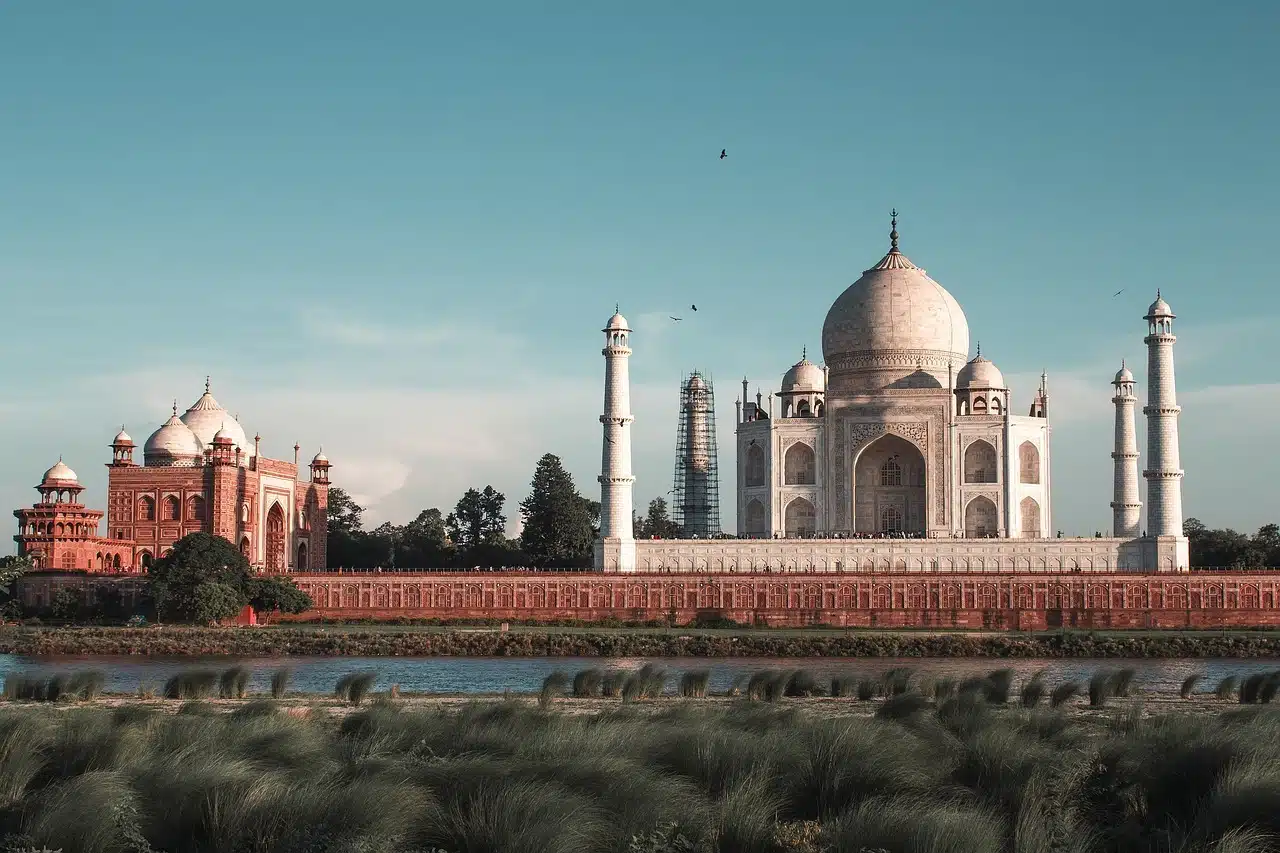
First, Delhi mixes Mughal monuments, such as the Red Fort, with busy bazaars. Then, in Agra, the Taj Mahal is breathtaking at sunrise. Finally, Jaipur, the Pink City, has the Amber Fort and the Palace of the Winds.
Rajasthan and the North of India
- Jodhpur: The Blue City below the mighty Mehrangarh Fort.
- Jaisalmer: A golden fort and camel rides in the Thar Desert.
- Ranthambore: One of the best places to spot wild tigers.
- Varanasi: Evening ceremonies on the sacred Ganges.
- Amritsar: The stunning Golden Temple of the Sikhs.
- Ladakh and Darjeeling: Himalayan monasteries and tea gardens.
The South and the Coasts
In the south, Kerala offers houseboat cruises on peaceful backwaters. Meanwhile, Goa is famous for beaches and Portuguese heritage. Also, Hampi has ancient temple ruins among giant boulders. Then, Mumbai and Bangalore show modern India. Further afield, the Andaman Islands and Meghalaya are hidden gems.
A Short History of India
First, the Indus Valley civilisation flourished over 4,000 years ago. Later, great empires, such as the Mauryas and the Mughals, built cities and monuments. Then, Britain ruled the country until 1947. In that year, India became independent after a non-violent struggle led by Gandhi. Today, it is the most populous country in the world.
Food in India
Every region has its own cuisine. For example, try butter chicken and biryani in the north, and dosa and fish curry in the south. Also, street food like samosas and chaat is delicious. To drink, sweet masala chai is everywhere.
Practical Tips
- Dress modestly: cover shoulders and knees, especially at temples.
- Drink bottled water: and eat busy, freshly cooked street food.
- Book trains early: popular routes sell out weeks ahead.
- Expect crowds and noise: take breaks and go with the flow.
For more ideas, see the official Incredible India website.
Basic Words and Expressions to Use in India
India has over 20 official languages, and English is widely spoken. Hindi, however, is understood in much of the north. So, a few words of Hindi bring big smiles.
Finally, a head wobble can mean yes, maybe or OK. Don’t worry, you will soon get used to it.
India Travel FAQ
We recommend two to three weeks for a first trip. That way, you can see the Golden Triangle, Rajasthan and Varanasi or Kerala. With ten days, however, focus on Delhi, Agra and Jaipur.
Count $20 to $60 per person per day. In fact, the country is very affordable. However, heritage hotels and private drivers cost more.
The best period is October to March, with cooler, dry weather in most regions. In contrast, April to June is very hot, and the monsoon arrives from June to September. Ladakh, meanwhile, is best in summer.
Most visitors need a visa, and many nationalities can apply online for an e-visa. So, always check the latest requirements for your passport before you travel.
Yes, around 10% is usual if service is not included. Also, tip drivers, guides and hotel staff.
Trains are an iconic way to travel and cover most of the country. Also, domestic flights save time on long distances. For Rajasthan, hiring a car with a driver is popular.
In short, the country offers palaces, temples, mountains, beaches and incredible food. So, combine the Golden Triangle with one more region. Explore our detailed guides for each destination.