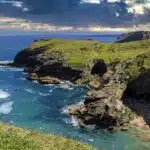
The Giant’s Causeway is a coastline of about 40,000 basalt columns in Northern Ireland, part of the United Kingdom. Most columns are hexagonal and look like giant stepping stones leading into the sea. In fact, they formed from cooling lava about 50 to 60 million years ago. Today, the site is a UNESCO World Heritage site.
So, this guide covers the geology, legends, coastal walks and practical tips.
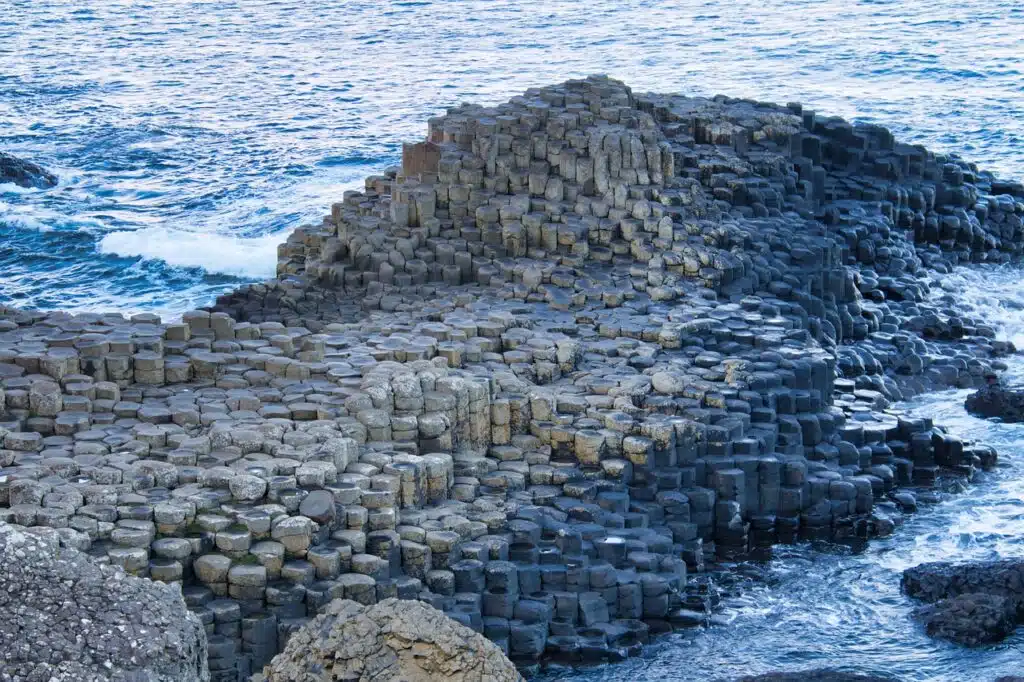
How the Giant’s Causeway Formed
Long ago, lava flowed over the land and cooled slowly. Then, as it cooled, it contracted and cracked into columns. As a result, most columns have six sides, although some have four, five, seven or eight. Also, the tallest columns are about 12 metres high.
The Legend of Finn McCool
According to Irish legend, the giant Finn McCool built the causeway to reach Scotland and fight his rival Benandonner. However, when Finn saw how huge Benandonner was, he hid. So, his wife disguised him as a baby. Seeing the “baby”, Benandonner feared the father and fled, tearing up the causeway behind him.
What to See
- The Grand Causeway: The main area of columns at the water’s edge.
- The Wishing Chair: A natural seat formed by columns.
- The Organ: Tall columns on the cliff that look like organ pipes.
- The Giant’s Boot: A large boulder shaped like a boot.
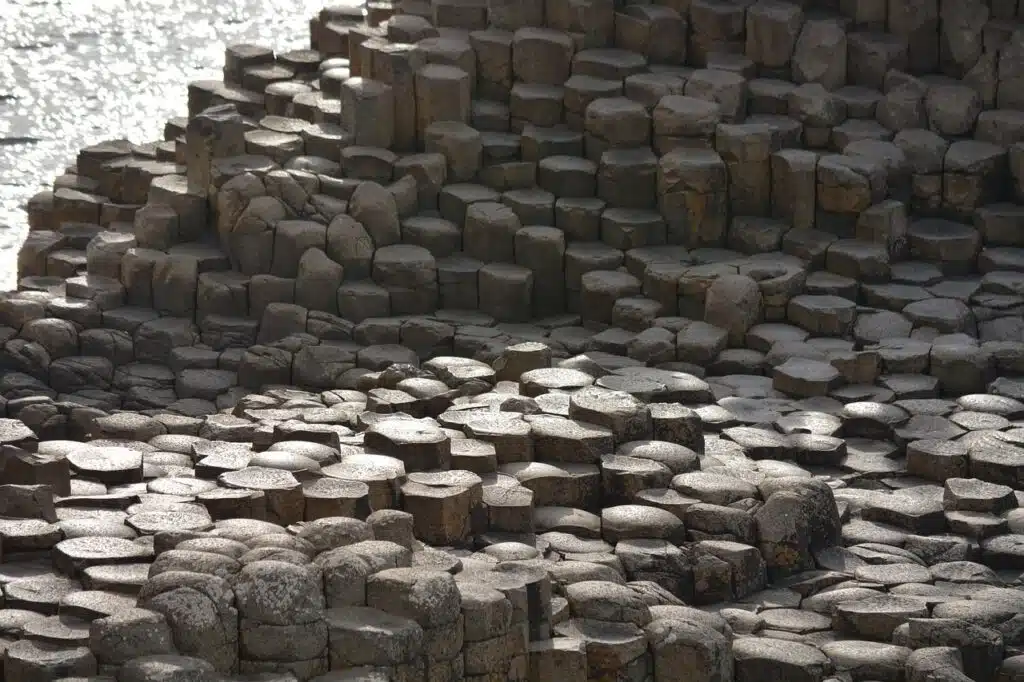
Coastal Walks Near the Giant’s Causeway
The Causeway Coast Way follows the cliffs with views over the Atlantic. For example, it leads east to the Carrick-a-Rede Rope Bridge. Also, the ruins of Dunluce Castle sit dramatically on a cliff to the west.
Attractions Near the Giant’s Causeway
Bushmills, a short drive away, has one of the oldest licensed whiskey distilleries in the world. In addition, the Dark Hedges, an avenue of beech trees, became famous through Game of Thrones.
Practical Tips
- Access is free: You can walk to the stones without a ticket. However, the visitor centre and its car park charge a fee.
- Go early or late: Light is softer and crowds are smaller.
- Wear good shoes: The stones are slippery when wet.
- Stay safe: Keep away from the edge in rough seas.
Getting There
The site is about 1 hour 15 minutes by car from Belfast. Also, trains run to Coleraine and Portrush, with buses to the causeway. For more information, see the National Trust page for the Giant’s Causeway.
Final Thoughts
In short, this coast combines natural wonder, myth and wild Atlantic scenery. Afterwards, discover the Scottish Highlands or Edinburgh. Discover all our United Kingdom travel guides.