The British Museum in London is one of the greatest museums in the world. In fact, its collection holds around eight million objects from every continent. Founded in 1753, it was the first free national public museum. Moreover, entry to its permanent galleries is still free today.
Indeed, from Egyptian mummies to Greek sculptures, it covers two million years of human history. So, this guide helps you choose the highlights and plan your visit.
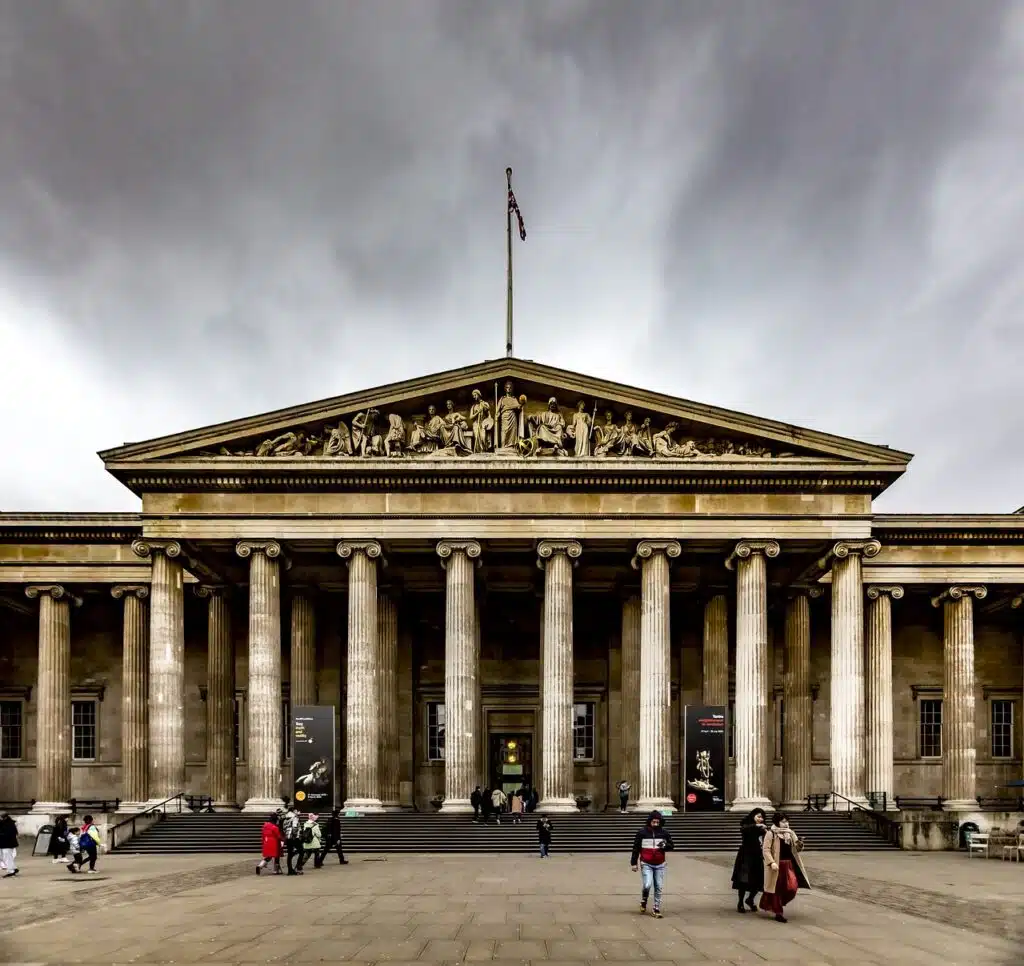
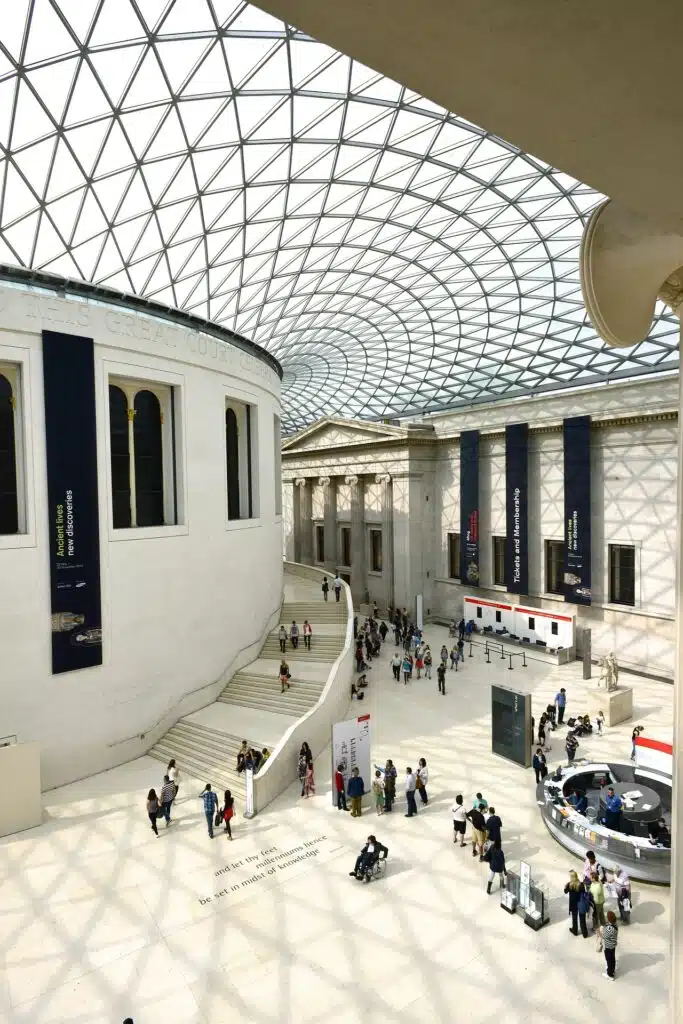
The Great Court of the British Museum
Your visit begins in the Great Court, the largest covered square in Europe. Above it, a spectacular glass and steel roof covers the space. In the centre stands the round Reading Room, where Karl Marx once studied. Also, the court has cafés and an information desk.
What to See at the British Museum
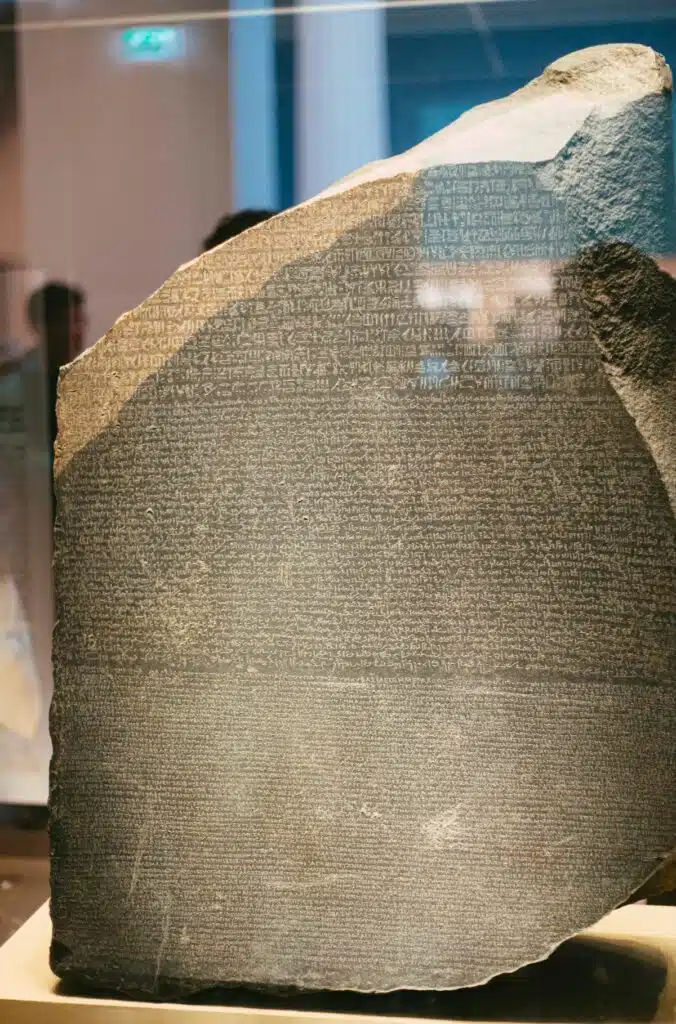
The Rosetta Stone
This granite slab carries the same text in three scripts: hieroglyphs, Demotic and Greek. As a result, it allowed scholars to decode Egyptian hieroglyphs in the 1820s. It is the most visited object in the museum, so come early.
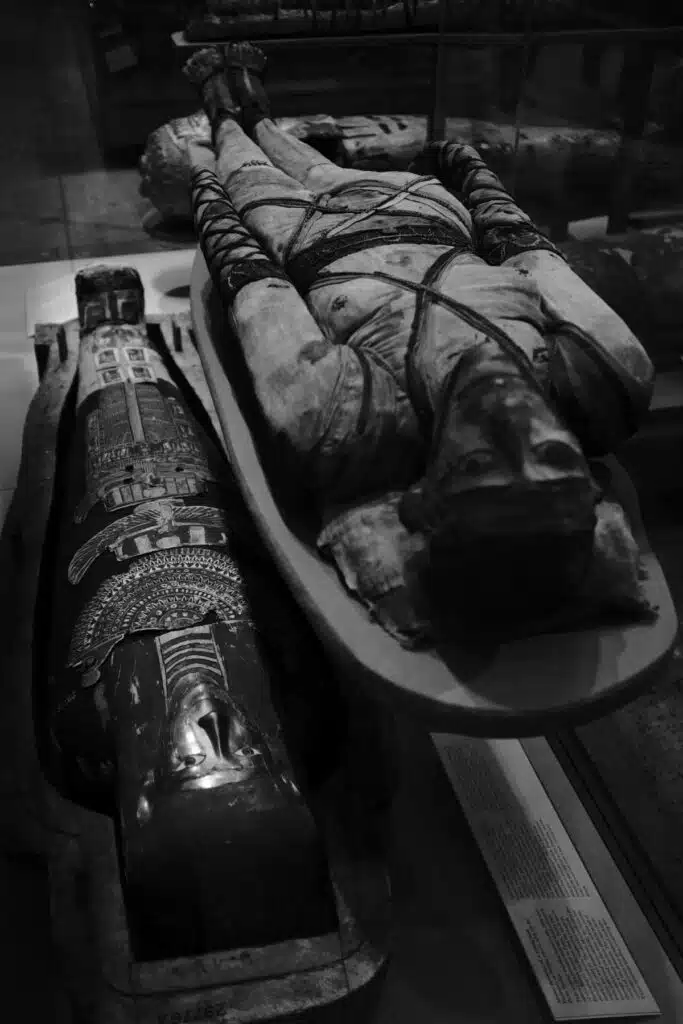
The Egyptian Mummies
The museum has one of the largest Egyptian collections outside Egypt. Upstairs, painted coffins, mummies and amulets explain beliefs about the afterlife. Surprisingly, even mummified cats and crocodiles are on display.
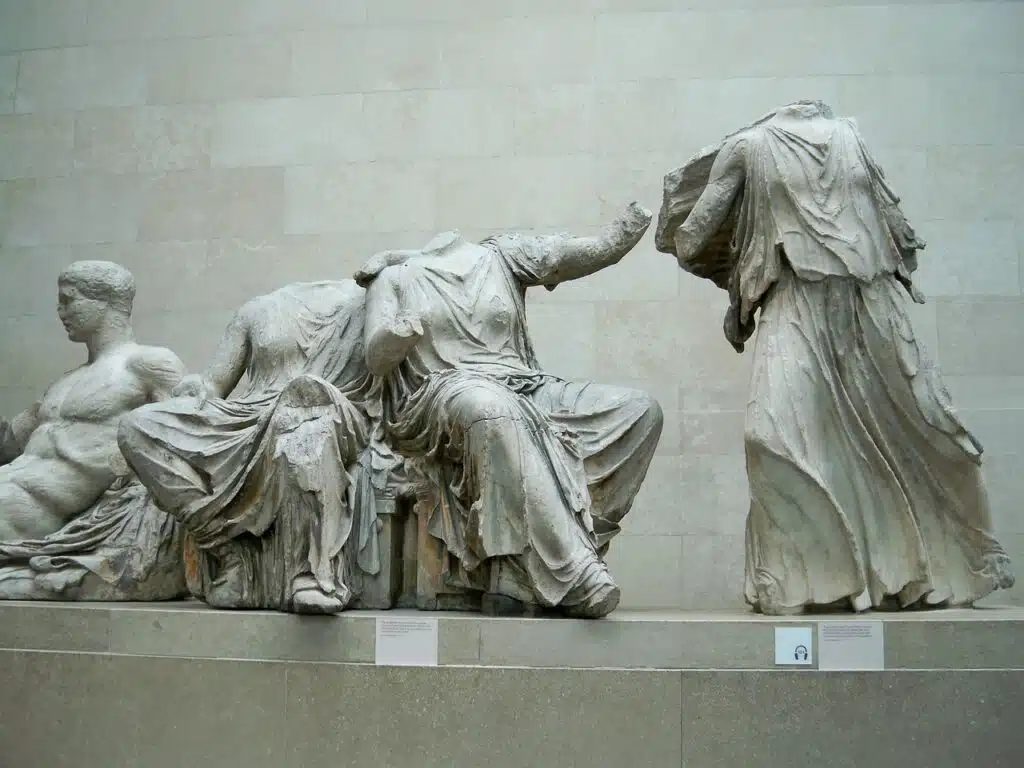
The Parthenon Sculptures
These marble sculptures once decorated the Parthenon in Athens. Together, they show gods, heroes and a grand procession, though in fragments. However, they remain the subject of a long debate, because Greece asks for their return.
The Assyrian Lion Hunt Reliefs
Carved around 2,700 years ago, these stone panels come from a royal palace in Nineveh, in modern Iraq. They show King Ashurbanipal hunting lions in vivid detail. Indeed, they are among the finest ancient reliefs anywhere.
The Sutton Hoo Treasure
In 1939, archaeologists found an Anglo-Saxon ship burial in Suffolk. Inside, there was gold jewellery, weapons and a famous iron helmet. Therefore, it changed how historians see early medieval England.
The Lewis Chessmen at the British Museum
These small chess pieces were carved from walrus ivory in the 12th century. Moreover, their worried faces make them very popular with visitors.
The Benin Bronzes
These brass plaques and sculptures were made by artists of the Kingdom of Benin, in today’s Nigeria. They were taken by British troops in 1897. As a result, their display also raises questions about colonial history.
The Enlightenment Gallery
Housed in the elegant King’s Library, this gallery shows how 18th-century collectors tried to classify the world. Today, fossils, coins and curiosities still fill its tall wooden cases.
Tips for Visiting the British Museum
- Book a free ticket: Entry is free, but booking a time slot is recommended. Also, special exhibitions are paid.
- Arrive at opening time: The Egyptian and Greek rooms get crowded by late morning.
- Choose your highlights: You cannot see everything in one day. So, pick a few galleries.
- Visit on Friday evening: Some galleries stay open later, and the atmosphere is calmer.
- Accessibility: The museum has lifts, ramps and accessible toilets.
How to Get to the British Museum
The museum is in Bloomsbury, in central London. The nearest Tube stations are Tottenham Court Road, Holborn and Russell Square. For opening hours and exhibitions, check the official British Museum website.
What to See Nearby
Also, the Charles Dickens Museum and the British Library are both a short walk away. In fact, the library displays treasures such as the Magna Carta. Then, head south to Covent Garden or the shops of Oxford and Regent Street.
Final Thoughts on the British Museum
The British Museum is a journey through human history under one roof. Above all, it is free, central and endlessly fascinating. For more culture, also see our guide to London’s art museums and the Natural History Museum. Discover all our London travel guides.