The Natural History Museum in London is one of the world’s great science museums. It sits in South Kensington, inside a spectacular Victorian building. Moreover, entry to its permanent galleries is free. As a result, it is one of the most visited attractions in the city.
The Natural History Museum’s collections hold around 80 million specimens, from dinosaurs to meteorites. So, there is something for every age. This guide covers the highlights, practical tips and what to see nearby.
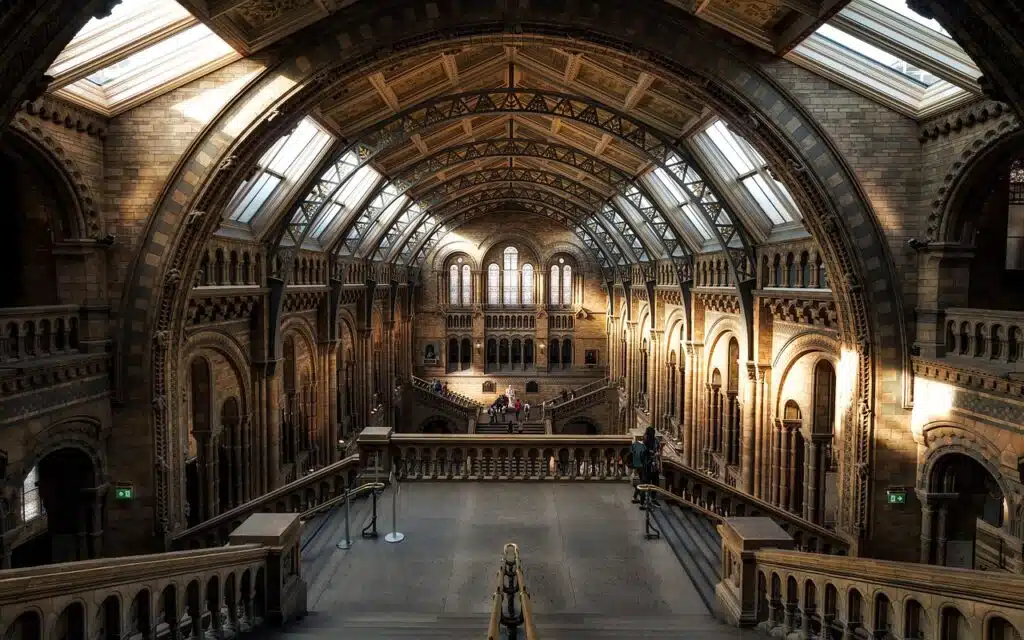
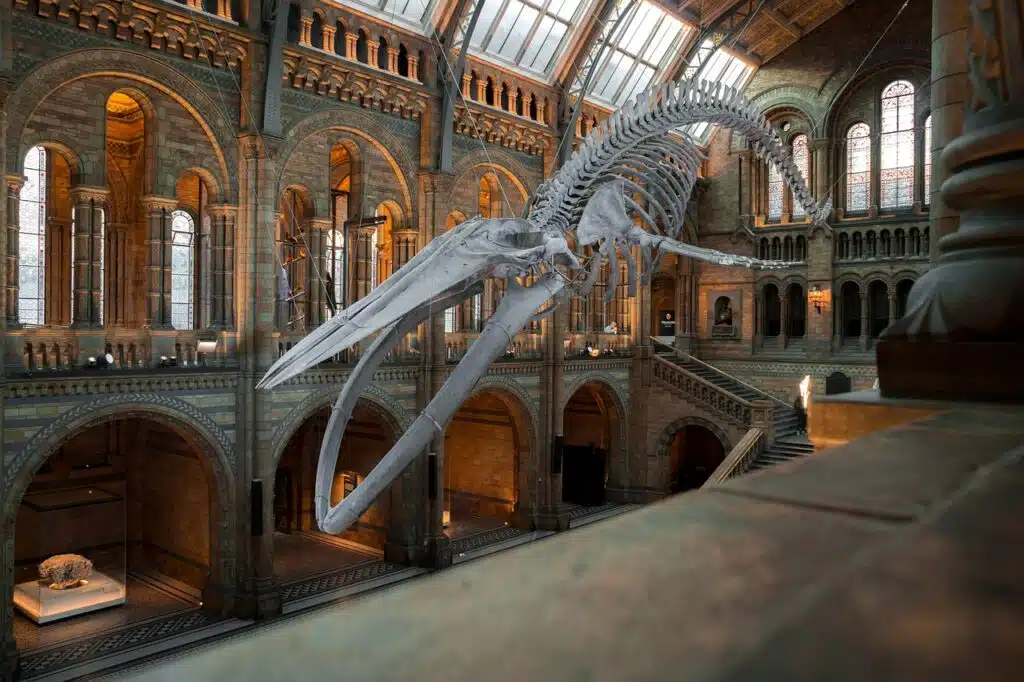
A Cathedral of Nature
The building opened in 1881 and was designed by Alfred Waterhouse. Its facade is covered with terracotta tiles showing animals and plants. In fact, extinct species decorate one side and living species the other. Therefore, the architecture itself tells a story.
What to See at the Natural History Museum
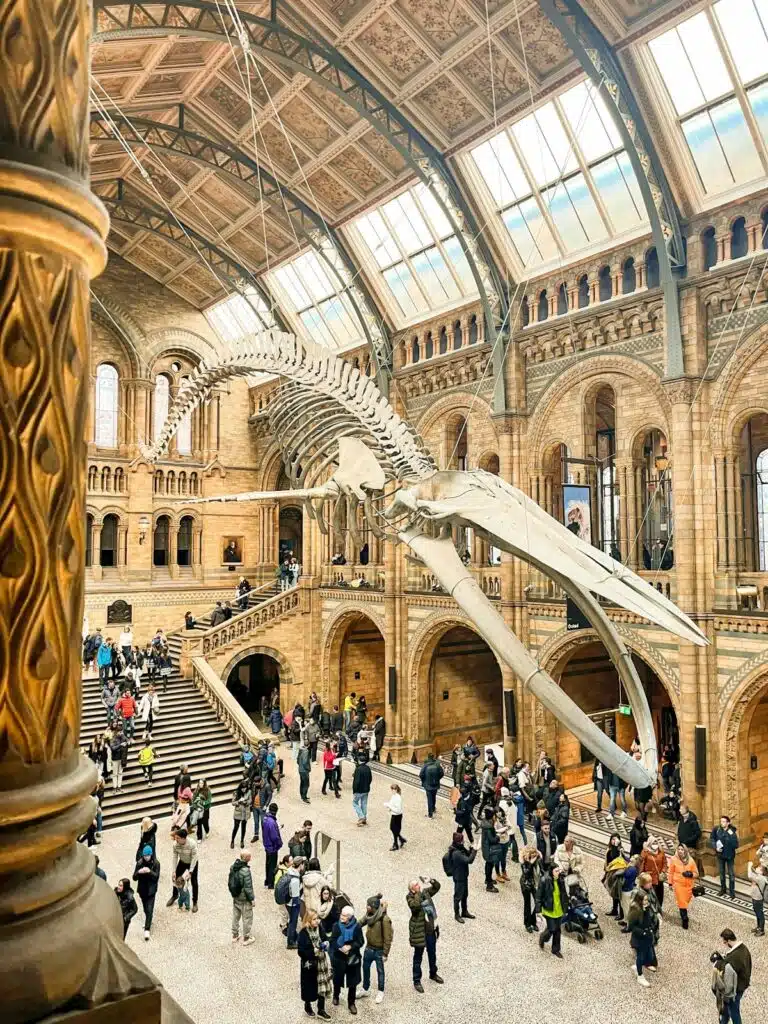
Hintze Hall and the Blue Whale
The grand central hall greets you with a 25-metre blue whale skeleton, nicknamed Hope. It hangs from the ceiling as though diving. Also, look up at the painted ceiling panels of plants from around the world.
The Dinosaurs Gallery
This is also the museum’s most popular gallery. First of all, a raised walkway leads you past skeletons and fossils. Then, at the end, a life-size animatronic T. rex roars and moves. Children love it, so expect queues at busy times.
Earth Hall and the Volcanoes Gallery
An escalator carries you through a giant metal globe into the Earth Hall. There, galleries explain volcanoes, earthquakes and how our planet works. In addition, a simulator recreates the shaking of the 1995 Kobe earthquake in Japan.
Minerals Gallery and the Vault
Long rows of Victorian cabinets display thousands of minerals and crystals. At the end, the Vault holds the rarest treasures. For example, you can see precious gems, gold nuggets and a piece of a Martian meteorite.
Human Evolution Gallery
This gallery traces our story over millions of years with skulls, tools and models. Above all, meet Cheddar Man, Britain’s oldest almost complete human skeleton. In fact, he lived around 10,000 years ago.
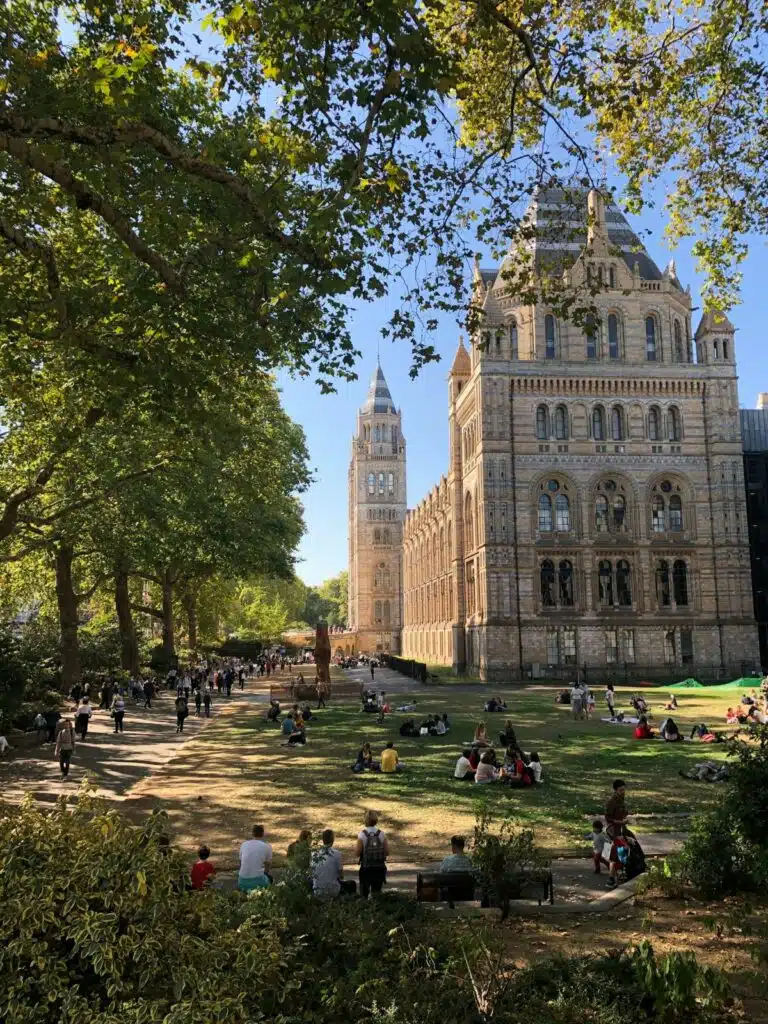
The Natural History Museum Gardens
The outdoor gardens were recently redesigned. Now, an Evolution Garden walks you through 2.7 billion years of life with plants and rocks. Meanwhile, a wildlife garden shows the nature of London’s parks and ponds. It is also a lovely place for a picnic.
Natural History Museum Exhibitions
The museum also hosts paid exhibitions. In particular, the Wildlife Photographer of the Year show displays the best nature photos from around the world.
Tips for Visiting the Natural History Museum
- Book a free ticket: Entry is free, but booking a time slot online is recommended. As a result, you skip the longest queue.
- Arrive early: Weekends and school holidays are very busy. So, come at opening time.
- Prioritise: You cannot see everything in one visit. Therefore, choose three or four galleries.
- Use the tunnel: A pedestrian tunnel links South Kensington station to the museum. It is useful when it rains.
- Take breaks: Several cafés offer snacks and meals. Also, you can bring a picnic for the gardens.
For opening hours and exhibitions, check the official Natural History Museum website.
Near the Natural History Museum
Next door, the Science Museum and the Victoria and Albert Museum are also free. Then, walk north to Kensington Gardens and Hyde Park. For more culture, see our guide to London’s art museums and the British Museum.
Final Thoughts
The Natural History Museum combines stunning architecture with amazing collections. Whether you love dinosaurs, gems or human history, it will spark your curiosity. Discover all our London travel guides.