Graz is the second-largest city in Austria and the capital of Styria. Its old town and Eggenberg Palace are a UNESCO World Heritage site. Moreover, it is a lively student city with bold modern architecture. As a result, Graz blends history, design and great food in a relaxed atmosphere.
So, this guide covers the best things to see, local food and practical tips for your visit.
The Old Town of Graz
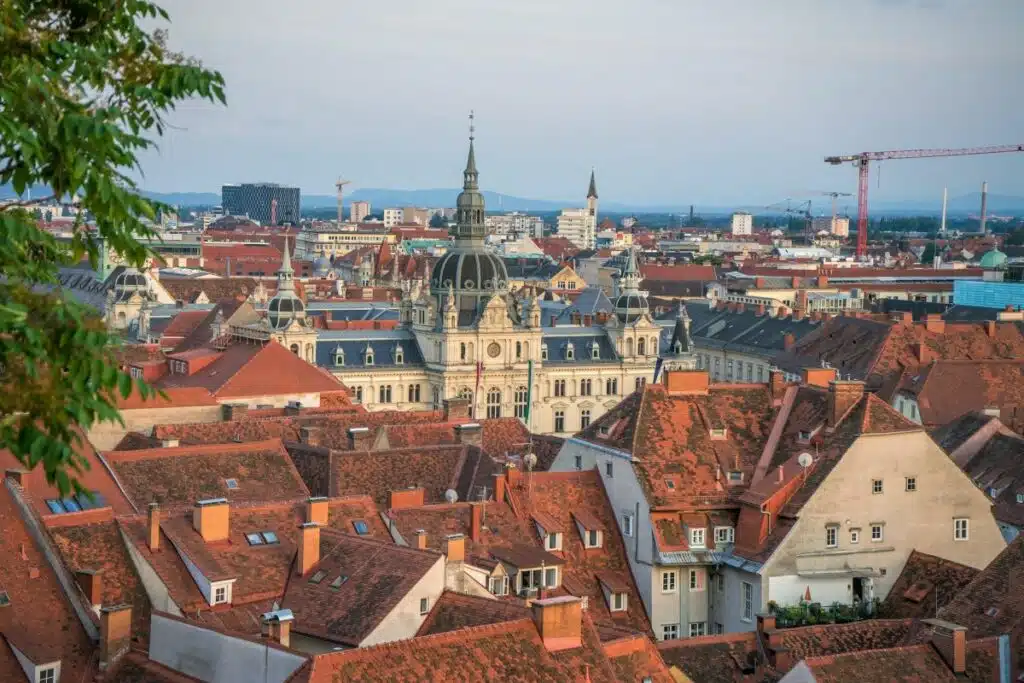
The old town is one of the best-preserved historic centres in Central Europe. First, start at Hauptplatz, the main square, with its grand Town Hall. Then, explore the narrow lanes and hidden courtyards, such as the Renaissance courtyard of the Landhaus. Also, don’t miss the Landeszeughaus, a historic armoury with around 30,000 weapons and suits of armour.
At Glockenspielplatz, moreover, wooden figures in traditional dress appear and dance to the chimes several times a day.
Schlossberg Hill and the Clock Tower
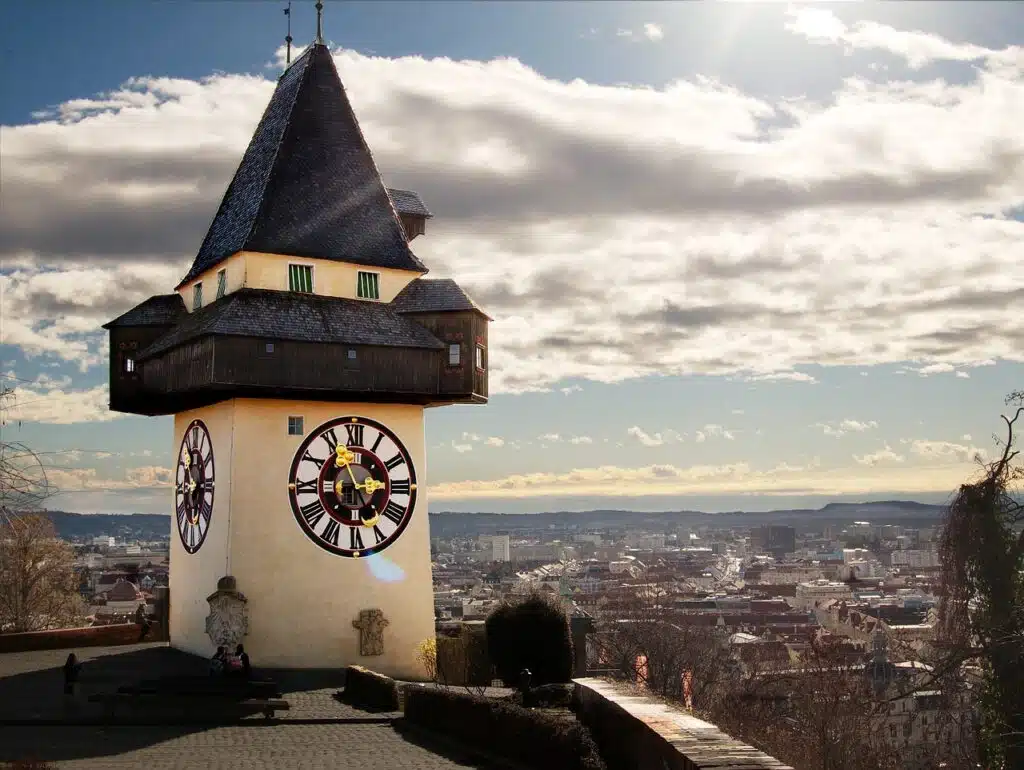
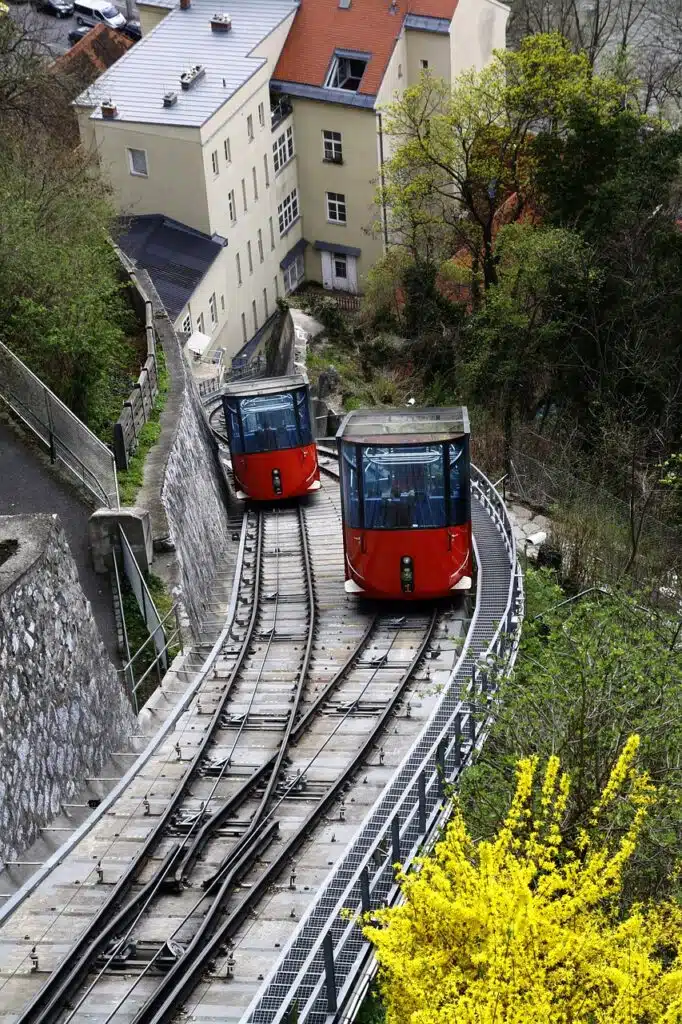
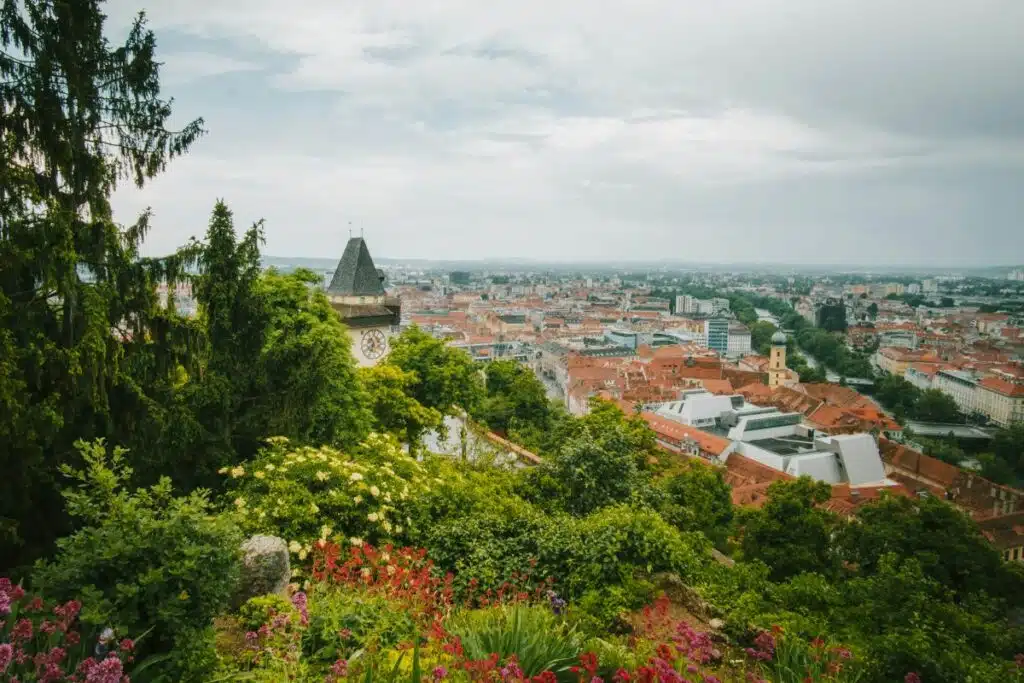
The Schlossberg rises right above the city centre. To reach the top, take the funicular, the lift inside the rock or the stone steps. On the hill, the Uhrturm clock tower is the symbol of Graz. Interestingly, its hour and minute hands were once reversed, with the long hand showing the hours. In summer, the Kasematten open-air stage hosts concerts and plays. Then, ride down on the Schlossberg slide, one of the longest underground slides in the world.
Eggenberg Palace
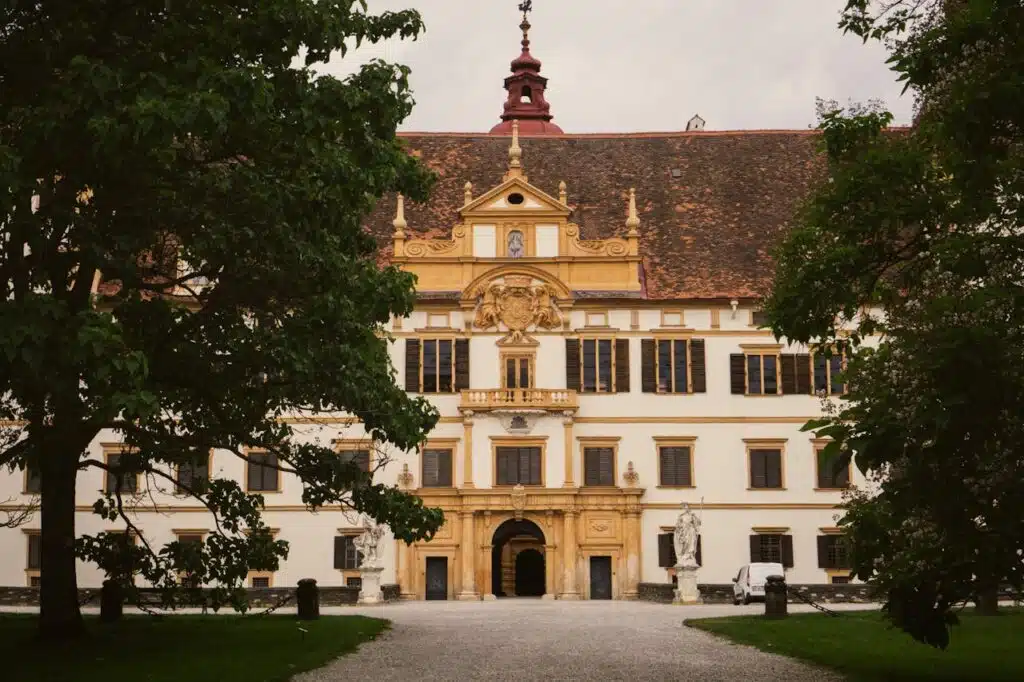
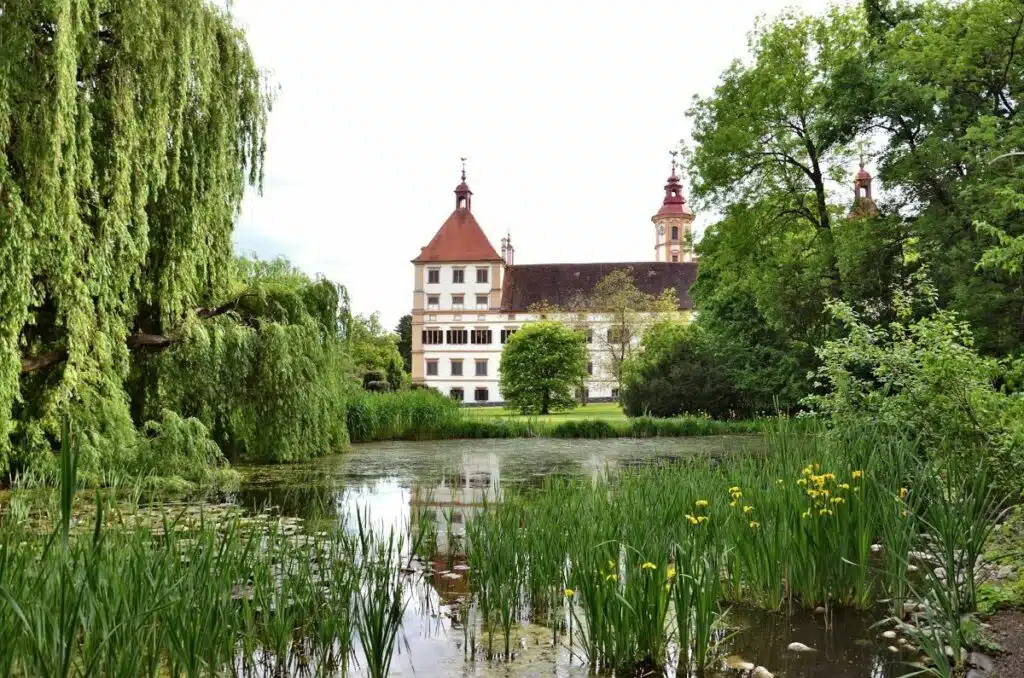
Eggenberg Palace is the largest Baroque palace in Styria. In fact, its design follows the calendar, with 365 windows and 24 state rooms. Above all, the Planetary Room is decorated with paintings of the planets and the zodiac. Also, peacocks roam freely in the park.
Modern Graz
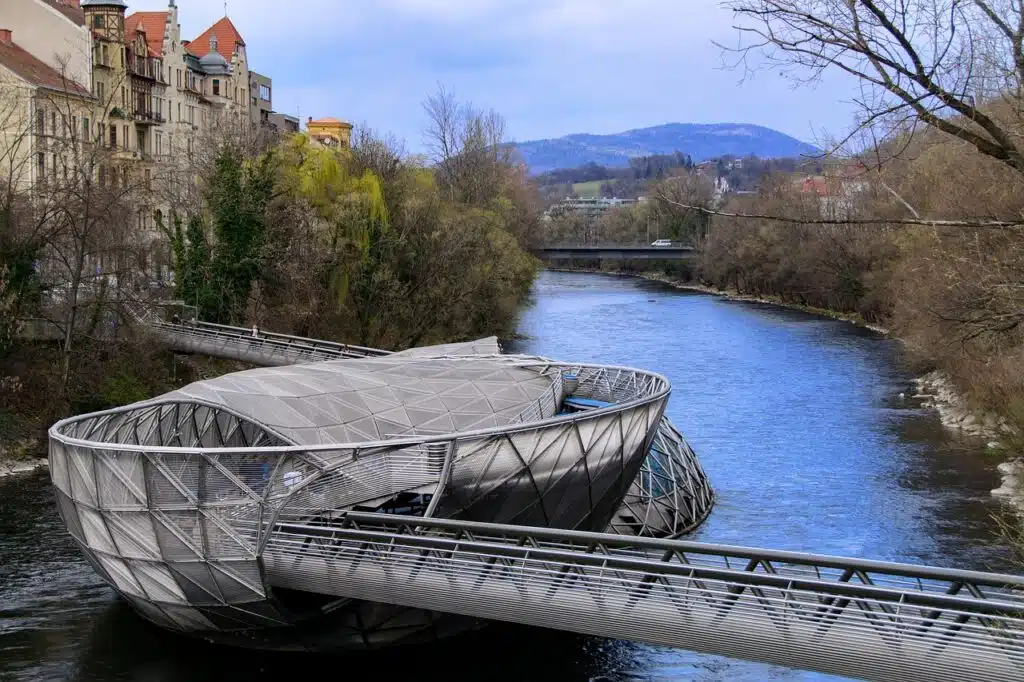
Murinsel
This steel and glass island floats on the River Mur. It was built in 2003, when Graz was European Capital of Culture. Today, it holds a café and a small amphitheatre.
Kunsthaus Graz
Locals call this art museum the “Friendly Alien” because of its blue, bubble-like shape. Inside, it shows changing exhibitions of contemporary art. Also, Graz is a UNESCO City of Design.
Cathedral and Mausoleum
Graz Cathedral is a Gothic church with a rich Baroque interior. Next door, the Mausoleum of Emperor Ferdinand II is a fine example of Mannerist architecture. In fact, the emperor rests here in the city where he was born.
What to Eat in Graz
Styria is famous for its dark green pumpkin seed oil. So, try it on salads or even on vanilla ice cream. Also, taste Backhendl, crispy fried chicken, and Käferbohnen, large local runner beans. For a snack, order a Brettljause, a board of cold meats and cheese. Then, shop for fresh produce at the Kaiser-Josef-Markt.
Festivals and Events
Every autumn, Steirischer Herbst presents contemporary art, theatre and performance. In summer, meanwhile, the Styriarte festival offers classical concerts. Also, the Christmas markets fill the old town in December.
Practical Tips
- Buy a day ticket: It covers trams, buses and the Schlossberg funicular.
- Visit Eggenberg early: The state rooms are seen on guided tours, so check the times.
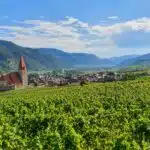
- Explore the wine roads: South Styria’s vineyards are about an hour away.
Getting There
Trains from Vienna take about 2.5 hours. Also, the city has a small international airport. For events and tickets, see the official Graz Tourism website.
Final Thoughts
Graz offers a historic old town, bold design and some of Austria’s best food. Afterwards, continue to Salzburg or Hallstatt. Discover all our Austria travel guides.