
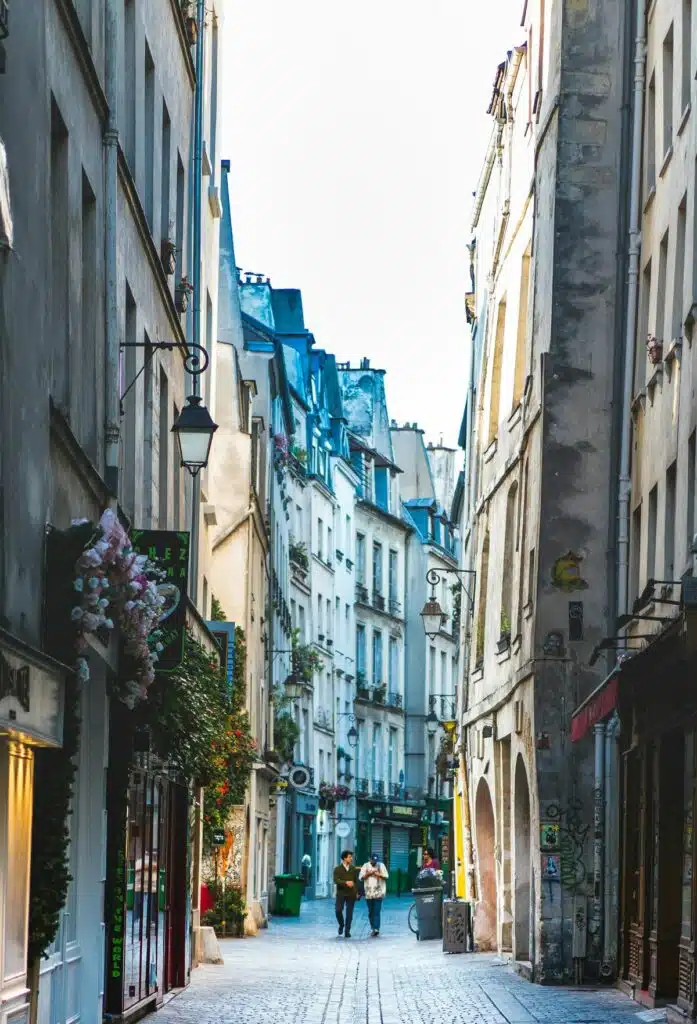
The Marais is one of the most charming districts of Paris. Indeed, it mixes medieval lanes, grand 17th-century mansions, trendy boutiques and lively cafés. Moreover, it is home to a historic Jewish quarter and a vibrant LGBTQ+ scene. As a result, the Marais feels both historic and modern.
So, this guide covers its history, the best museums, shopping, food and practical tips.
A Short History of the Marais
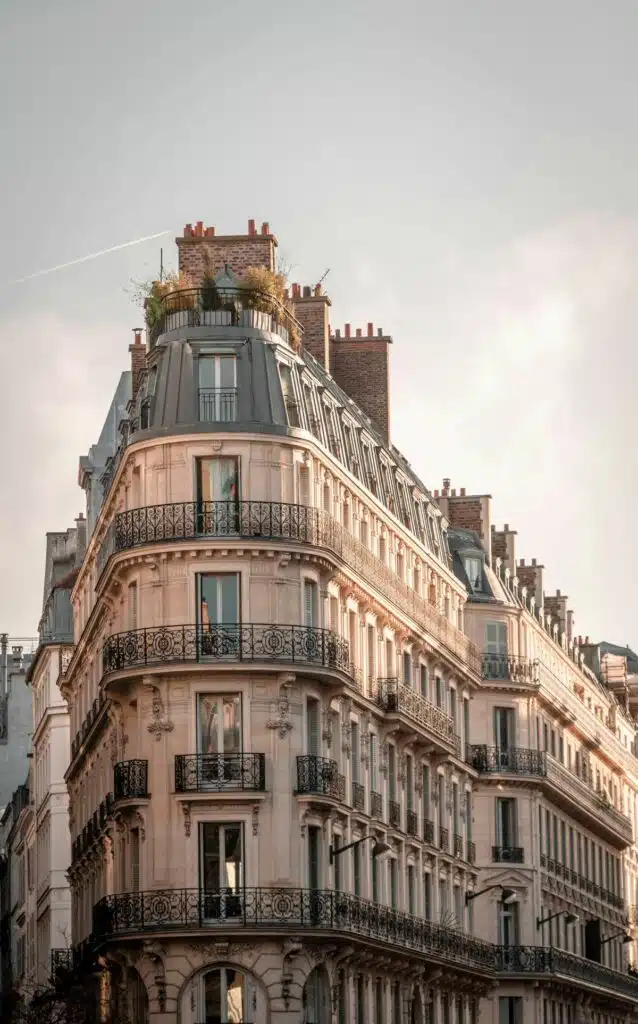
“Marais” means marsh, because the area was once wetland. Then, in the 17th century, aristocrats built elegant mansions called hôtels particuliers. Later, the district declined. However, it was carefully restored from the 1960s. Today, many mansions also house museums and galleries.
Top Sights in the Marais
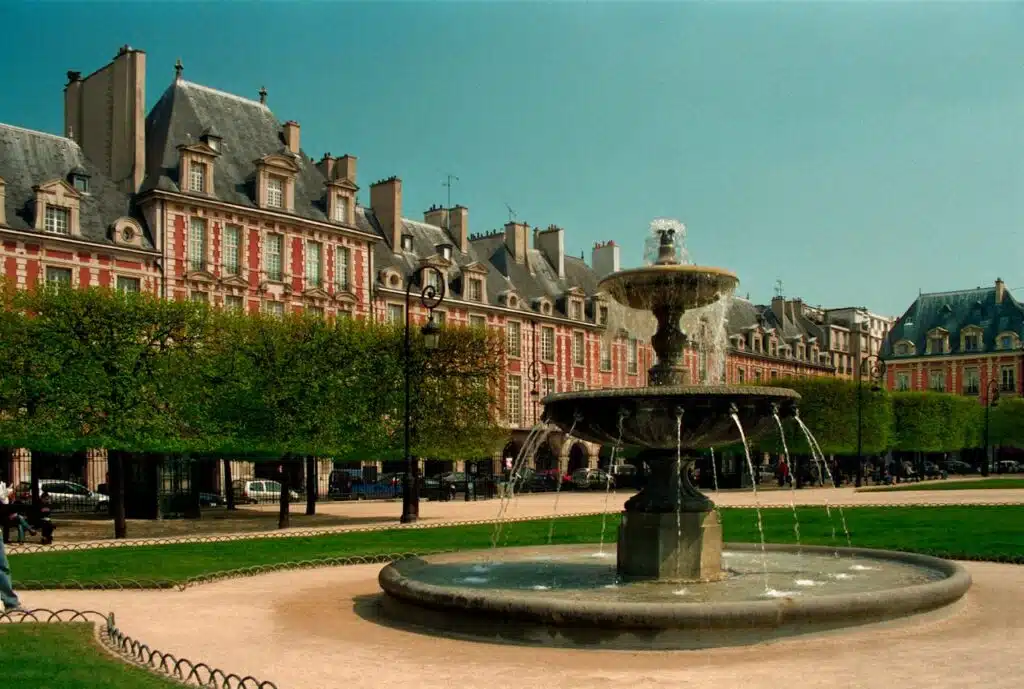
Place des Vosges
Completed in 1612, Place des Vosges is the oldest planned square in Paris. Around it, red-brick houses with arcades surround a shady garden too. Also, Victor Hugo once lived at number 6, which is now a free museum.
Musée Picasso
Set in the grand Hôtel Salé, this museum also holds one of the largest collections of Picasso’s works. In addition, it displays art from his personal collection.
Musée Carnavalet
The museum of the history of Paris occupies two connected mansions. Moreover, entry to the permanent collection is free. So, it is a great introduction to the city.
Rue des Rosiers and the Jewish Quarter
Rue des Rosiers is the heart of the historic Jewish quarter, known as the Pletzl. Here, bakeries sell challah and pastries, while falafel shops attract long queues. Also, look for small synagogues and memorial plaques.
Shopping in the Marais
The Marais is also a paradise for shoppers. For example, Rue des Francs-Bourgeois mixes French brands with independent designers. Meanwhile, the northern Haut-Marais is known for concept stores and young creators. In addition, vintage shops offer unique finds. Unlike much of Paris, many shops open on Sundays.
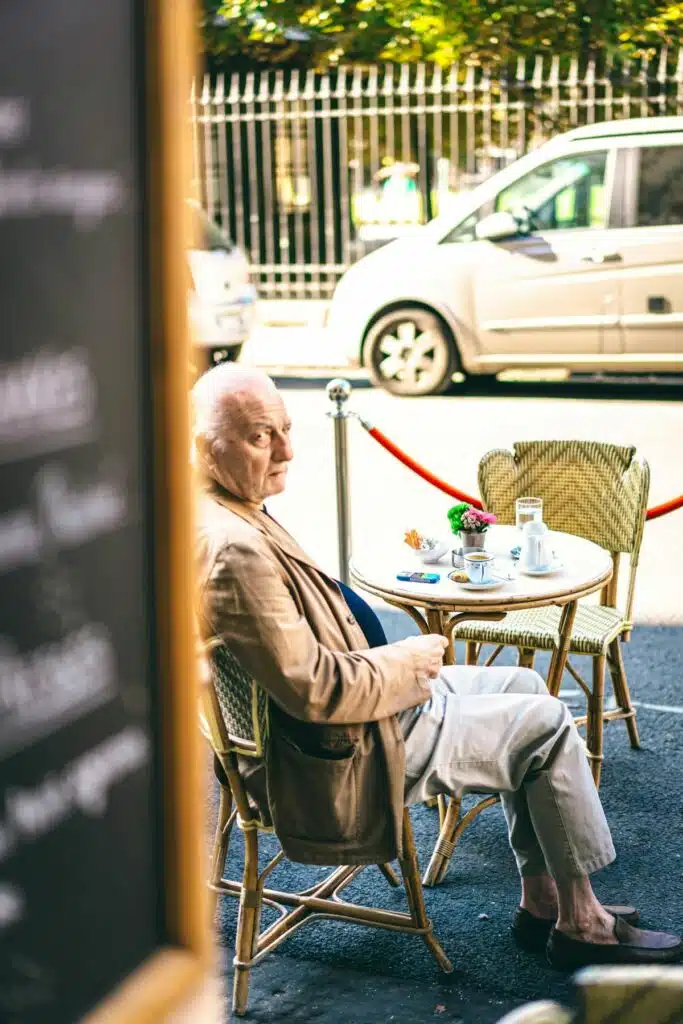
Food and Cafés
- L’As du Fallafel: A legendary falafel shop on Rue des Rosiers.
- Chez Janou: A lively Provençal bistro, famous for its chocolate mousse.
- Carette: An elegant tea room on Place des Vosges.
- Mariage Frères: A historic tea house with hundreds of teas.
- Marché des Enfants Rouges: The oldest covered market in Paris, with food stalls from around the world.
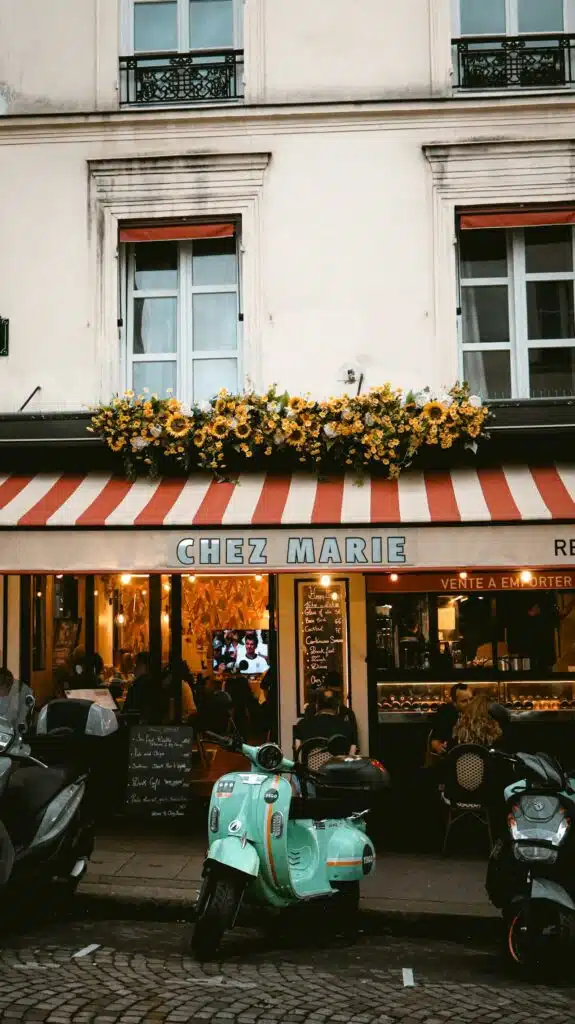
Exploring the Neighbourhood
- Art galleries: Contemporary galleries line many streets, especially in the north.
- Hidden gardens: For instance, the Jardin des Rosiers–Joseph Migneret is a quiet green courtyard.
- Nightlife: Cocktail bars and LGBTQ+ bars make the district lively at night.
- Centre Pompidou: On the western edge, the iconic modern art centre is closed for renovation until around 2030.
Tips for Visiting the Marais
- Wear comfortable shoes: Cobbled streets are best explored on foot, though they can be slippery.
- Visit on Sunday: Shops are open, and some streets become pedestrian too.
- Go beyond the main streets: Courtyards and side lanes hide the best surprises.
- Note closures: Many Jewish-owned shops close on Saturday for Shabbat.
How to Get to the Marais
Metro stations Saint-Paul (line 1), Hôtel de Ville and Chemin Vert are all close. Also, the district is a short walk from Notre-Dame. For more ideas, see the official Paris tourism website.
Final Thoughts on the Marais
The Marais combines history, culture and modern Parisian style. Above all, take time to wander and get lost. Afterwards, explore Montmartre or the Luxembourg Gardens. Discover all our Paris travel guides.