The Day of the Dead, or Día de los Muertos, is one of the most beautiful traditions in Mexico. Every year, on 1 and 2 November, families welcome the souls of their loved ones back home. However, it is not a sad occasion. Instead, it is a joyful celebration of life, memory and family.
In fact, UNESCO recognises this festival as intangible cultural heritage. So, this guide explains its traditions, the best places to experience it and tips for visitors.
Origins of the Day of the Dead
The Day of the Dead tradition goes back to Indigenous cultures, such as the Aztecs. Already, they honoured the dead with offerings. Later, Spanish priests linked it with the Catholic feasts of All Saints and All Souls. As a result, the modern festival mixes both traditions.
Traditionally, 1 November is dedicated to children who have died. So, it is sometimes called Día de los Angelitos, the Day of the Little Angels. Then, 2 November honours adults.
Key Traditions of the Day of the Dead
Ofrendas (Altars)
First of all, families build altars at home or at the cemetery. Then, they decorate them with photos, candles, flowers and the favourite food and drinks of the departed. In fact, people believe the souls return to enjoy these gifts.
Marigolds
Bright orange marigolds, called cempasúchil, cover altars and graves. Moreover, their colour and scent are believed to guide the souls home. So, markets fill with marigolds in late October.
Calaveras and La Catrina
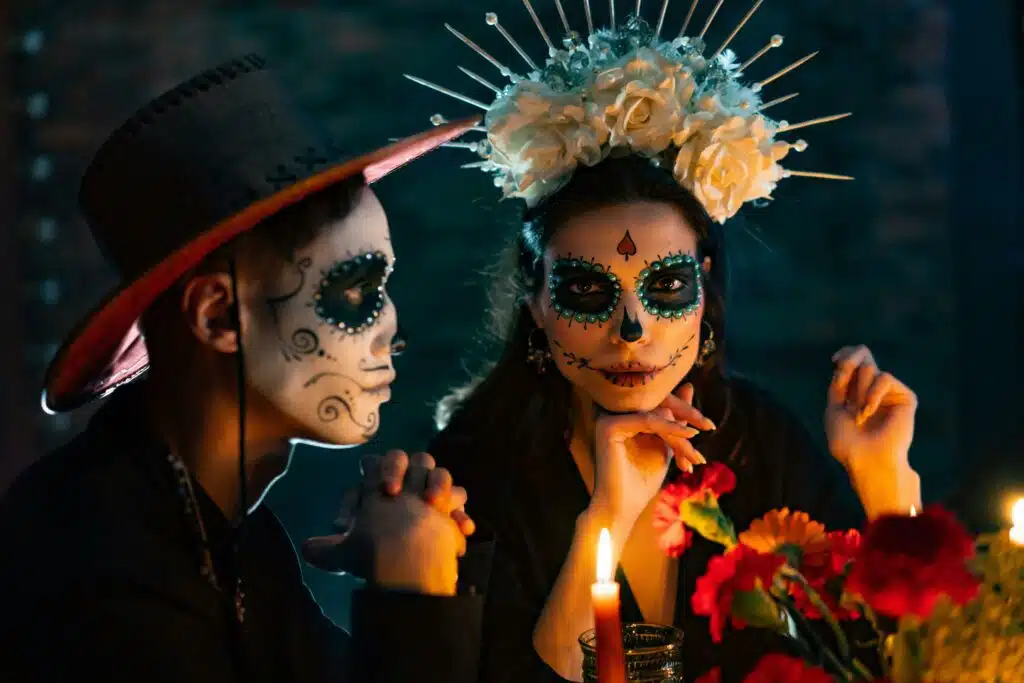
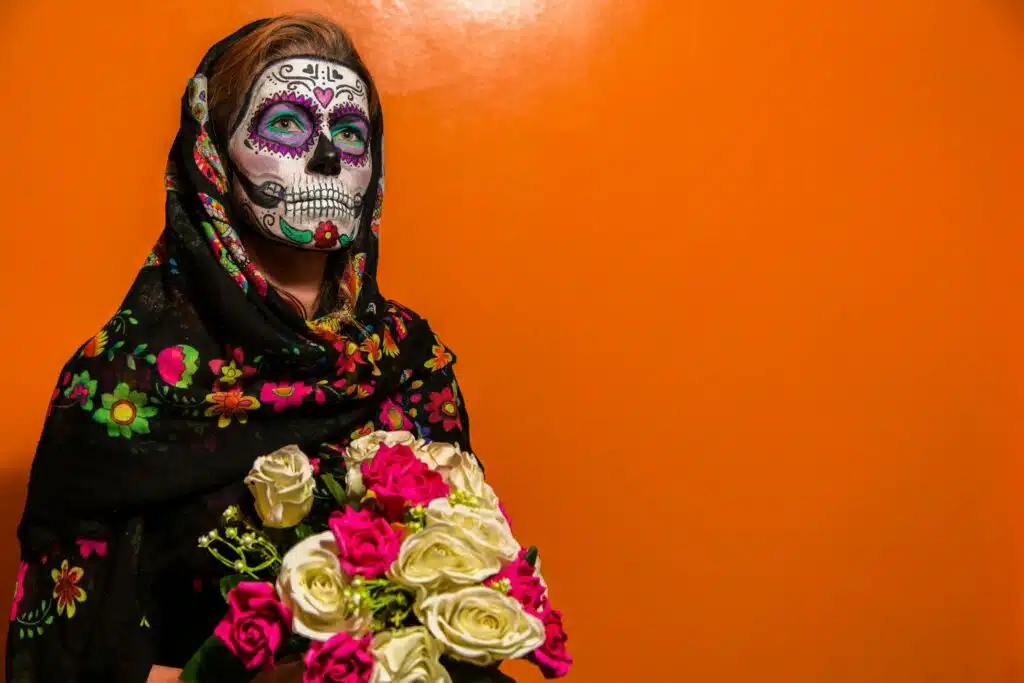
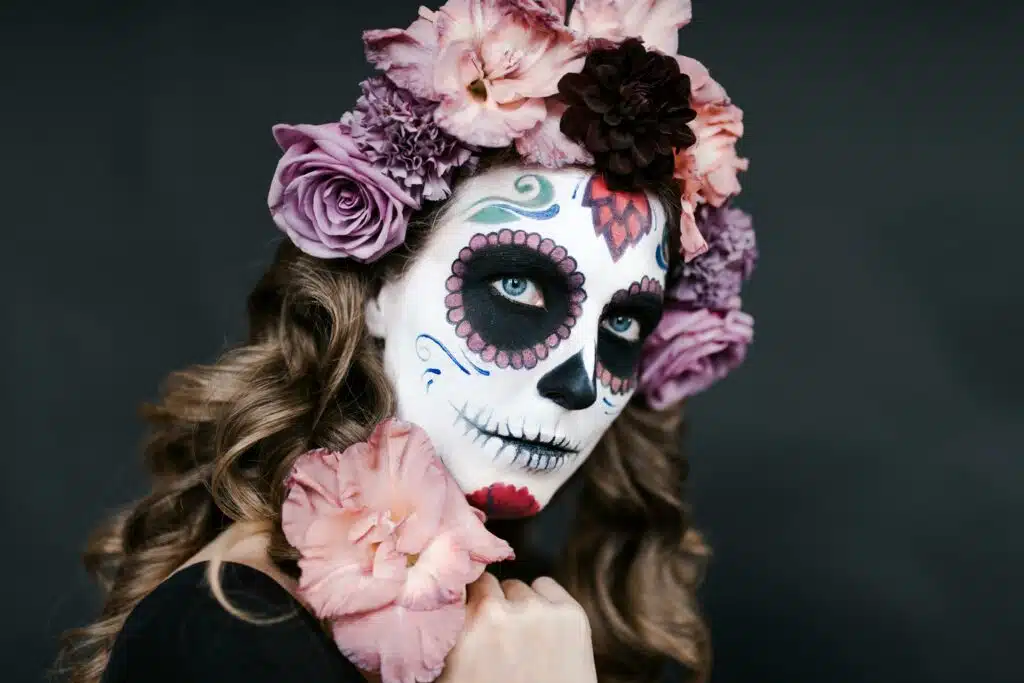
Sugar skulls, called calaveras, carry names written in icing. Also, La Catrina, an elegant skeleton lady in a big hat, is the festival’s icon. She was created by artist José Guadalupe Posada and later popularised by Diego Rivera.
Pan de Muerto
This sweet bread is decorated with dough “bones” and dusted with sugar. Above all, enjoy it with a cup of hot chocolate.
Where to Celebrate the Day of the Dead
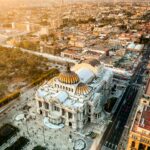
- Mexico City: A huge parade crosses the centre, while giant altars fill public squares. Learn more in our guide to Mexico City.
- Oaxaca: Musical processions, called comparsas, fill the streets. Also, cemeteries glow with candles at night.
- Pátzcuaro and Janitzio (Michoacán): On the island of Janitzio, families spend the night beside candlelit graves.
- Mixquic: In this village near Mexico City, the cemetery celebrations are especially moving.
Tips for Experiencing Día de los Muertos
- Be respectful: Cemeteries are places of family memories. So, ask before taking photos.
- Book early: Hotels in Oaxaca and Mexico City fill up months ahead.
- Join a local tour: Guides explain the meaning of each tradition.
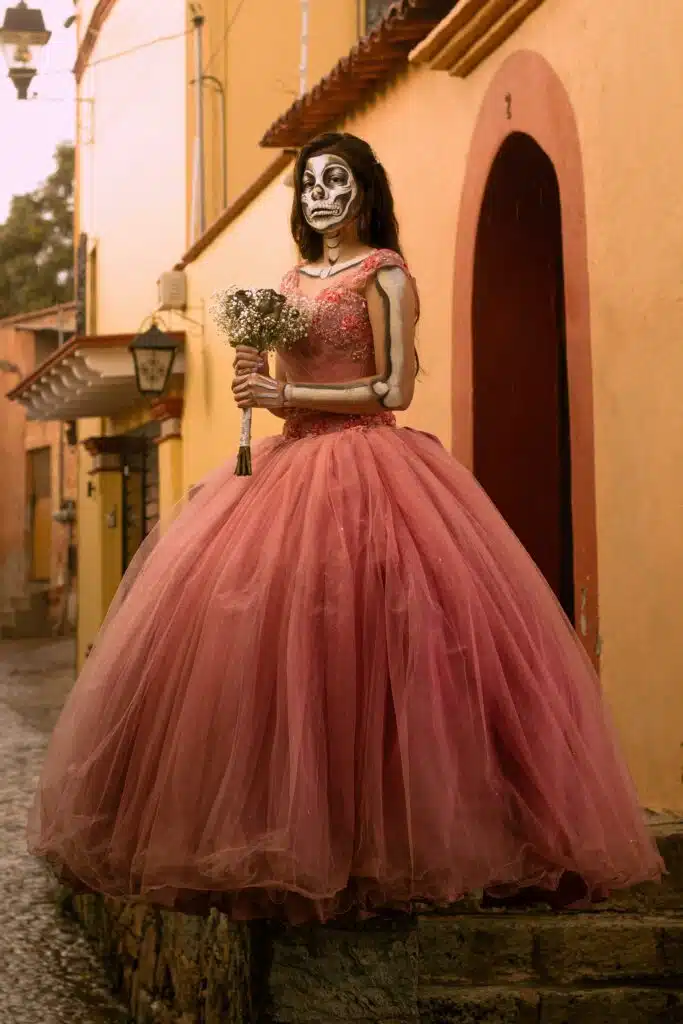
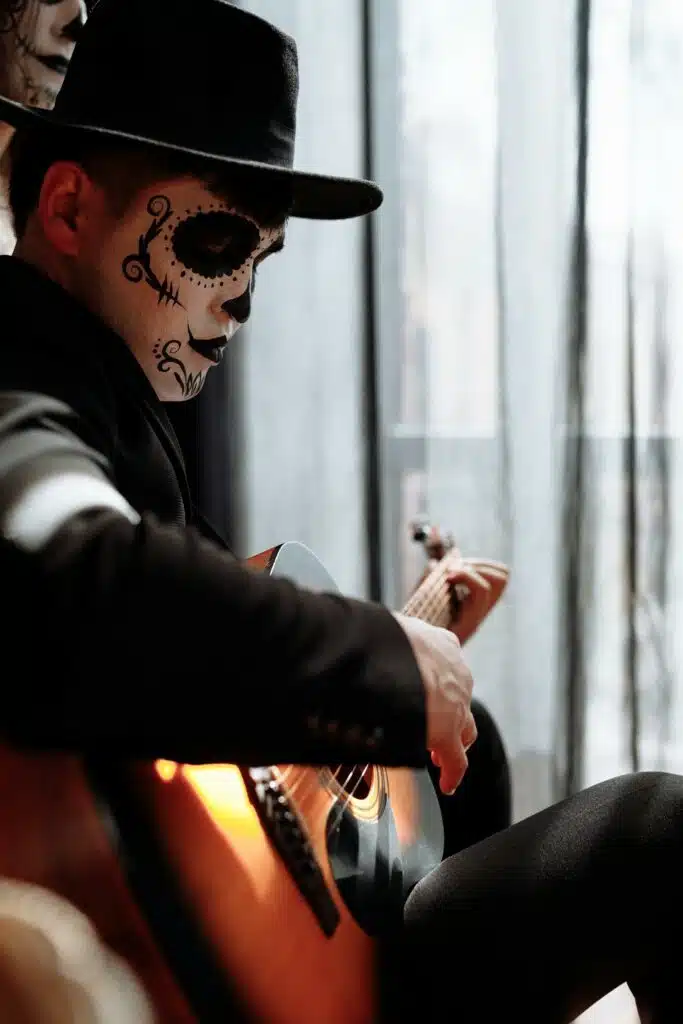
- Try face painting: Many visitors paint their faces like Catrinas. However, do it with respect.
The Day of the Dead Around the World
The film Coco brought the festival to a global audience. Today, Mexican communities also celebrate the Day of the Dead in many countries. Still, nothing compares to experiencing it in Mexico.
For more about its heritage status, see the UNESCO page on the Indigenous festivity dedicated to the dead.
Final Thoughts on the Day of the Dead
The Day of the Dead turns remembrance into colour, music and love. Above all, it shows how Mexicans celebrate life. Also, taste the season’s flavours in our guide to Mexican cuisine. Discover all our Mexico travel guides.