Évora is the historic capital of the Alentejo region in southern Portugal. Inside its medieval walls, Roman ruins, Gothic churches and whitewashed houses sit side by side. As a result, its historic centre is a UNESCO World Heritage site. Moreover, the city will be a European Capital of Culture in 2027.
So, this guide covers the top sights, food and wine, nearby megaliths and practical tips.
Top Sights in Évora
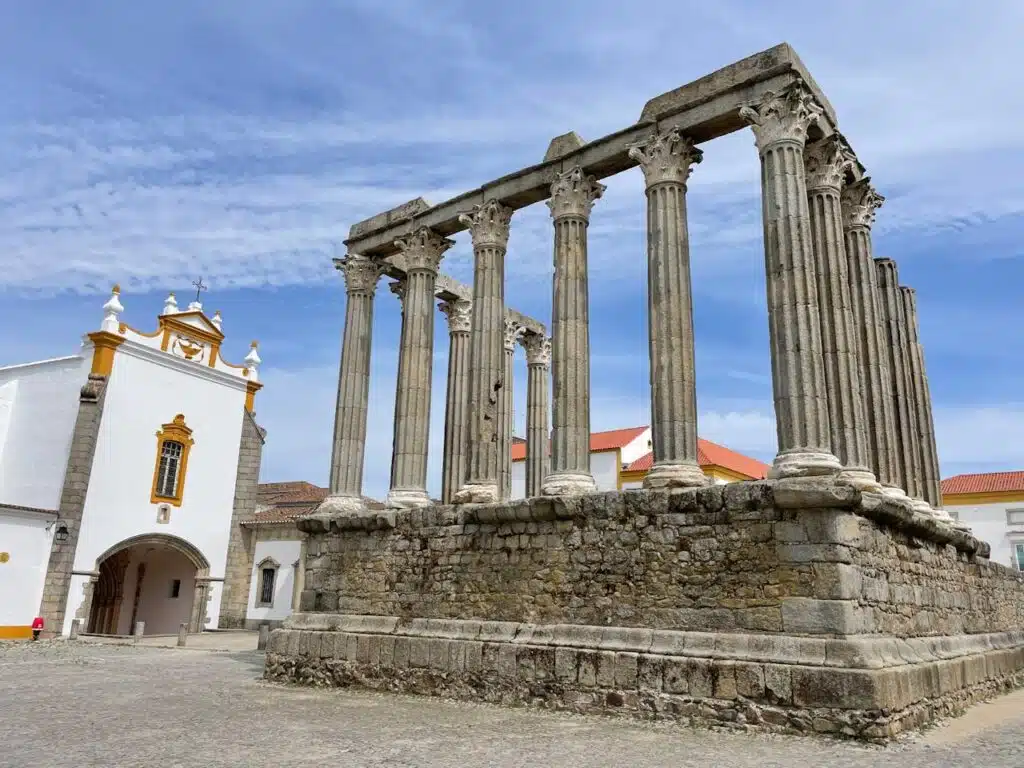
Roman Temple
This 1st-century temple has elegant Corinthian columns. It is often called the Temple of Diana, although it was probably dedicated to the emperor. In fact, it is one of the best-preserved Roman monuments in Portugal.
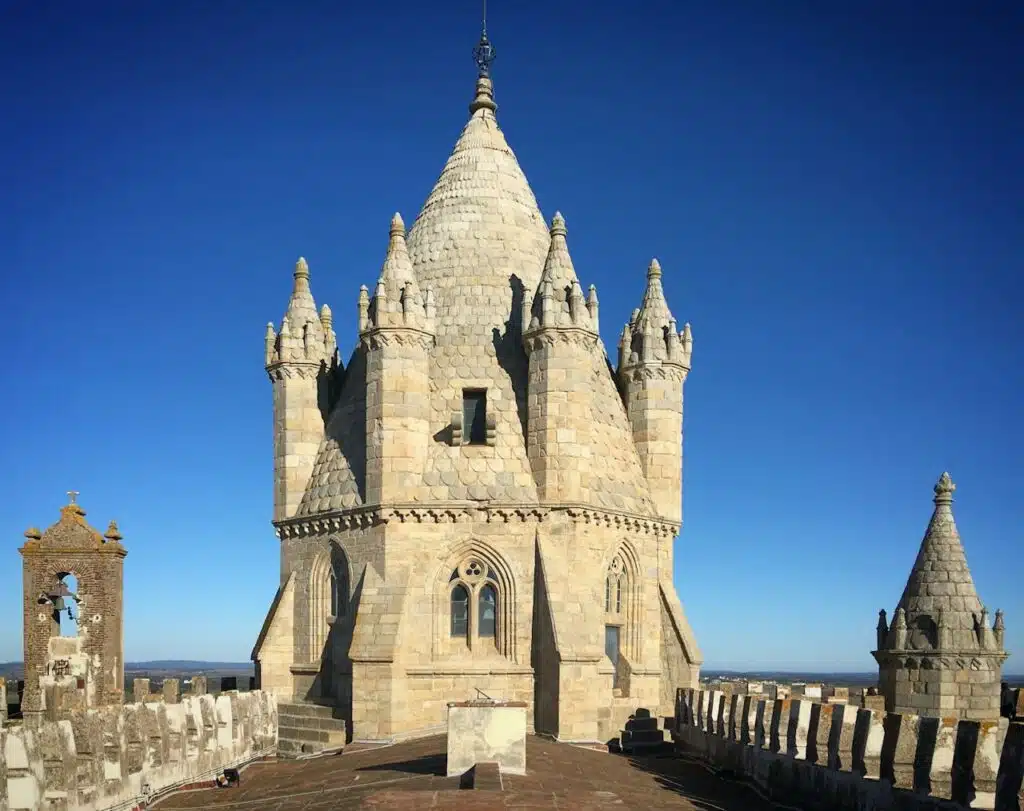
The Cathedral
The Sé was built mainly in the 13th century and looks like a fortress. Then, climb to the roof for views over the city and plains. Also, the cloister and treasury are worth seeing.
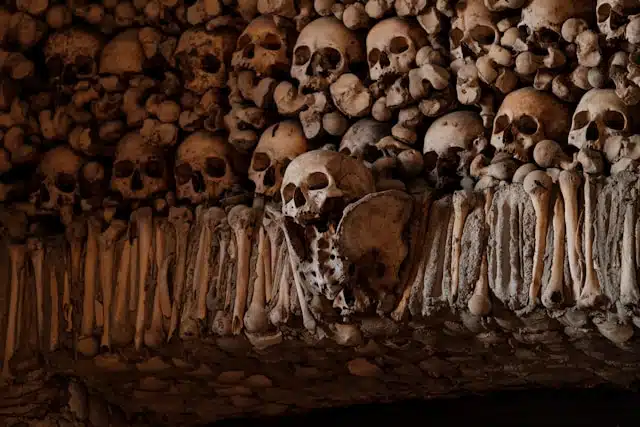
Chapel of Bones
Inside the Church of St Francis, this chapel is lined with thousands of human bones and skulls. Above the door, an inscription reminds visitors that death awaits everyone. However, it can be crowded, so go early.
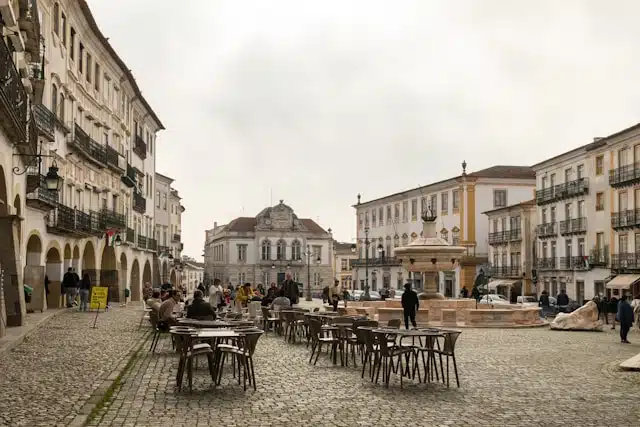
Praça do Giraldo
The main square has arcades, a marble fountain and cafés. So, it is the perfect place to relax.
University and Aqueduct
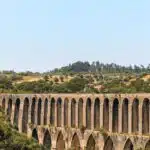
The university was founded by Jesuits in 1559. Inside, classrooms are decorated with blue and white tiles. Meanwhile, the 16th-century Silver Water Aqueduct runs through the streets, with houses built between its arches.
Food and Wine in Évora
The Alentejo is famous for hearty country food. For example, try migas with black pork or açorda, a bread soup with garlic and coriander. Also, the region produces excellent red wines. In addition, listen to cante alentejano, a traditional polyphonic singing on UNESCO’s intangible heritage list.
Around Évora
About 15 km west, the Almendres Cromlech is a circle of nearly 100 standing stones. In fact, it is thousands of years older than Stonehenge. Also, wine estates nearby offer tours and tastings. Further away, the hilltop village of Monsaraz overlooks a large lake.
Best Time to Visit
Spring and autumn are ideal, with mild weather. In contrast, summer temperatures often pass 35°C.
Practical Tips
- Walk the centre: The historic area is compact.
- Rent a car: It is the best way to see megaliths and vineyards.
- Stay overnight: Evenings are calm after day-trippers leave.
Getting There
Trains from Lisbon take about 1.5 hours. Also, buses run several times a day. For more about its heritage, see the UNESCO page for the Historic Centre of Évora.
Final Thoughts on Évora
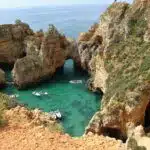
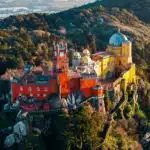
In short, the city combines Roman ruins, Gothic beauty and Alentejo flavours. Afterwards, discover the Algarve or Sintra. Discover all our Portugal travel guides.