The Pantheon is the best-preserved building of ancient Rome. Marcus Agrippa built the first temple here, but Emperor Hadrian rebuilt it around 125 AD. In fact, the inscription on the front still names Agrippa. Today, its huge dome is still the largest unreinforced concrete dome in the world.
So, this guide covers the dome, the interior, the tombs and practical tips.


The Dome and the Oculus
The dome measures 43.3 metres across, exactly the same as the height of the building. As a result, a perfect sphere would fit inside. At the top, moreover, the oculus is an open hole about 9 metres wide. So, sunlight moves across the walls during the day. Also, rain falls inside and drains through small holes in the floor.


The Portico
Sixteen giant granite columns, brought from Egypt, support the entrance. Then, huge bronze doors lead into the rotunda.
Inside the Pantheon
The interior is decorated with coloured marble from across the Roman Empire. In 609 AD, it became a church dedicated to Santa Maria ad Martyres. In fact, this explains why it survived so well.
Tombs in the Pantheon
The painter Raphael is buried here. Also, two kings of Italy lie here, Victor Emmanuel II and Umberto I.
Interesting Facts
- Roman concrete: The dome gets lighter towards the top, thanks to lighter stones in the mix.
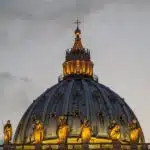
- A model for others: Many domes were inspired by it, including St Peter’s.
- Still in use: Masses and weddings still take place inside.
Practical Tips
- Buy a ticket: Since 2023, entry costs a few euros, but it remains free for worship.
- Come early: Mornings are quieter.
- Dress respectfully: It is still a church.
- Look up: The light through the oculus is magical at noon.
Getting There
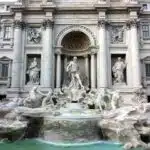
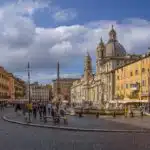
The building stands on Piazza della Rotonda, in the historic centre. For example, it is a short walk from Piazza Navona and the Trevi Fountain. For tickets, see the official Pantheon website.
Final Thoughts on the Pantheon
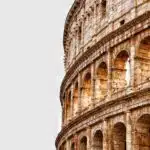
In short, this ancient temple is a marvel of Roman engineering. Afterwards, visit the Colosseum or St Peter’s Basilica. Discover all our Rome travel guides.