The Roman Forum was the beating heart of ancient Rome. For centuries, moreover, it hosted the city’s political meetings, trials, temples and markets. Today, its ruins lie in a valley between the Palatine and Capitoline Hills, in the centre of Rome. As a result, walking through the Roman Forum feels like stepping into history.
So, this guide to the Roman Forum covers its highlights, history and practical tips.
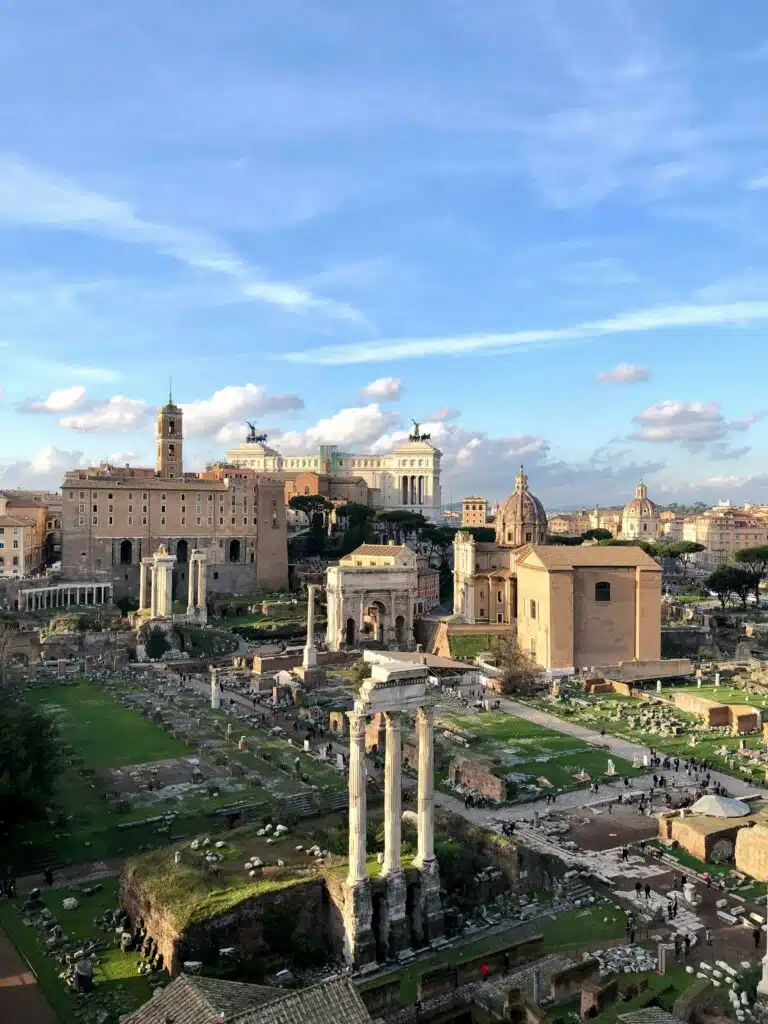
History of the Roman Forum
At first, however, the valley was a marsh. Then, around the 7th century BC, the Romans drained it and built a public square. Then, over the centuries, temples, basilicas and monuments filled the space. However, after the fall of the empire, the Forum was abandoned and slowly buried. Finally, excavations began in earnest in the 19th century.
What to See in the Roman Forum
- Via Sacra: The main street, used for triumphal processions.
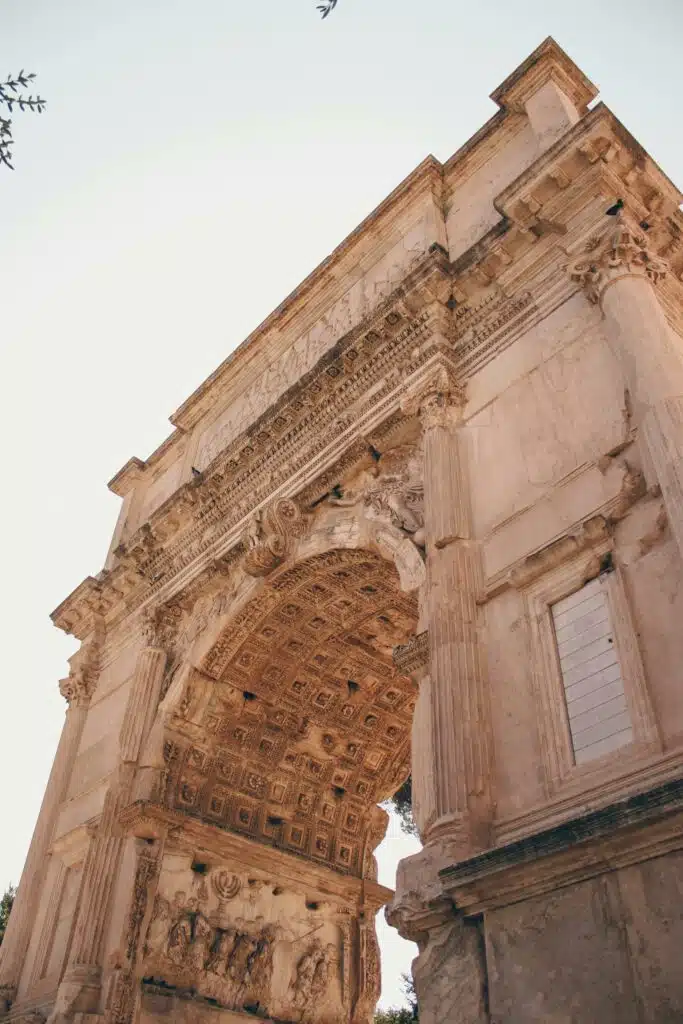
- Arch of Titus: It celebrates the capture of Jerusalem in AD 70. Also, its reliefs show soldiers carrying the temple menorah.
- Temple of Saturn: Still, eight tall columns remain. In fact, the temple once held the state treasury.
- Curia Julia: The Senate House, where senators debated.
- Rostra: The speakers’ platform, where Cicero and others addressed the crowd.
- Temple of Vesta: A round temple where the sacred fire of Rome was kept burning.
- House of the Vestal Virgins: Next door, statues also line a long garden courtyard.
- Arch of Septimius Severus: A grand arch celebrating victories in the East.
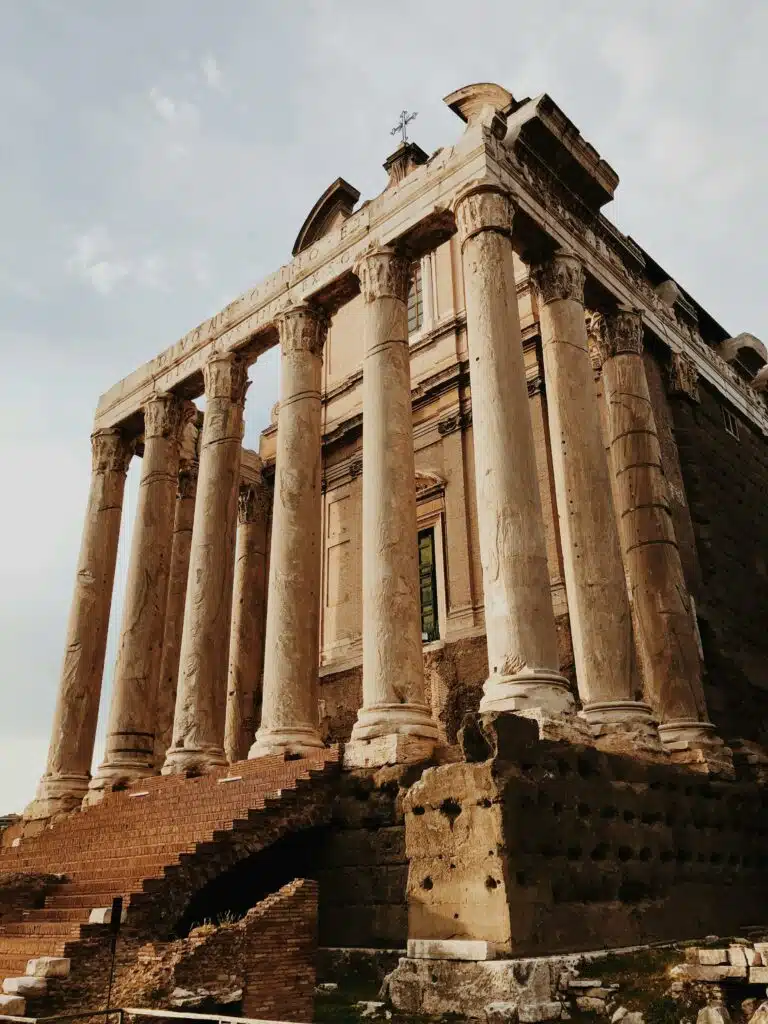
- Temple of Antoninus and Faustina: Today, however, its columns front a church.
- Basilica of Maxentius: Its massive vaults show the scale of Roman engineering.
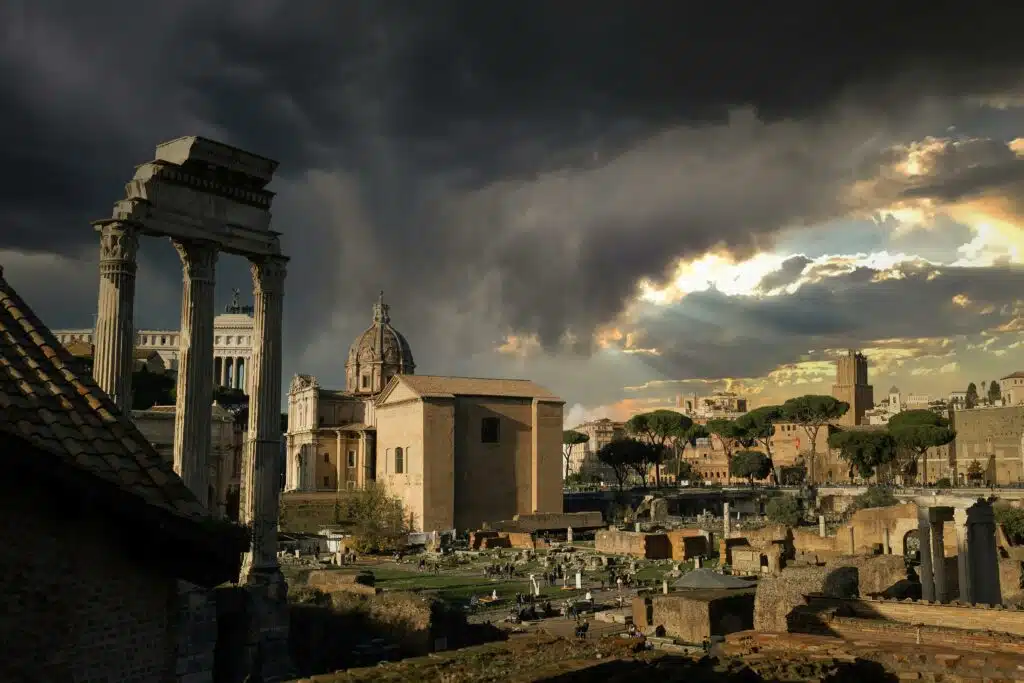
The Palatine Hill Next Door
Your ticket also includes the Palatine Hill, just above the Forum. In fact, legend says Rome was founded here. Later, emperors built their palaces on the hill. So, climb up for the best view over the Forum.
Visiting Tips
- Buy a combined ticket: It covers the Colosseum, the Forum and the Palatine. Also, book online to skip long queues.
- Go early or late: There is little shade, so avoid the midday heat.
- Bring water: Public fountains inside the site let you refill your bottle.
- Join a guided tour: The ruins are hard to understand alone, so a guide helps a lot.
- Wear good shoes: After all, ancient paving stones are uneven.
How to Get There
The nearest metro stop is Colosseo, on line B. Also, the main entrance is on Via dei Fori Imperiali, near the Colosseum. For more about its heritage, see the UNESCO page for the Historic Centre of Rome.
Final Thoughts on the Roman Forum
The Roman Forum brings the daily life and power of ancient Rome to life. Above all, take time to imagine the crowds that once filled it. Afterwards, visit the Colosseum or the Pantheon. Discover all our Rome travel guides.