The Trevi Fountain is the largest Baroque fountain in Rome and one of the most famous in the world. It was designed by Nicola Salvi and completed in 1762. Moreover, it marks the end of the Aqua Virgo, an aqueduct built in 19 BC. Today, millions of visitors come to toss a coin into its turquoise water.
So, this guide covers its history, traditions, current rules and practical tips.
History and Design
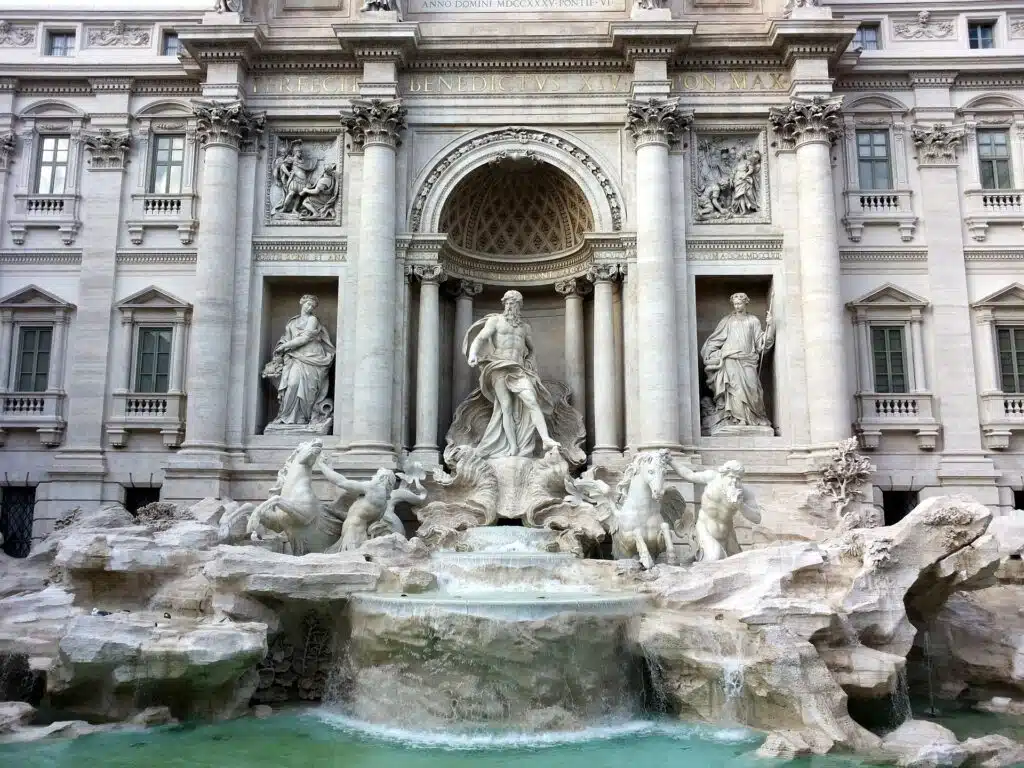
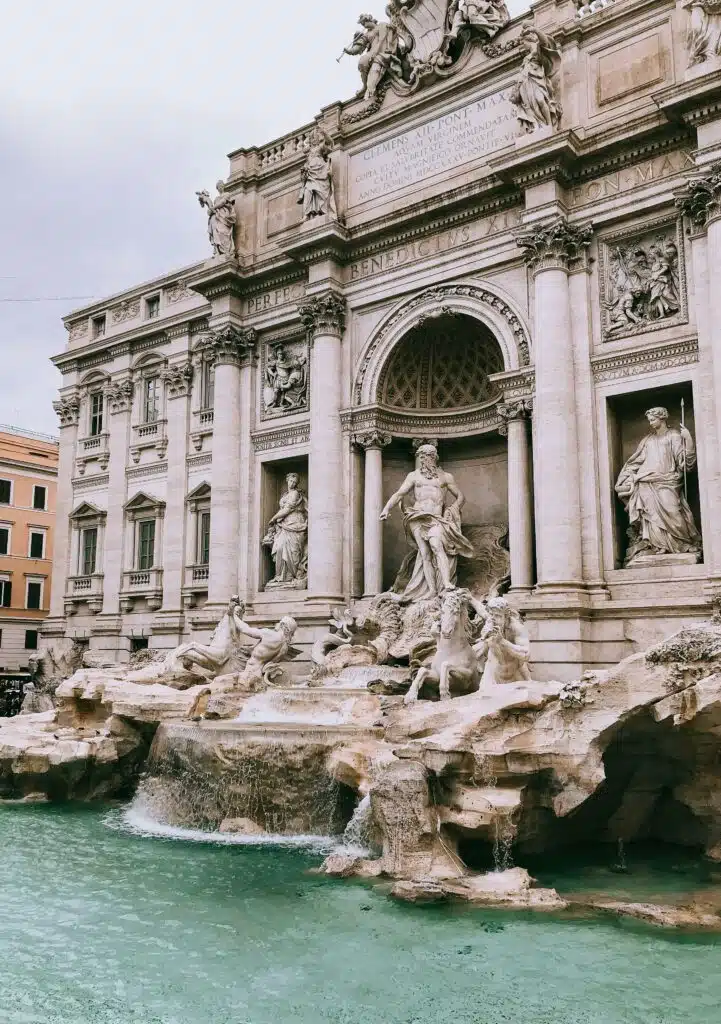
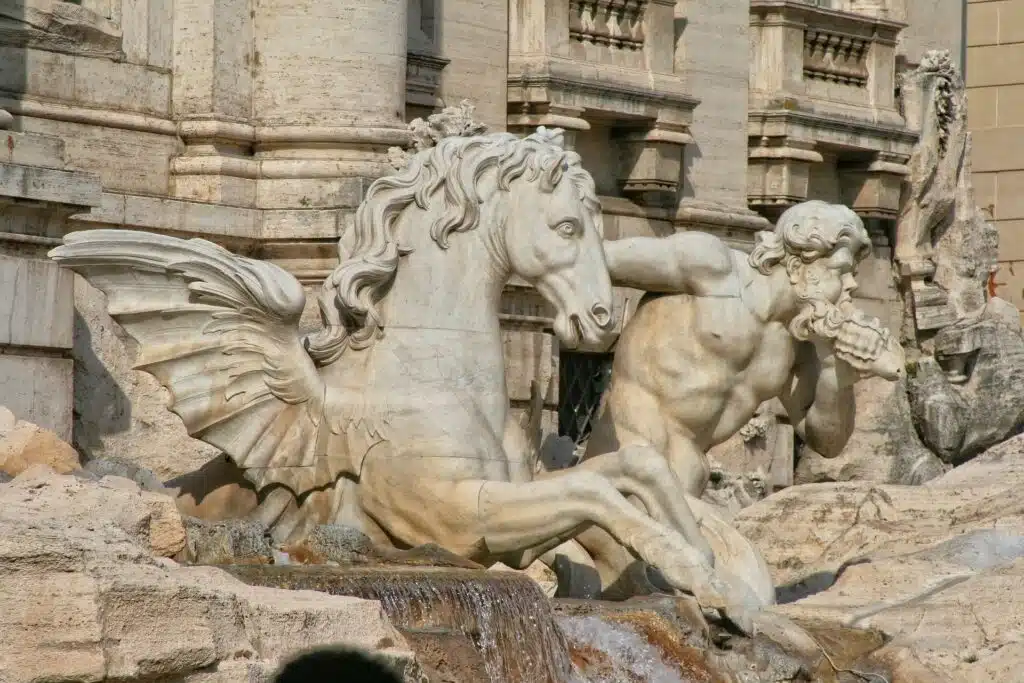
The name comes from tre vie, the three roads that met here. After Salvi’s death, Giuseppe Pannini finished the work. In the centre, the sea god Oceanus rides a shell-shaped chariot. On each side, moreover, Tritons tame wild sea horses. Also, the statues of Abundance and Health stand in the side niches.
Traditions of the Trevi Fountain
Toss a Coin
According to tradition, throw a coin with your right hand over your left shoulder. Then, you will return to Rome one day. Interestingly, about one and a half million euros are thrown in every year.
Coins for Charity
The coins are collected regularly and given to Caritas, a Catholic charity. In fact, they help fund meals and support for people in need.
Rules at the Trevi Fountain
Sitting on the edge, eating nearby and wading into the water are forbidden. In addition, police can give heavy fines. Since 2026, a small fee of about €2 applies to go down to the basin. However, the view from the square stays free. So, check the latest rules before your visit.
A Famous Film Location
The fountain became world-famous in Federico Fellini’s La Dolce Vita (1960), when Anita Ekberg waded into it. Today, however, doing the same would bring a large fine.
Tips for Visiting the Trevi Fountain
- Go early or late: At sunrise or late at night, the square is calmer.
- See it lit up: At night, the illuminated marble is magical.
- Watch your belongings: Pickpockets work in the crowd.
- Enjoy a gelato: Several good ice cream shops are nearby.
Getting There
The fountain is a short walk from Barberini metro station on line A. Also, it lies close to the Pantheon and the Spanish Steps. For more about Rome’s heritage, see the UNESCO page for the Historic Centre of Rome.
Final Thoughts
In short, the fountain combines Baroque art, history and a touch of magic. Afterwards, visit Piazza Navona or the Colosseum. Discover all our Rome travel guides.